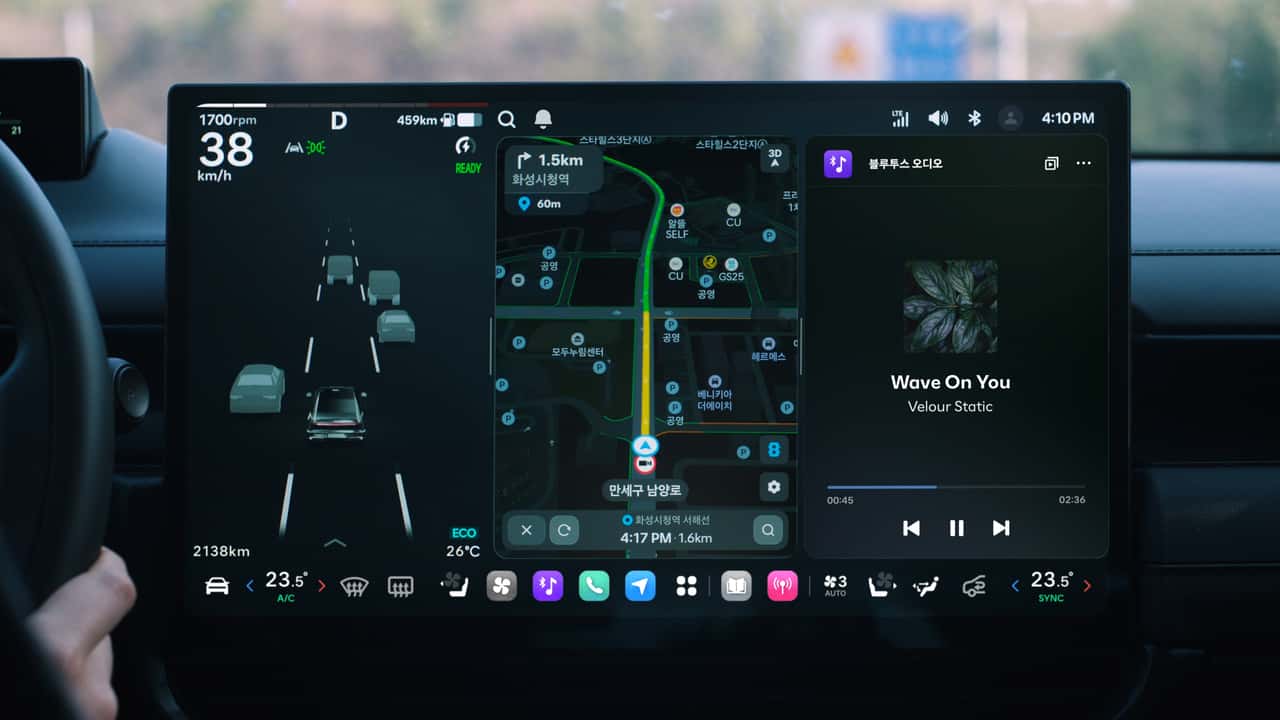
Hyundai launches Pleos Connect next month, finally delivering an infotainment system that doesn't force drivers to choose between touchscreen convenience and physical controls. The dual-screen setup pairs a digital display with a traditional button layout, addressing a real frustration in modern vehicles where critical functions hide behind menu layers.
The system integrates an AI companion that actually serves a purpose rather than gimmickry. Hyundai engineered this with driver safety in mind. fewer distractions mean fewer accidents. The physical buttons stay for climate control, volume, and navigation inputs. This matters. Drivers need tactile feedback without taking eyes off the road.
The industry has swung too far toward minimalist touchscreen-only designs that look sleek in marketing photos but fail in real driving conditions. Hyundai's approach acknowledges this gap. They kept the hardware where it works best while layering smart software on top.
Pleos Connect rolls into Hyundai's lineup at a moment when competitors still chase the Tesla-inspired stripped-down aesthetic. Hyundai recognized that engineering for actual use cases beats engineering for showrooms. This system will likely become a template others copy. Expect other manufacturers to quietly abandon their minimalist touchscreen obsessions within two years.