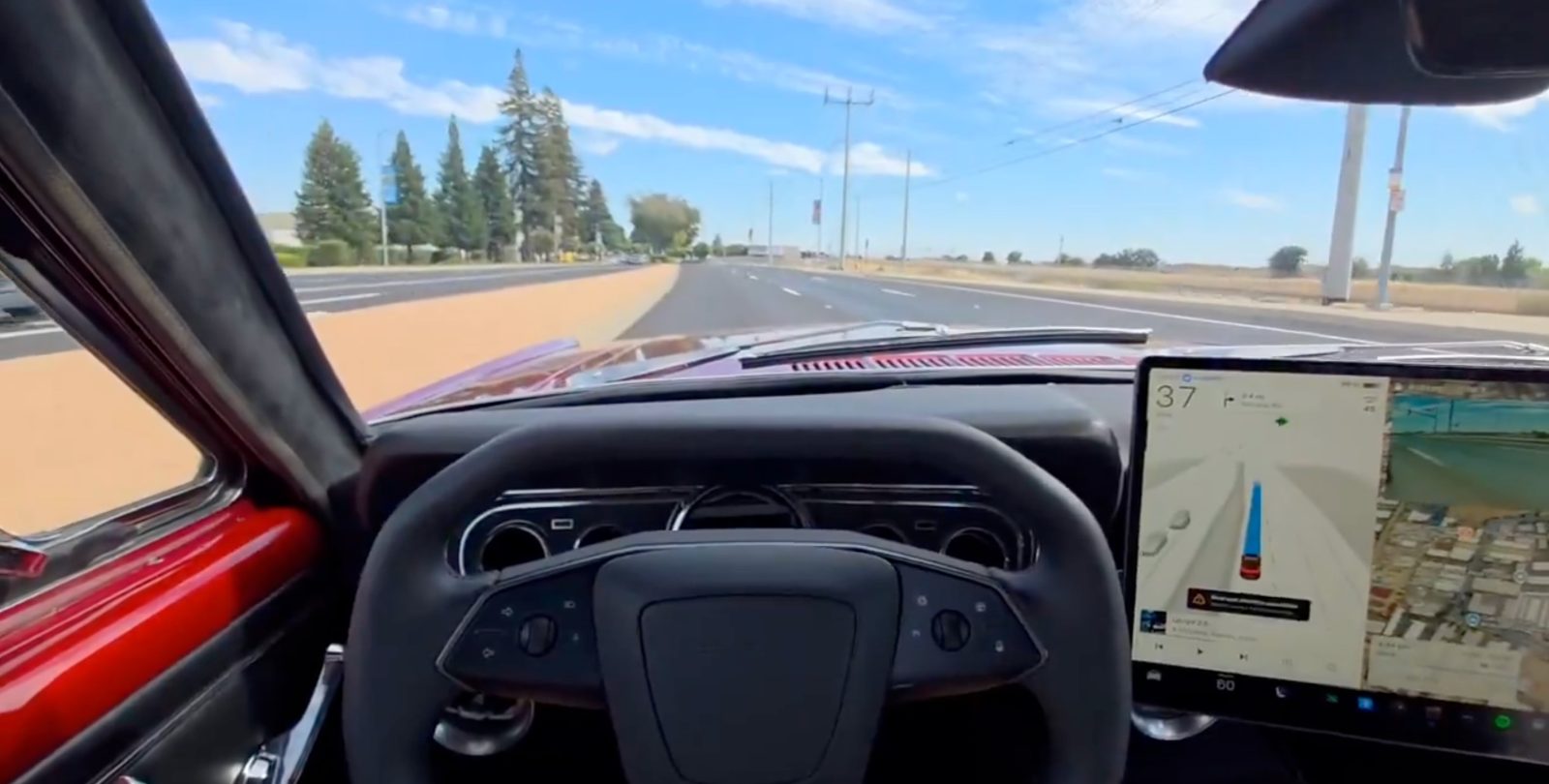
A Sacramento Tesla parts shop owner completed a radical conversion project. He transplanted a Model 3's dual-motor drivetrain, 15-inch touchscreen, and full autonomous capability into a 1966 Ford Mustang. The two-year build cost $40,000.
The result runs Tesla's Full Self-Driving (Supervised) software. This appears to be the first non-Tesla vehicle to execute FSD on public roads. The converted Mustang achieves 258 Wh/mi efficiency, matching a stock Model 3's real-world performance.
The project proves FSD's underlying architecture decouples from Tesla's hardware ecosystem. It also demonstrates that classic cars remain viable platforms for modern EV drivetrains and autonomous systems. The build required integrating Tesla's proprietary software stack with aftermarket components, a technical feat few shops attempt.
This conversion sits at the intersection of nostalgia and cutting-edge autonomy. It's not a marketing stunt. The owner operates a legitimate Tesla parts business and executed genuine engineering work. Whether other shops replicate this approach remains uncertain. Tesla's software licensing terms likely prohibit such conversions, limiting the project's broader implications for the custom EV market.