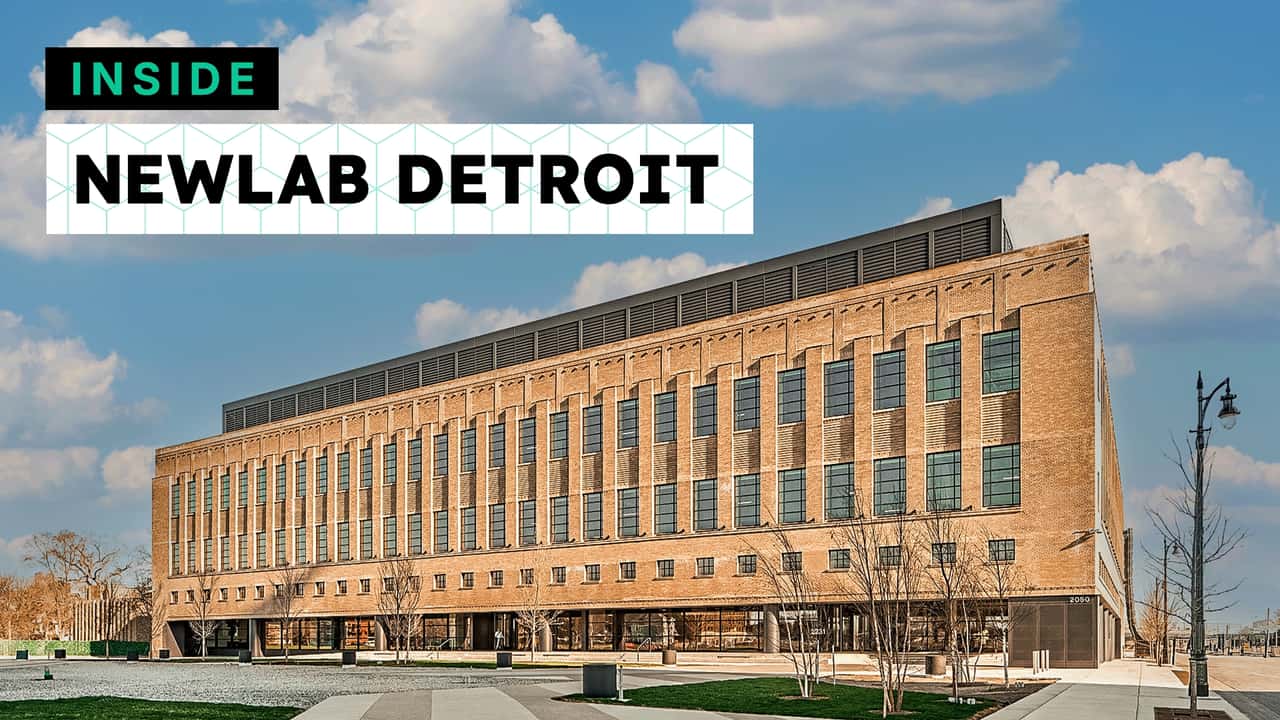
Ford invested $1 billion to convert Michigan Central, a defunct Detroit train station, into Newlab, a technology and innovation hub. The automaker transformed the 1913 Beaux-Arts building into office and collaborative workspace designed to attract startups and engineering talent focused on mobility solutions.
The project addresses a broader Ford strategy. Rather than relying solely on internal R&D, Ford leverages external innovation through partnerships with emerging companies. Newlab houses teams working on autonomous vehicles, software platforms, and next-generation vehicle technologies.
The Detroit location carries symbolic weight. Ford headquarters sits just blocks away in Dearborn. By anchoring Newlab in downtown Detroit, the company signals commitment to the city's revival while positioning itself at the center of regional tech development.
The facility spans multiple floors with mixed-use programming. Engineering labs occupy dedicated spaces. Shared areas encourage cross-pollination between Ford engineers and outside entrepreneurs. The company provides both workspace and potential investment capital for selected startups.
This represents Ford's acknowledgment of a hard truth. Legacy automakers cannot innovate at startup speed internally. Michigan Central becomes a testing ground for absorbing external talent and ideas faster than traditional corporate structures allow. Ford bets that proximity to cutting-edge thinking in a flagship building drives genuine competitive advantage in electric vehicles, autonomous driving, and software development.