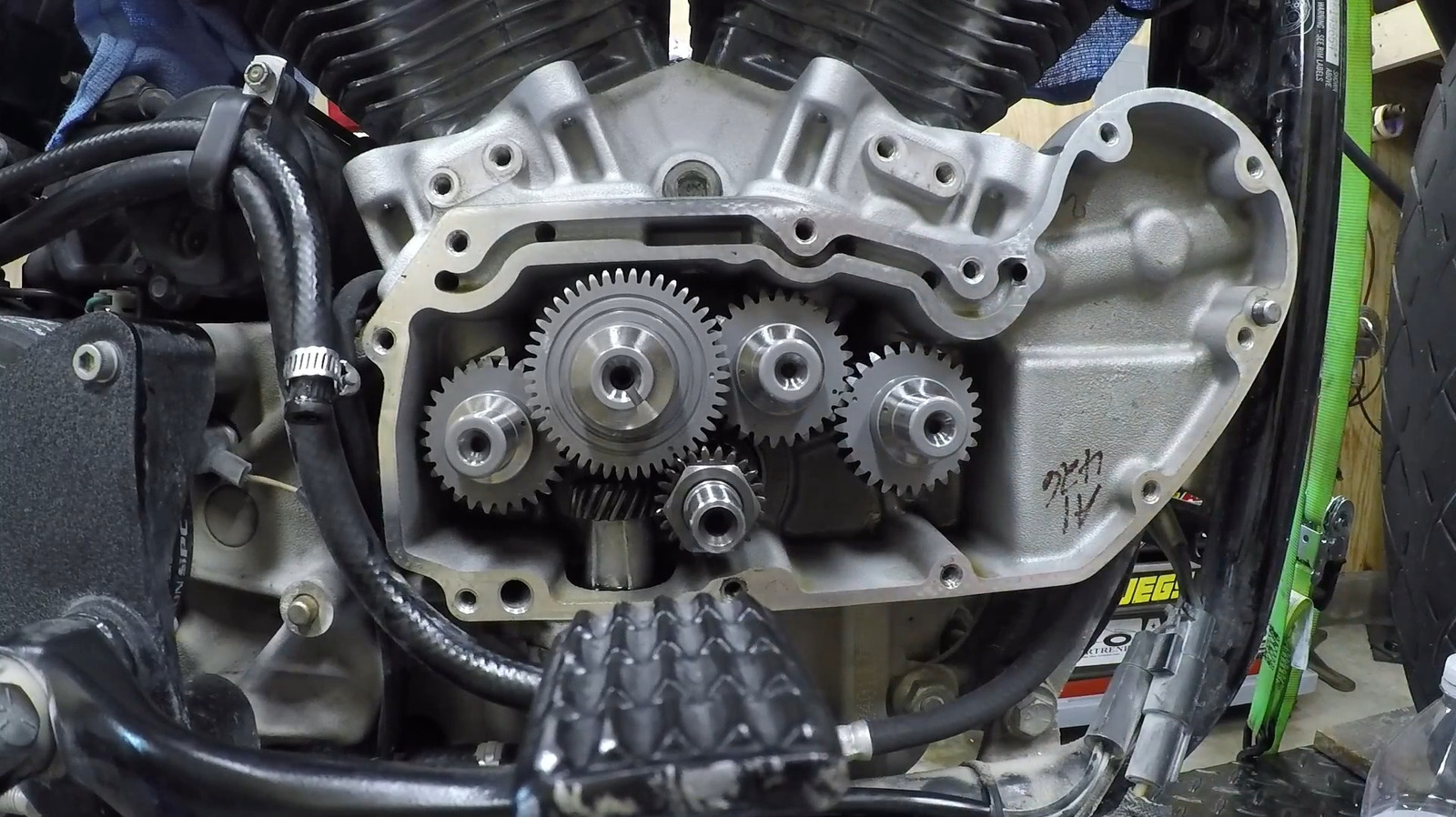
Harley-Davidson's pushrod V-twin engines employed four camshafts connected by meshed gears, a design choice rooted in engineering necessity rather than experimentation. This unconventional architecture solved a fundamental problem with pushrod valve actuation in V-twin configurations.
The dual-cam setup, with two camshafts per cylinder bank, allowed Harley to achieve precise valve timing on both intake and exhaust sides without the packaging constraints of a single overhead cam. Meshed gears synchronized rotation across both banks, ensuring reliable operation across varying engine speeds and loads.
This approach reflected Harley's commitment to displacement and torque delivery. The pushrod design kept the engine's profile compact and maintained low center of gravity, critical for cruiser handling and styling. Four camshafts delivered the mechanical sophistication needed to extract performance from large-displacement V-twins without sacrificing the iconic simplicity riders expected.
The system proved durable through decades of production. Harley abandoned pushrods entirely only when developing the water-cooled Revolution engine and subsequent models, marking a fundamental shift in engineering philosophy. The four-camshaft configuration remains a testament to intelligent mechanical design. It solved real problems rather than chasing novelty.