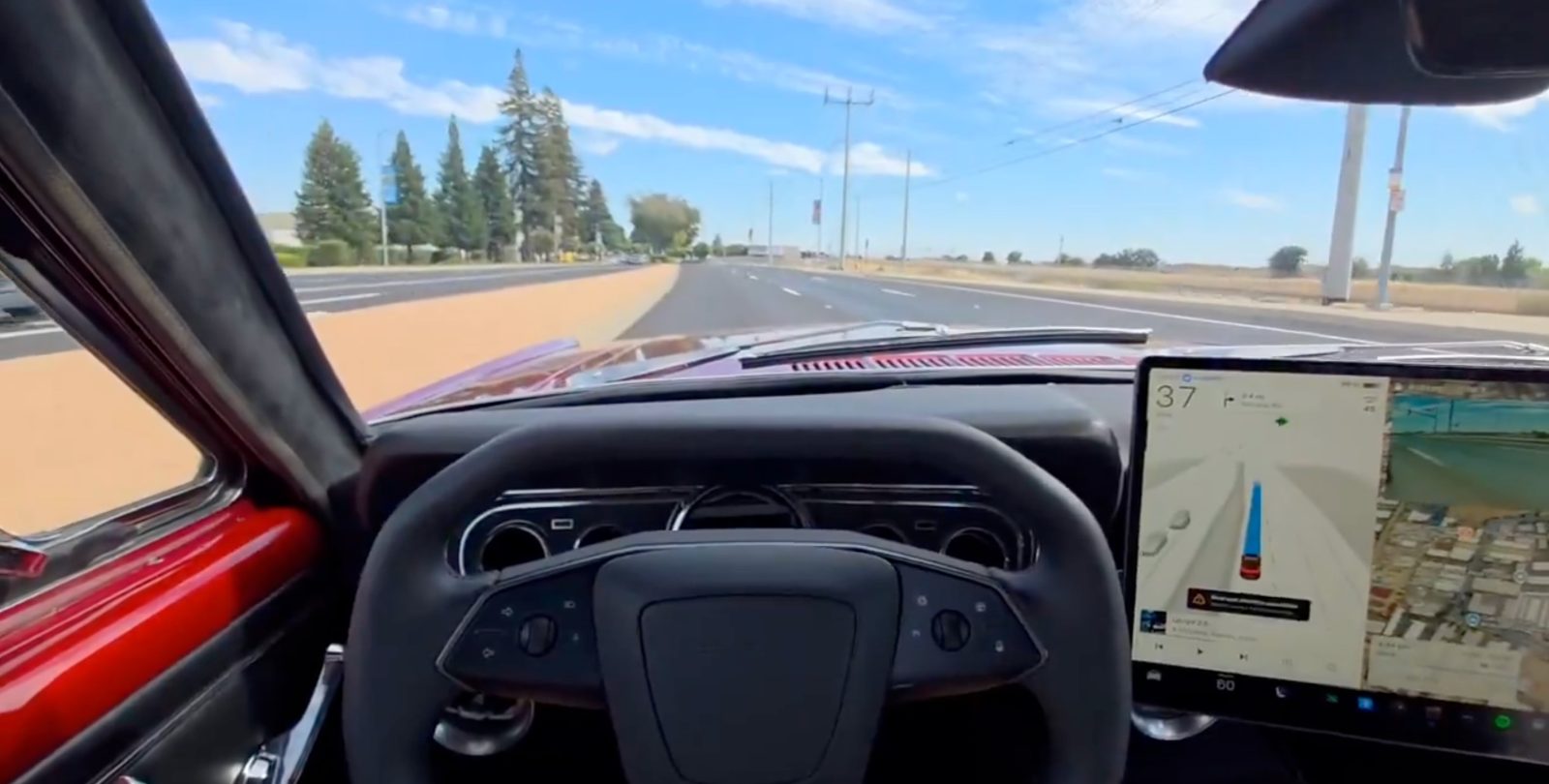
A Sacramento-based Tesla parts shop owner completed a radical 1966 Ford Mustang conversion. The build cost $40,000 and consumed two years of work. The result runs Tesla's Model 3 dual-motor drivetrain, a 15-inch touchscreen infotainment system, and most impressively, working Full Self-Driving (Supervised) capability.
This Mustang appears to be the first non-Tesla vehicle to run FSD. The conversion achieves 258 Wh/mi efficiency, matching a production Model 3's real-world performance. The builder stripped the classic American muscle car to its skeleton and integrated modern Tesla hardware throughout.
The project demonstrates both the modularity of Tesla's systems and the feasibility of retrofitting autonomous driving into older vehicles. It's a legitimate engineering feat, not vaporware or marketing gimmick. FSD actually functions on the vehicle without modification to Tesla's underlying code.
This build raises questions about aftermarket EV conversions and whether other manufacturers' autonomous systems could receive similar treatment. It also highlights how software increasingly defines a vehicle's capabilities in 2026, potentially decoupling brand identity from chassis and powertrain decisions.
The conversion proves that Tesla's architecture transcends the traditional vehicle-to-software bond that locked-in previous generations of drivers.