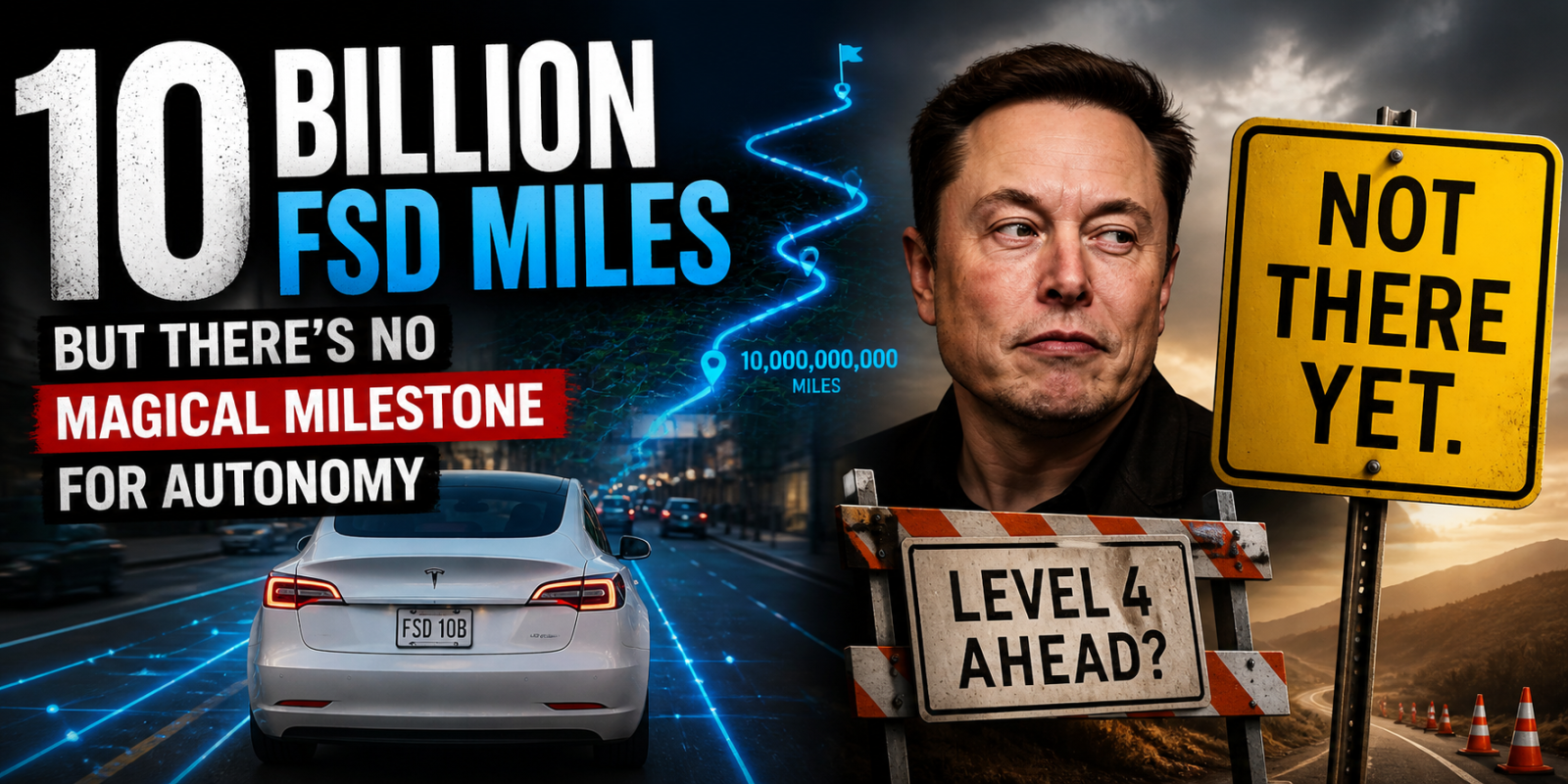
Tesla's Full Self-Driving (Supervised) system has accumulated 10 billion miles of real-world driving data, hitting a milestone CEO Elon Musk previously cited as necessary for safe unsupervised operation. The fleet nearly doubled its data collection rate to 29 million miles daily by late April, up from 14 million at the start of the year.
This acceleration reflects Tesla's aggressive FSD rollout to more vehicles, generating exponentially more training data. The numbers are genuinely impressive from an engineering perspective. However, reaching a round number does not signal imminent Level 4 autonomy deployment.
Musk's own timeline has proven unreliable before. The company faces genuine technical hurdles beyond raw mileage. Edge cases in complex urban environments, liability frameworks, and regulatory approval remain unresolved. Tesla must demonstrate consistent performance across diverse conditions, not just accumulate miles.
The data collection infrastructure works. What matters now is whether Tesla's neural networks extract meaningful patterns from those billions of miles and whether their validation testing proves the system safe enough for driverless operation without human supervision. Raw mileage counts less than what engineers learn from it.