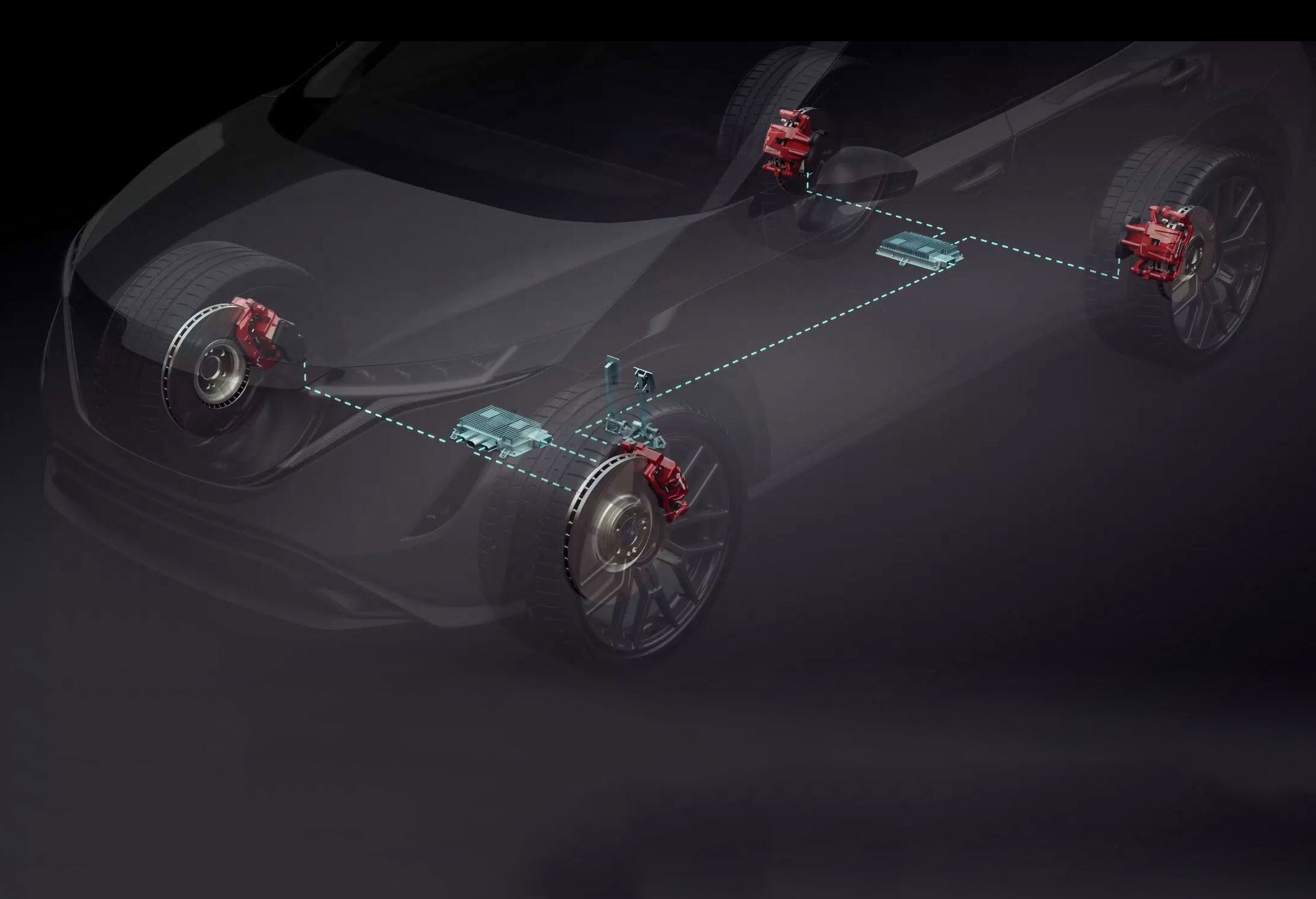
Brembo's Sensify brake-by-wire system has moved from development into series production, equipping an unnamed global automaker's vehicles as standard equipment. The Italian supplier's technology replaces traditional hydraulic brake lines with electronic controls and actuators, a shift that automakers increasingly adopt to reduce weight, improve safety response times, and enable advanced driver assistance systems.
Brake-by-wire eliminates mechanical linkage between the pedal and brake components. Instead, sensors read driver input and send signals to electronic actuators that apply braking force. The system responds in milliseconds, faster than hydraulic systems. This speed matters for autonomous driving features and collision avoidance systems that demand instantaneous brake application.
Brembo developed Sensify to address two industry demands. First, weight reduction. Removing hydraulic lines and master cylinders cuts vehicle mass, directly improving electric vehicle range. Second, packaging flexibility. Without hydraulic plumbing constraining design, engineers gain cabin space and can relocate components more freely.
The move to series production confirms brake-by-wire readiness for mass market vehicles. Development systems proved reliable in controlled environments, but production deployment tests durability under real-world conditions across millions of miles. Brembo's willingness to offer Sensify as standard, not optional, signals confidence in the technology's maturity.
The unnamed manufacturer represents a significant customer for Brembo, though the supplier guards the name. Industry sources suggest premium and mainstream brands have trialed the system. Adoption by a global player validates Brembo's engineering and likely accelerates competitor adoption. Competitors including Bosch and Continental also develop brake-by-wire systems, so this move could intensify market pressure.
Brake-by-wire remains partially regulated by automotive authorities ensuring safety standards. Multiple redundancies protect against electrical failure. The system retains mechanical backup braking in