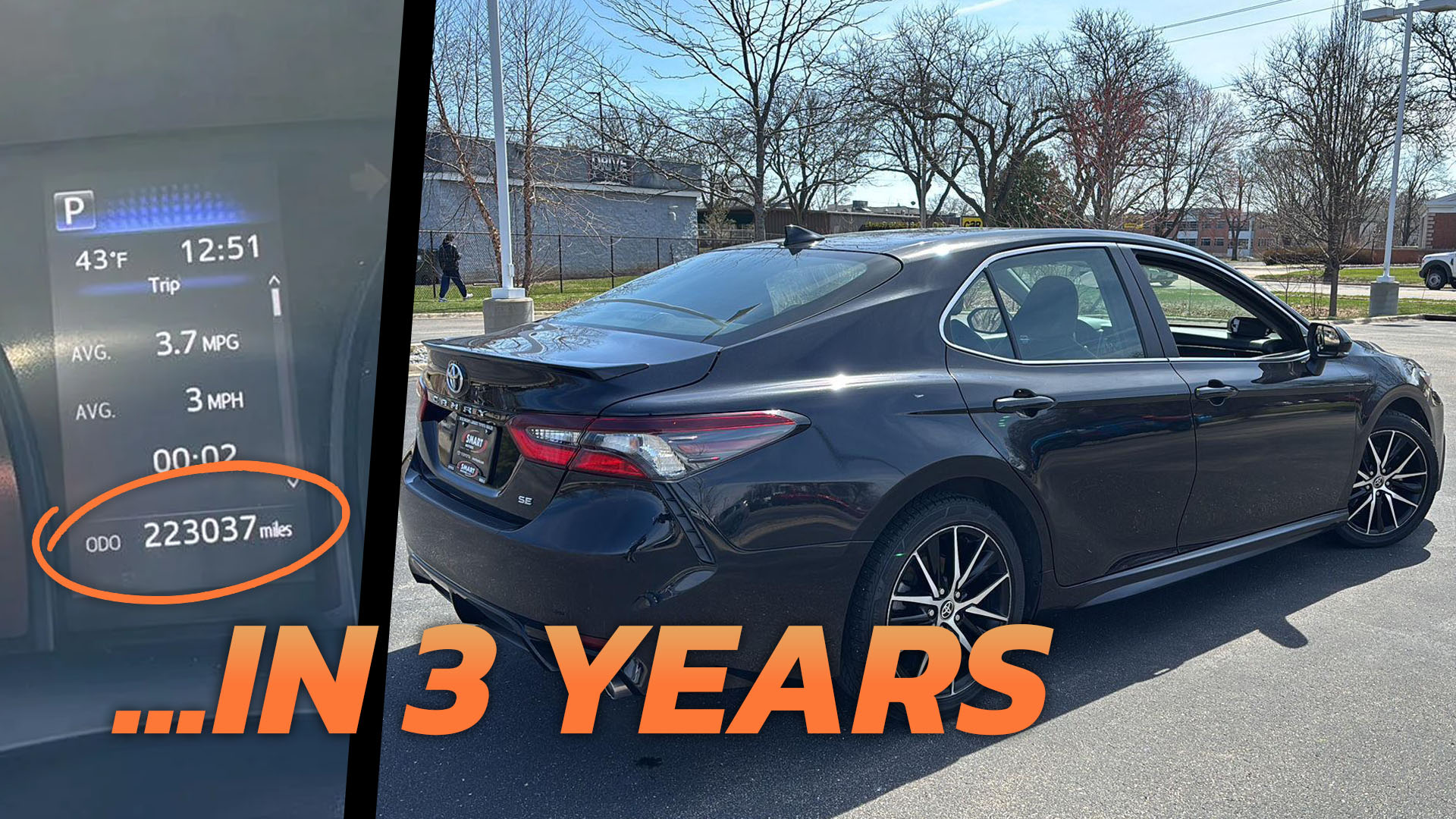
A lessee walked away from a three-year Toyota Camry lease with 223,000 miles on the odometer. That equates to over 200 miles daily or roughly 75,000 miles annually. Standard lease agreements typically cap mileage between 10,000 and 15,000 miles per year. Exceeding these limits triggers overage fees, commonly ranging from 15 to 30 cents per mile.
The math here is brutal. At 25 cents per mile, the excess mileage on this Camry would generate penalties exceeding $77,000. That figure alone exceeds the cost of a new Camry outright. Toyota's standard lease terms would have resulted in charges approaching or surpassing the vehicle's original purchase price.
This incident highlights a critical disconnect in how lessees use vehicles versus how manufacturers price lease agreements. Leasing appeals to drivers who want low monthly payments and minimal maintenance hassles. The trade-off is strict mileage restrictions. Someone driving 75,000 miles annually should finance a vehicle purchase, not lease one.
The question remains whether this lessee faced consequences or somehow avoided paying the overages. Lease companies do pursue recovery for excess mileage, though collection efforts vary. Some lessees have negotiated reduced penalties or disputed charges based on wear-and-tear conditions, but dodging 150,000 miles of overage fees would represent an extraordinary lapse in enforcement.
This case serves as a cautionary tale for lease shoppers. Anyone commuting long distances, working in transportation services, or planning substantial annual travel should calculate realistic mileage needs before signing. The Camry itself is reliable and practical, but the lease structure completely fails drivers with high annual mileage. Ford, General Motors, and Honda offer similar lease programs with identical mileage penalties.
For high-mile