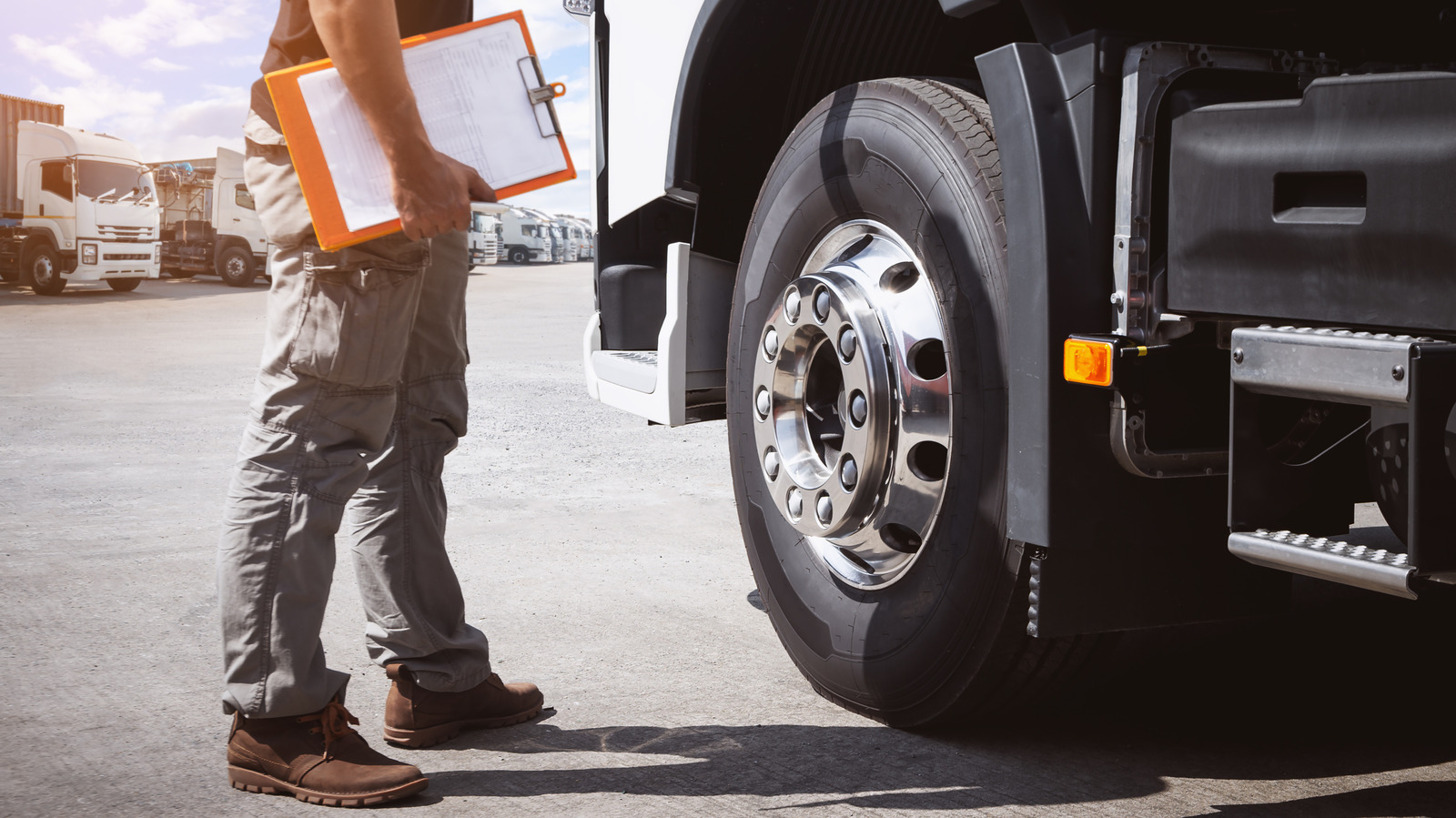
Semi truck tires and passenger car tires represent fundamentally different engineering solutions built for opposite working conditions.
Semi tires operate under extreme loads. An 18-wheeler distributes 80,000 pounds across ten drive wheels, meaning each tire carries roughly 8,000 pounds. A passenger car tire handles 1,000 to 1,500 pounds per wheel. This load differential drives every design choice.
Semi tires use harder rubber compounds that resist heat buildup during sustained highway miles. Passenger tires prioritize grip and comfort for daily driving with frequent stops and starts. The compounds aren't interchangeable. Semi rubber would feel wooden and unsafe on a sedan at city speeds. Car rubber would overheat and fail within hours on a loaded trailer.
Construction differs too. Semi tires feature reinforced sidewalls and multiple steel belt layers to contain deflection under load. Passenger tires use fewer plies and softer sidewalls for ride quality. The tread patterns reflect their jobs. Semi tires have straighter grooves optimized for straight-line stability on interstates. Car tires have complex patterns designed for cornering grip and water evacuation during aggressive driving.
Durability expectations separate them further. A semi tire rated for 500,000 miles represents normal service life. A passenger car tire delivering 60,000 miles is considered excellent. Semi operators run tires hard and hot constantly. They need predictable, linear wear and minimal blowout risk.
Size differences are obvious but not trivial. Common semi sizes reach 11R22.5 inches in diameter. That's nearly twice the footprint of a typical 225/60R16 passenger tire. The larger volume dissipates heat better across extended operations.
Retreading technology applies almost exclusively to semi tires. The economics work at trucking scales. Passenger tire retreading remains rare because