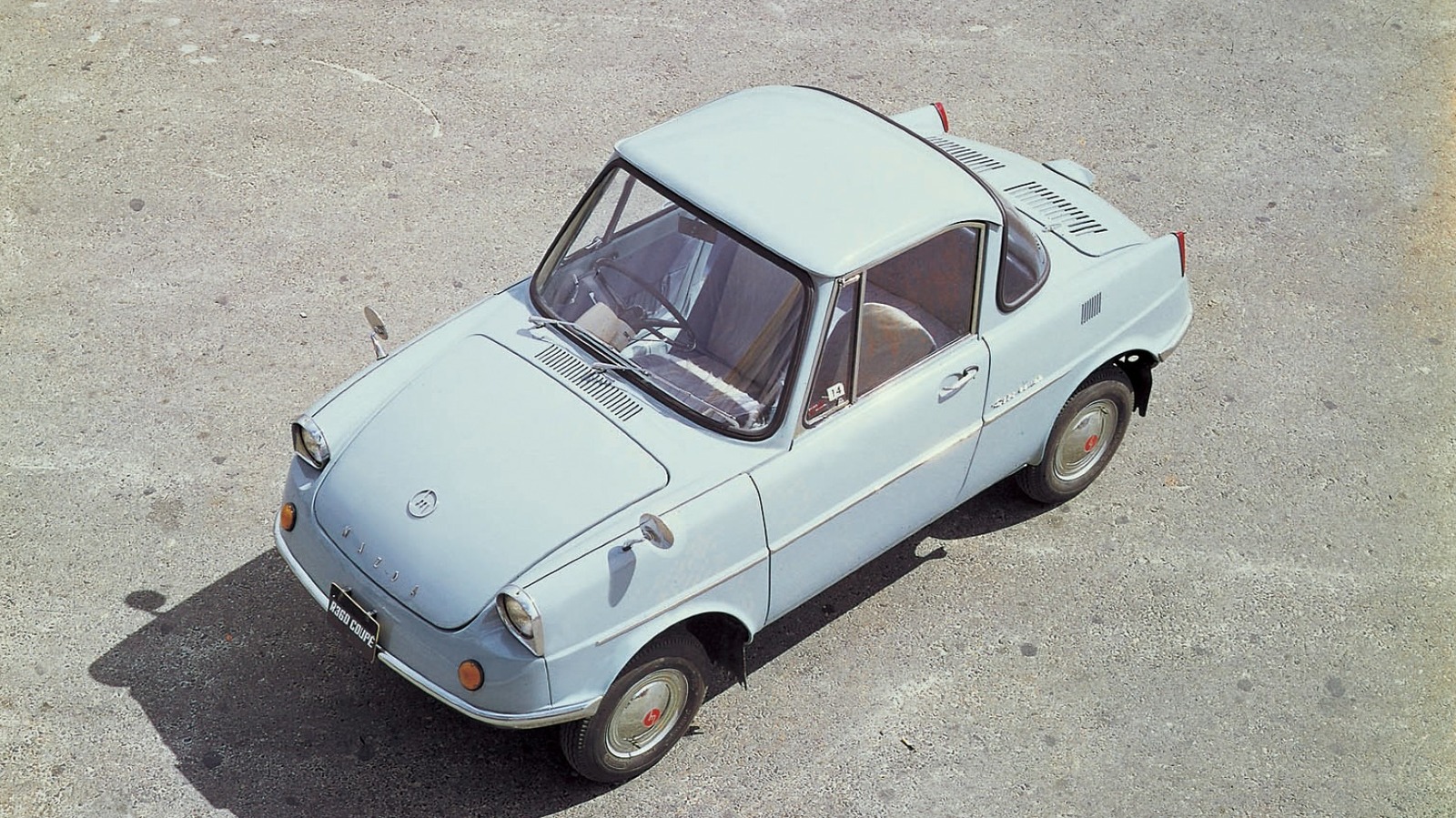
# The Smallest Production Cars Ever Built Make Modern Compacts Look Huge
The automotive market has shifted dramatically toward SUVs and crossovers, but history reveals a fascinating catalog of genuinely tiny vehicles that dwarf modern compact cars in minimalism.
Manufacturers once built cars for urban commuting and fuel economy with aggressive downsizing. The Peel P50, produced in the Isle of Man from 1962 to 1968, stands as the smallest production car ever made. It measured just 54 inches long, seated one person, and weighed 130 pounds. Top speed reached 38 mph. The Isetta, built by BMW and others under license, offered only slightly more space with a 4-foot-4-inch length and a single front-opening door that dominated the vehicle's design.
Japan's Suzuki and Daihatsu produced pocket-sized machines for dense cities. The original Kei-class vehicles, limited to 660cc engines and specific dimensions by government regulation, created a market segment that still thrives today. Models like the early Daihatsu Mira and Suzuki Wagon R packed surprising practicality into frames under 11 feet long.
The Messerschmitt Kabinenroller, a three-wheeled microcar from 1950s Germany, borrowed aerospace engineering principles. It measured just 9.5 feet long and used motorcycle-derived engines. Italy's Fiat 500 and Autobianchi A112 continued this tradition with charming simplicity and actual usability.
Today's market ignores this segment entirely. The smallest cars available, like the Hyundai i10 or Chevy Spark, exceed 12 feet in length. American and European regulations, safety standards, and consumer preferences have eliminated the true microcar.
These vehicles