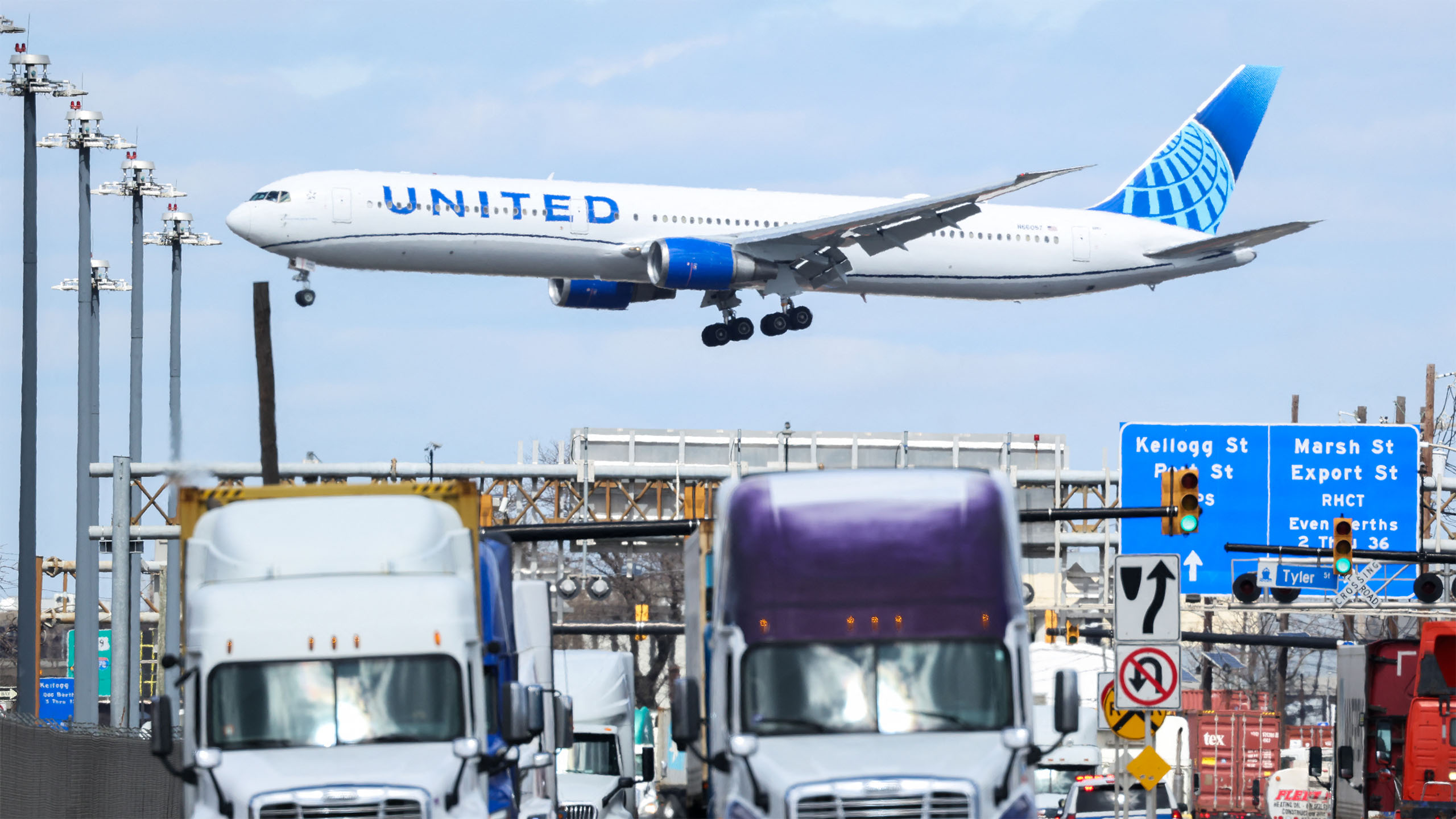
A United Boeing 767 struck a streetlight and clipped the roof of a semi-truck carrying bread on the New Jersey Turnpike during what appears to have been an extremely low landing approach. The truck driver sustained only minor injuries in the incident.
The collision occurred as the aircraft descended toward Newark Airport, one of the busiest air hubs in the Northeast. The 767, a wide-body jet that typically carries 180 to 300 passengers depending on configuration, came dangerously close to the roadway during its final approach. Hitting both ground infrastructure and a moving vehicle at low altitude represents a serious safety breach, though fortunately the outcome avoided catastrophe.
The semi-truck driver's minor injuries mark the luckiest outcome from what could have been a disaster. A Boeing 767 fully loaded with fuel and cargo weighs roughly 450,000 pounds. Direct contact with a commercial truck at low speed and altitude could have resulted in loss of aircraft control, runway incursion, or worse. The New Jersey Turnpike, a major transportation corridor, sees constant traffic that creates additional hazard during approaches to Newark.
The Federal Aviation Administration and National Transportation Safety Board will investigate the incident's cause. Possible factors include approach vector errors, instrument malfunction, pilot confusion, or air traffic control miscommunication. Newark Airport operates complex arrival procedures with multiple approach corridors that cross densely populated areas and heavily trafficked highways.
This incident highlights ongoing concerns about flight paths near major roadways. Newark Airport sits relatively close to the New Jersey Turnpike and other major routes, creating unavoidable overlap between airspace and ground traffic zones. Modern approach systems include terrain awareness and warning systems, ground proximity warning systems, and traffic collision avoidance systems that should trigger alerts during abnormal descent rates.
United will cooperate fully with federal investigators. The 767 remained operational enough to continue to