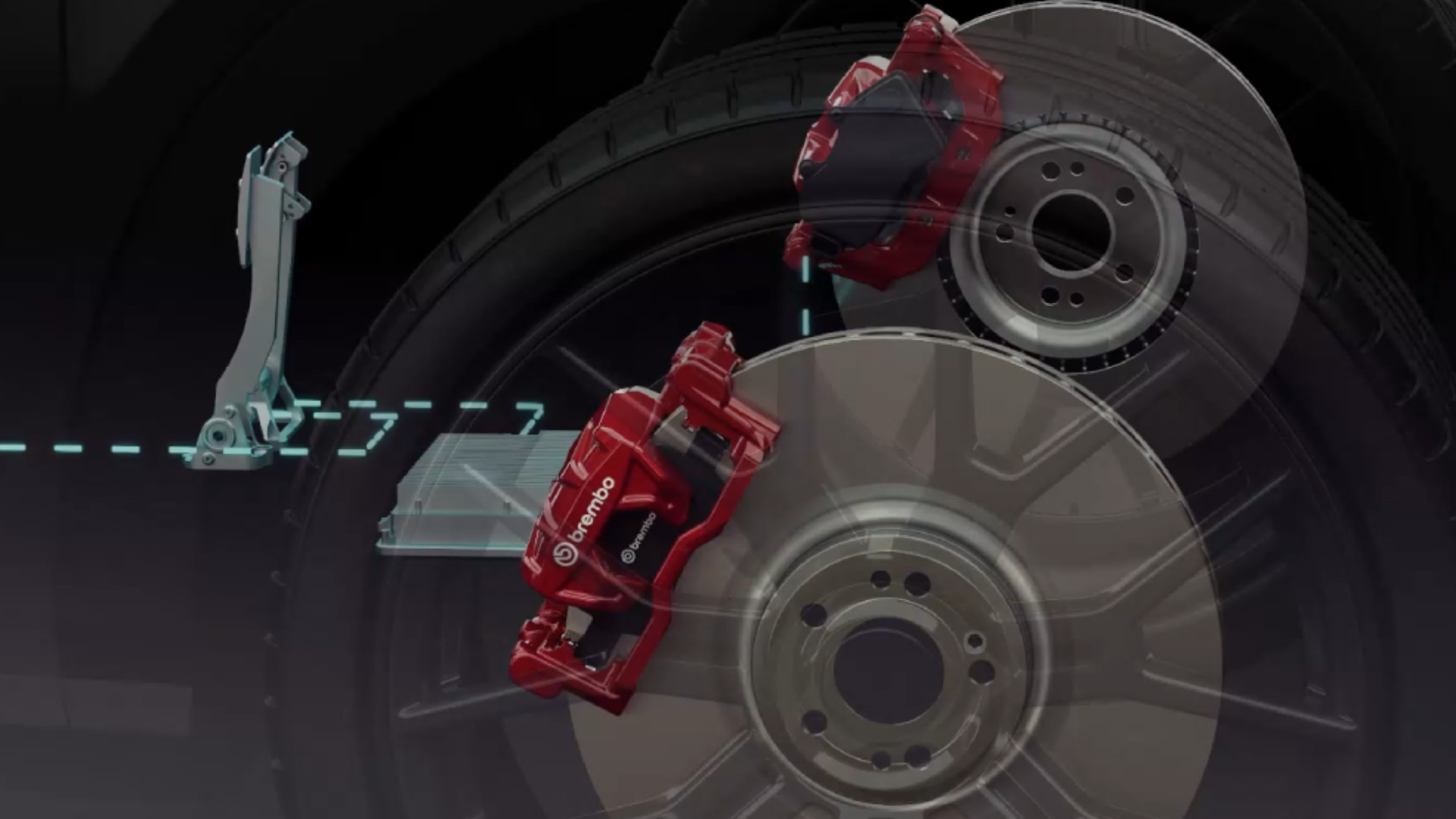
Brembo's Sensify brake system eliminates hydraulic fluid entirely, replacing it with electromechanical actuators that respond to driver input through electronic signals. The Italian brake specialist confirmed the technology will debut in a production vehicle, marking the first time a modern car reaches customers without traditional hydraulic brakes.
Sensify operates through individual wheel brake actuators controlled electronically, removing the need for brake fluid, master cylinders, and complex hydraulic line routing. The system offers tangible advantages. It reduces unsprung weight, simplifies packaging constraints that plague modern platform design, and enables precise braking modulation across all four wheels simultaneously. Integration with regenerative braking on electric vehicles becomes cleaner without hydraulic components competing for space and control logic.
The shift addresses a fundamental engineering challenge plaguing EVs and modern platforms. Hydraulic systems require substantial real estate, add complexity to brake distribution logic, and introduce failure points. Brembo's electromechanical approach aligns with how electric powertrains operate natively, using software to orchestrate stopping power rather than physics-dependent pressure distribution.
This development arrives as manufacturers hunt for weight savings and packaging flexibility. Every kilogram matters for EV range and performance. Eliminating hydraulic components contributes meaningfully to overall mass reduction while freeing up interior and structural space that engineers currently dedicate to brake lines and reservoirs.
Brembo hasn't disclosed which automaker will first deploy Sensify, though premium EV makers represent the likeliest candidates given their technology budgets and willingness to adopt unproven systems. Cost remains the unresolved question. Electromechanical brakes demand sophisticated electronics and redundancy architectures to meet safety standards. Initial production examples will carry premium pricing before economies of scale arrive.
The industry watches closely. Hydraulic brakes have dominated automotive engineering for nearly a century.