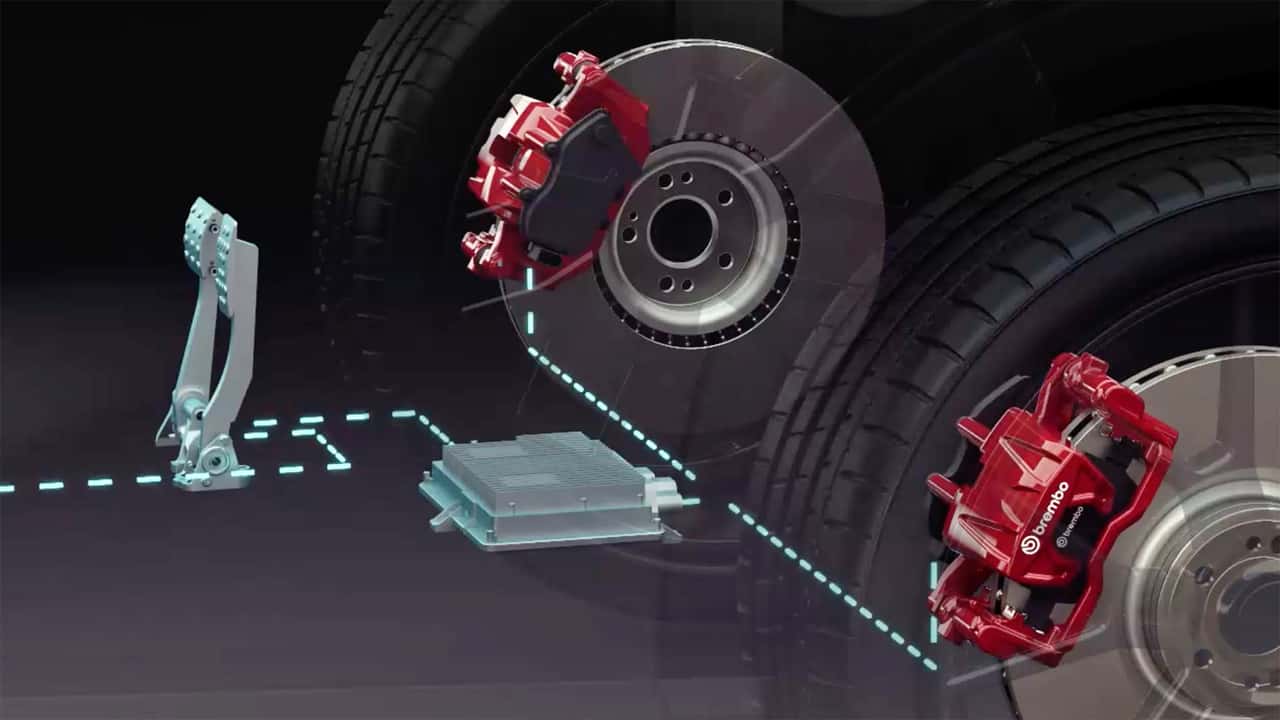
Brembo introduced a brake-by-wire system that eliminates hydraulic fluid entirely, marking a fundamental shift in how vehicles stop. The Italian braking specialist engineered an electromechanical setup that replaces traditional hydraulic lines and fluid pressure with electronic actuators and redundant safety controls.
This system debuts in a production vehicle, though Brembo hasn't disclosed which manufacturer or model launches it first. The technology appeals to EV makers hunting for packaging efficiency and weight reduction. Hydraulic brake systems require fluid reservoirs, lines, and master cylinders that consume valuable underbody space. Brake-by-wire eliminates these components, freeing room for battery packs or cargo.
The engineering challenge lies in safety redundancy. Hydraulic brakes fail gracefully when a line ruptures. Brake-by-wire systems require multiple independent electronic circuits and fail-safes to meet regulatory standards. Brembo built in redundant actuation channels and backup power supplies to prevent total braking loss if one system fails.
Performance gains matter too. Electronic actuation responds faster than hydraulic pressure propagation, enabling tighter integration with stability and regenerative braking systems on EVs. The system allows fine-grained brake modulation that hydraulics can't match, improving efficiency and control.
Adoption will accelerate as automakers transition to EV platforms designed without mechanical brake components from the start. Porsche, BMW, and other premium manufacturers have tested brake-by-wire on recent models. Once certification and field reliability data accumulate, the technology filters down to mainstream vehicles.
The drawback remains initial cost. Brake-by-wire systems cost more than proven hydraulic setups. Economies of scale will shrink that premium as production volumes rise. For now, Brembo's innovation sits at the premium end of the market, reserved for brands charging enough to justify