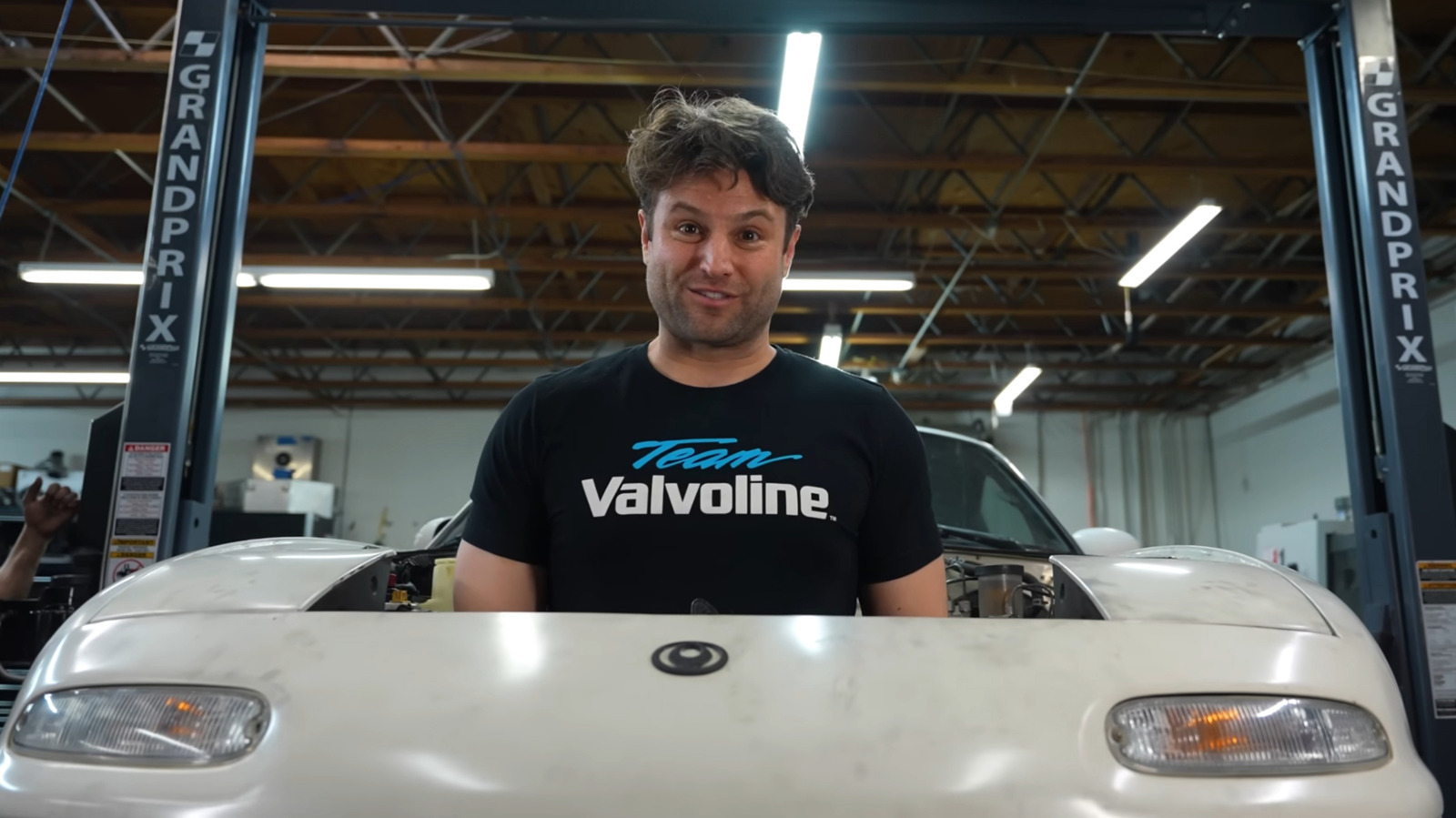
Rob Dahm strips weight obsessively from his single-rotor turbocharged Miata, treating mass as the primary enemy in lightweight performance. The rotary engine itself weighs less than a traditional four-cylinder, but Dahm's build philosophy demands cutting every unnecessary pound from chassis, interior, and drivetrain.
His approach centers on a fundamental principle: lighter cars need less power to deliver thrilling acceleration and sharper handling. The single-rotor turbocharged setup produces modest horsepower compared to piston engines of similar displacement, yet the reduced rotating mass and compact engine packaging allow for extreme weight reduction that piston conversions cannot match.
Dahm addresses the vibration challenge that plagues rotary engines through careful engine mounting, balanced rotating components, and chassis stiffening. Traditional Miata owners worry about drivability. Dahm instead focuses on whether rotary smoothness can improve with meticulous engineering. His track results suggest the answer is yes.
The single-rotor turbo configuration creates a different power delivery character than naturally aspirated rotaries. Boost arrives suddenly after slight lag, then sustains hard through mid-range. This on-off nature suits a lightweight car designed for autocross and road course work rather than highway cruising.
Dahm's build represents a contrarian approach to Miata modification. While the platform already sits at 2,400 pounds stock, most tuners add power and weight through upgrades. Dahm subtracts. His stripped, weight-optimized rotary Miata weighs less than 2,000 pounds, creating a power-to-weight ratio that competes with modern sports cars costing three times the price.
The project answers whether rotaries belong in modern enthusiast builds. Dahm proves they do, but only when builders commit fully to the lightweight ethos that makes the engine's