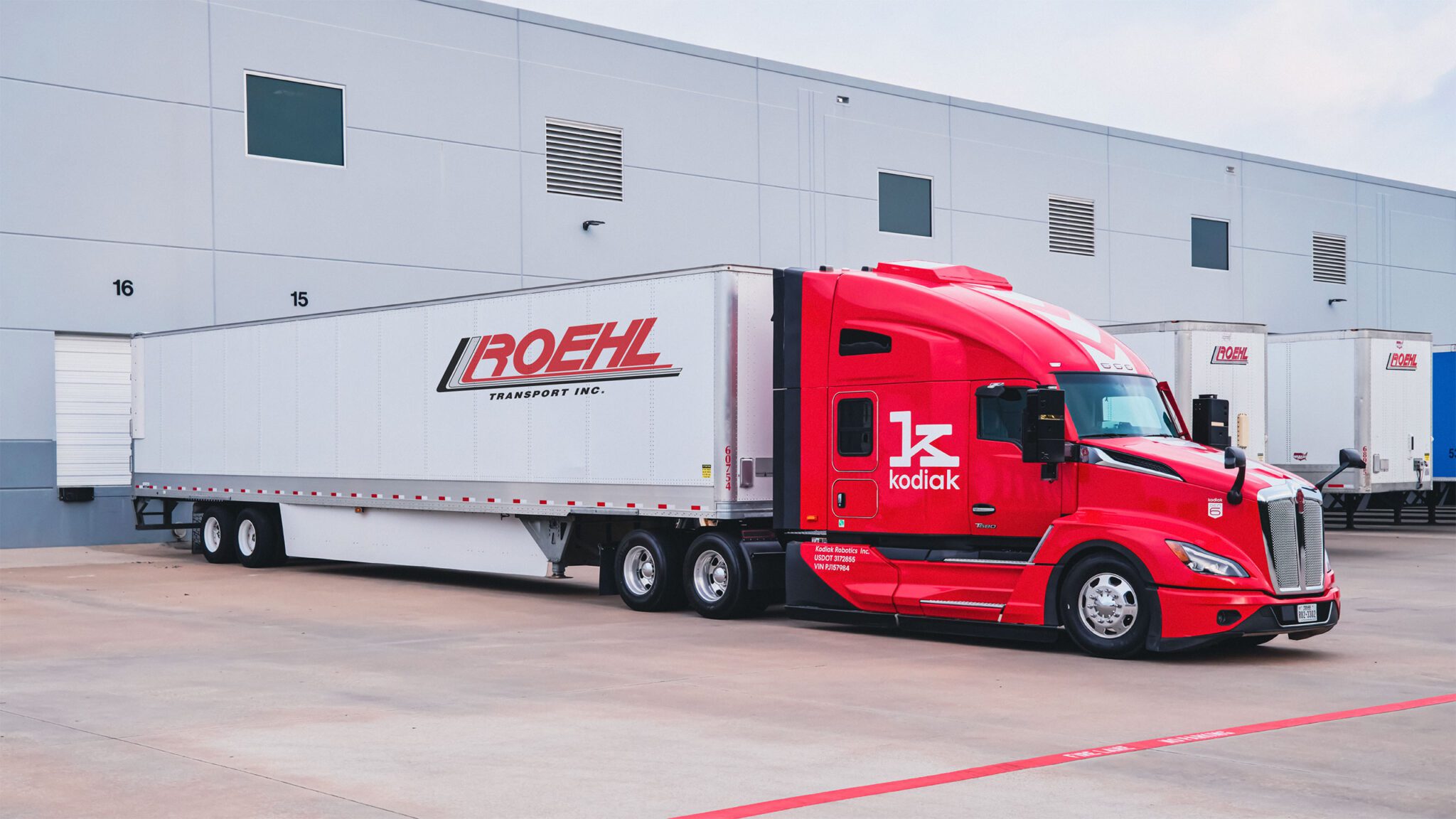
Kodiak AI has moved beyond testing into revenue-generating operations. The autonomous trucking company now runs four roundtrips weekly between Dallas and Houston for Roehl Transport, one of North America's largest carriers. This deployment marks a shift from pilot programs to active freight hauling on a real commercial route.
The Dallas-Houston corridor represents a logical first market for autonomous trucking. The 240-mile route sits entirely within Texas, avoiding interstate complexity and multi-state regulatory headaches. Roehl Transport operates over 10,000 trucks, giving Kodiak access to substantial freight volumes and operational expertise in exchange for proving autonomous reliability at scale.
Kodiak's play fits a crowded field. Aurora, Waymo, and TuSimple all chase the same autonomous trucking prize. But Kodiak has built relationships with established carriers rather than attempting vertical integration. This strategy reduces capital burn and sidesteps the regulatory gauntlet of becoming a freight operator yourself.
The Dallas-Houston run offers Kodiak real data on fuel efficiency, maintenance costs, and uptime against human drivers. Those metrics matter far more than impressive demo videos. Trucking operates on razor-thin margins. Autonomous systems must prove they save money, not just function without collisions.
What remains unproven: autonomous performance in weather, at loading docks, during equipment failures, and across multiple states. Texas routes avoid winter conditions and interstate tolling systems. Kodiak will eventually need to demonstrate competence in rain, snow, and the regulatory maze of crossing state lines.
Roehl gets something valuable here too. Labor costs devour trucking profit margins. If Kodiak's trucks prove reliable and cheaper than human drivers, Roehl gains a massive competitive advantage. The carrier maintains control of assets and customer relationships while reducing the expense that chokes the industry.
This arrangement reflects how autonomous trucking