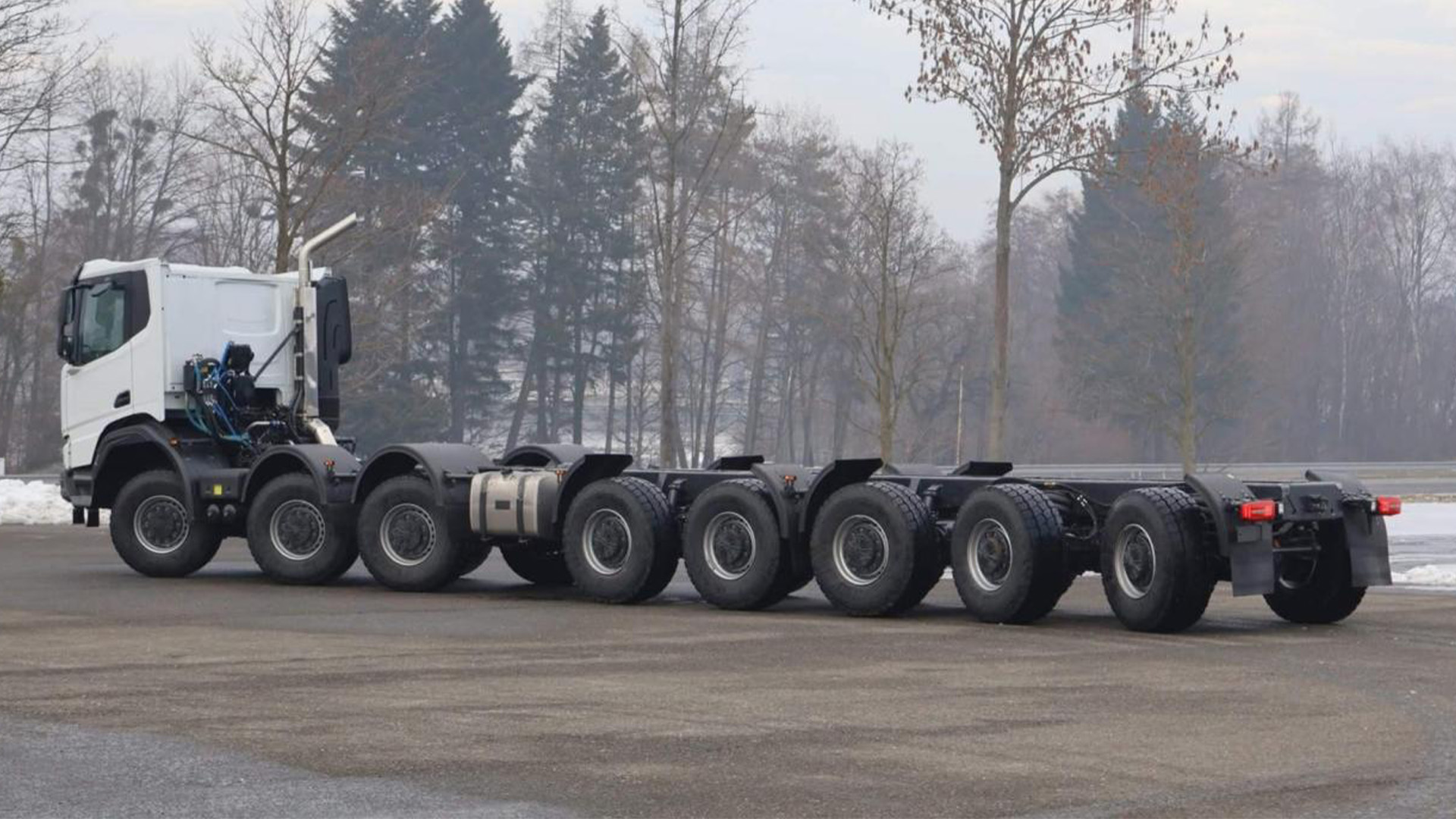
Czech manufacturer Tatra has unveiled an extreme all-terrain semi-truck featuring 16 wheels and an articulated, centipede-like design that pushes heavy-vehicle engineering to its limits. The truck stretches dramatically with multiple articulation points, allowing it to navigate terrain that conventional rigid-frame semi-trucks cannot access.
The 16-wheel configuration distributes weight across an exceptionally long wheelbase, enabling the vehicle to traverse soft ground, mud, and uneven surfaces without sinking. This design philosophy contrasts sharply with traditional semi-trucks, which sacrifice maneuverability for payload capacity on established roads. Tatra's approach targets specialized applications: mining operations, disaster relief, military logistics, and extreme off-road construction work where roads don't exist.
The articulated structure works differently than standard tractor-trailers. Rather than a single kingpin connection, Tatra's design allows multiple segments to flex independently, mimicking how a centipede's body segments move. This flexibility keeps wheels in contact with the ground across severe topography, improving traction and stability on slopes and soft terrain that would immobilize conventional trucks.
Tatra specializes in this category of extreme vehicles. The Czech company has built a reputation manufacturing trucks designed for military deployment, remote mining, and adventure expeditions. Their vehicles frequently appear in rallies like the Dakar Rally, where conventional commercial trucks fail entirely.
The centipede truck represents an engineering solution to a genuine problem: how do you move massive loads across landscapes without infrastructure. While highway trucks prioritize aerodynamics and fuel efficiency on paved surfaces, this Tatra sacrifices those advantages completely. Every design element serves one purpose. get heavy things across impossible terrain.
The visual result unsettles viewers because it violates our expectations for trucks. Sixteen wheels arranged in that configuration feel organic rather than mechanical, which explains the centipede comparison