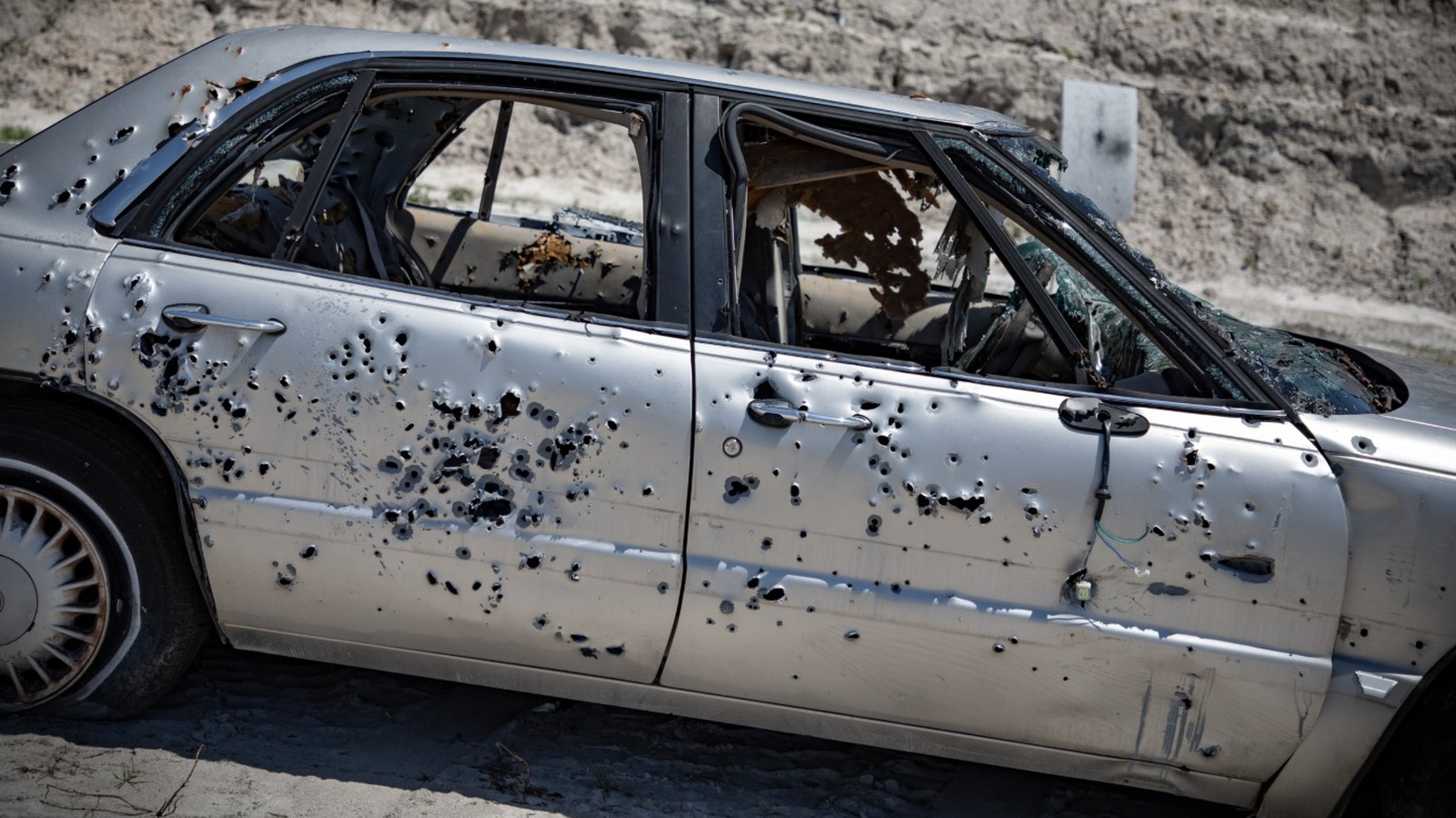
Shooting a car to disable it requires far more firepower than Hollywood suggests. Vehicles have redundancy built into critical systems that protect them from random gunfire.
Bullets struggle to stop modern cars because engines, transmissions, and fuel systems sit behind substantial metal, plastic, and composite shielding. A handgun round typically cannot penetrate engine blocks or transmission cases. Even rifle rounds often fail to cause catastrophic damage unless they hit specific components at precise angles.
The fuel tank represents one vulnerable point, but rupturing it rarely triggers the cinematic explosions seen on screen. Gasoline requires ignition to burn explosively. A punctured tank leaks fuel but doesn't automatically ignite. Shooting the radiator or coolant lines causes overheating, which disables a vehicle through mechanical failure rather than immediate impact. This takes time.
Hydraulic brake lines offer another attack point. Destroying them removes braking capability, but modern cars carry redundant brake circuits. A shooter would need to hit both primary and secondary systems to fully disable brakes. Anti-lock braking systems add further complexity.
Tire destruction works reliably. Bullets can shred tires, forcing a vehicle to stop, but this requires multiple hits and assumes the driver doesn't control the vehicle well enough to reach safety. Modern run-flat tires on luxury and military vehicles further complicate this approach.
The electrical system presents genuine vulnerability. Destroying the battery, alternator, or wiring harness can strand a vehicle, but these components sit protected beneath hoods and dashboards. Hitting them demands accuracy.
Real-world vehicle immobilization requires understanding automotive engineering, not movie logic. Law enforcement and military tactics rely on precision targeting of specific systems or using specialized ammunition designed for this purpose. Random gunfire creates noise and danger but rarely achieves the dramatic results audiences expect.
THE BOTTOM LINE: Hollywood's exploding cars