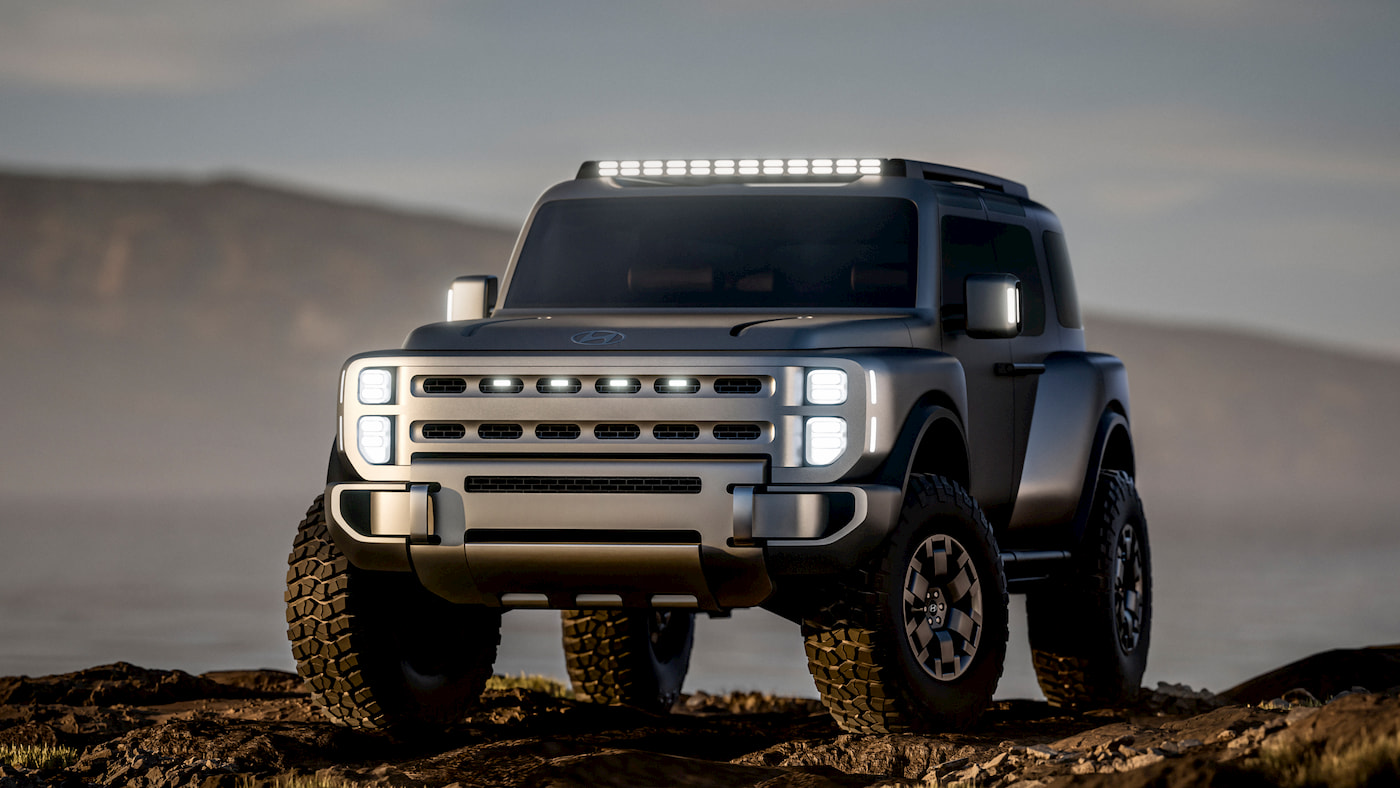
Hyundai filed a patent revealing its battery architecture for upcoming body-on-frame electric vehicles, signaling the automaker's strategy to compete in the truck and large SUV segments where traditional platforms dominate. The patent shows how Hyundai plans to integrate battery packs into a ladder-frame chassis, a structural approach that separates the body from the underlying frame. This design differs from unibody construction that most EVs currently use, where batteries sit integrated into a single structural shell.
The Boulder Concept SUV represents Hyundai's vision for this segment. The company is developing a midsize pickup truck as its first body-on-frame EV, directly challenging Ford's F-150 Lightning and Chevrolet's Silverado EV. Body-on-frame construction offers advantages for trucks and work vehicles. it provides better ground clearance, towing capacity, and payload ratings. However, it presents engineering challenges for battery placement that unibody designs avoid.
Hyundai's patent approach appears to mount battery modules alongside or beneath the frame rails, keeping the structural integrity of the ladder frame while distributing weight efficiently. This setup avoids cramping battery space in the cargo bed or passenger cabin, a concern for traditional truck buyers who prioritize functionality.
The filing matters because Hyundai enters a crowded EV truck market late. General Motors, Ford, and Rivian already have production or near-production vehicles. Hyundai's expertise with modular EV platforms like E-GMP gives it advantages, but a new frame architecture requires new manufacturing tooling and validation.
Battery placement in body-on-frame trucks remains unsolved at scale. The patent suggests Hyundai solved this through lateral integration along the frame rather than central battery packs. If successful, this approach could define how legacy automakers engineer large EV trucks without completely reimagining their production