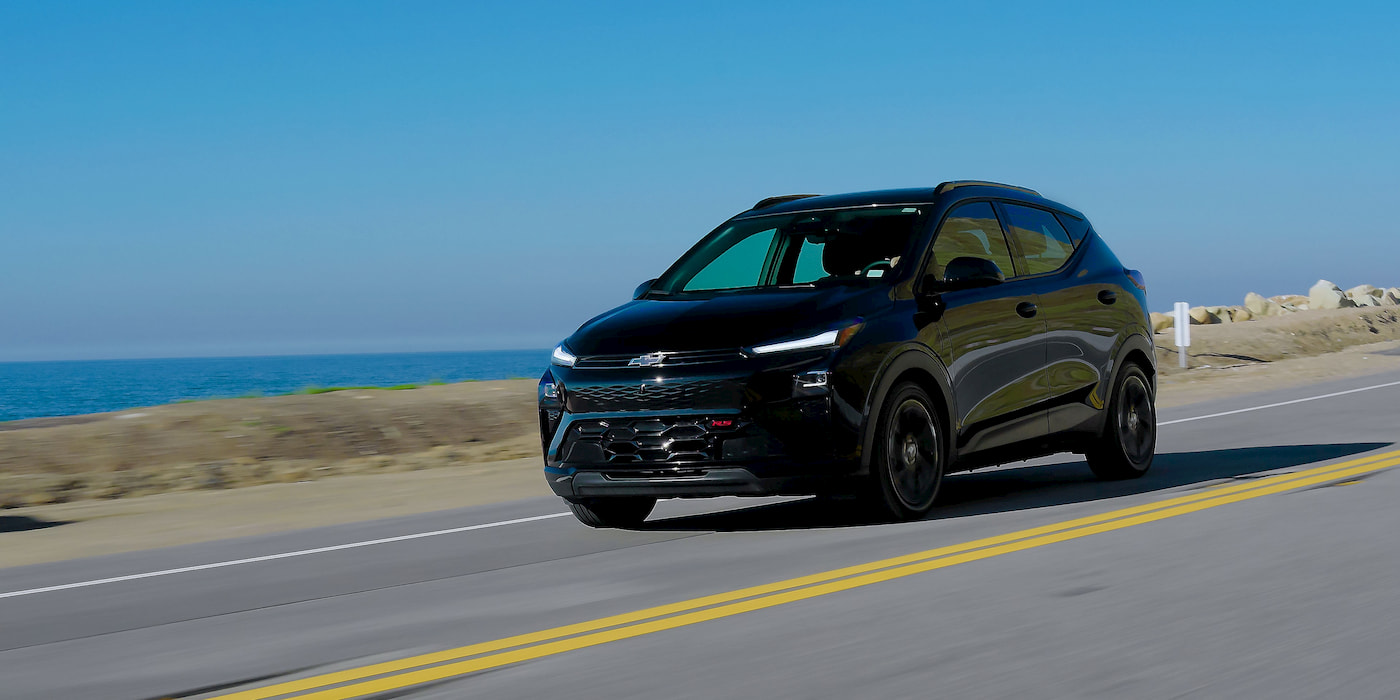
The 2027 Chevy Bolt EV achieves nearly 300 miles of real-world range on a single charge, exceeding its EPA rating by roughly 30 miles. General Motors prices the model under $30,000, positioning it as the most accessible long-range EV on the market.
Real-world testing demonstrates the Bolt's efficiency advantage over competitors. Drivers consistently see better mileage than EPA estimates suggest, a rarity in the EV space where real-world results typically fall short of official numbers. This performance gap reflects GM's engineering focus on highway efficiency and thermal management in the redesigned platform.
The sub-$30,000 price point reshapes the EV landscape. Tesla's Model 3 starts above $40,000. Nissan's Leaf, historically the affordability leader, maxes out around 150 miles of range at comparable pricing. The Bolt undercuts both on cost while doubling the Leaf's capability. Volkswagen's ID.4 Standard enters the market near $38,000. Hyundai's Ioniq 6 starts at $42,000. None match the Bolt's combination of range, price, and practicality.
The vehicle targets mainstream buyers skeptical about EV adoption due to range anxiety and sticker shock. A $30,000 electric car with nearly 300-mile range eliminates both objections. Federal tax credits reduce the effective cost to roughly $22,500 for qualifying buyers, making it cheaper than comparable gas-powered sedans when accounting for fuel and maintenance savings.
GM's Ultium platform underpins the redesigned Bolt, offering scalability across the brand's EV portfolio. This architecture cuts manufacturing complexity and component costs compared to earlier EV generations. The company benefits from cumulative production volume as the platform extends to Equinox