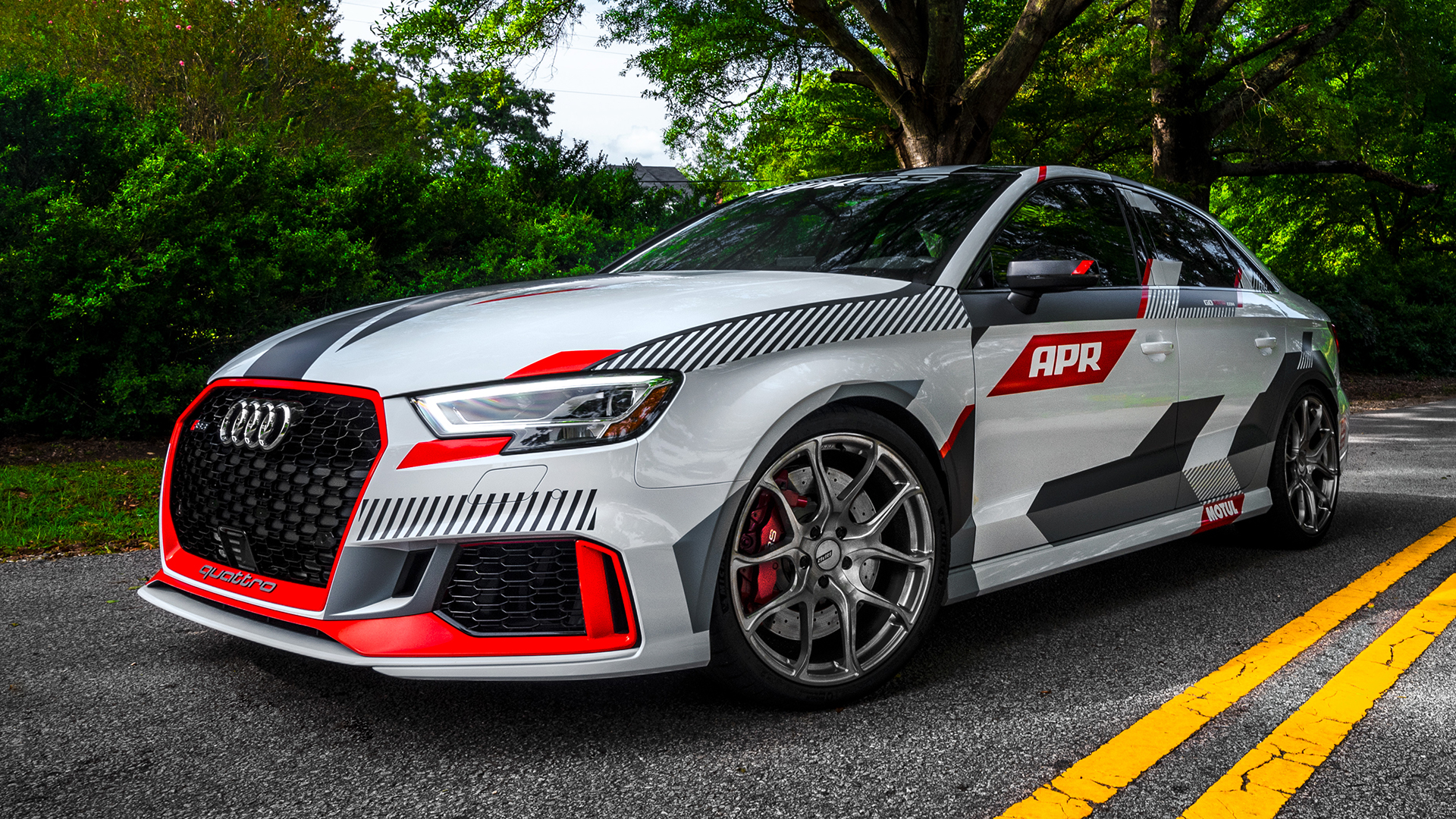
APR, the German tuning specialist, released a new transmission calibration for Volkswagen and Audi performance models equipped with Haldex all-wheel-drive systems. The tune allows drivers to lock the front differential and perform front-wheel-drive burnouts by manipulating how power distributes between axles.
The modification works by overriding the Haldex system's standard behavior. Normally, Haldex automatically sends torque to the rear wheels under acceleration or slipping conditions. APR's tune gives drivers the ability to force maximum front-wheel engagement, enabling sustained burnouts on FWD models that typically wouldn't perform this way.
This appeals to VW and Audi enthusiasts running high-power builds. Models like the Golf R, Audi S3, and RS3 become popular tuning platforms because their turbocharged engines respond well to ECU remaps. Adding 100+ horsepower is common in this segment. The burnout capability serves as a party trick but also demonstrates how much control modern tuning software offers over drivetrain behavior.
The tune carries real-world applications beyond showmanship. Locking the front differential under acceleration can improve traction off the line by preventing inside-wheel spin during hard cornering or launch scenarios. However, sustained burnouts place extreme stress on front tires, suspension, and CV joints. Drivers using this feature accept accelerated wear on drivetrain components.
APR's release reflects the broader aftermarket trend of granular drivetrain customization. Tuners now sell modifications that control turbo boost thresholds, transmission shift points, differential behavior, and suspension stiffness through software alone. For enthusiasts, this democratizes performance tuning. A software flash costs far less than mechanical upgrades while delivering measurable gains.
The Haldex system itself uses an electrohydraulic