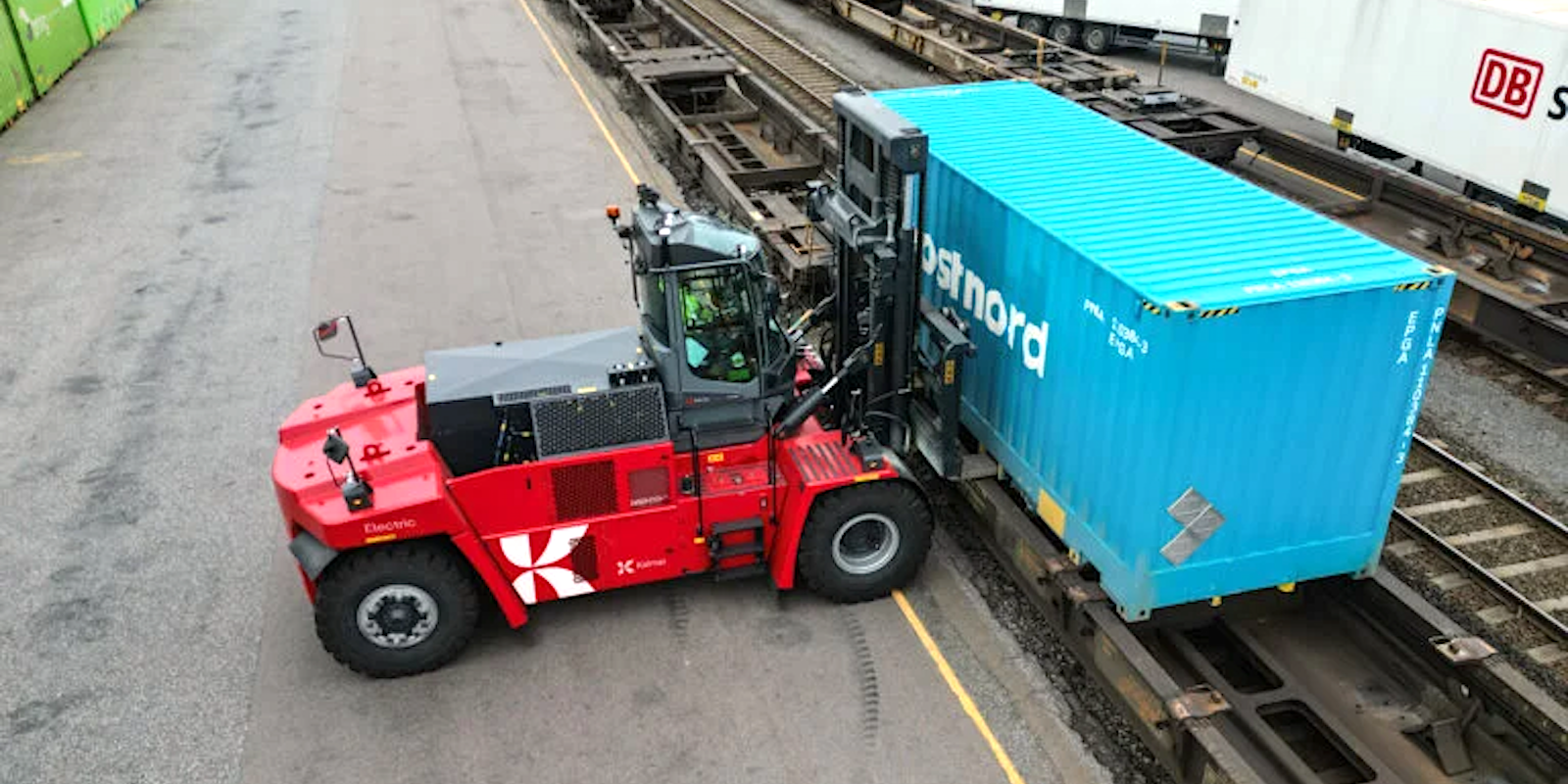
Kalmar unveiled its first lithium-ion electric forklift lineup at the ACT Expo, focusing on heavy-duty industrial applications that dwarf typical warehouse equipment. The company's "medium" category lifts 40,000 pounds. Larger Kalmar models exceed 160,000 pounds of lifting capacity, targeting ports, rail yards, and distribution centers that move massive loads daily.
The shift to li-ion batteries represents a material upgrade from lead-acid systems that dominated industrial forklifts for decades. Lithium technology delivers longer runtime, faster charging, and zero mid-shift battery swaps that halt operations. For logistics operators running continuous shifts, this translates directly to productivity gains and lower total cost of ownership.
Kalmar competes in a niche where few manufacturers operate. Competitors like Linde Material Handling and Toyota Material Handling offer electric heavy-lift equipment, but the market remains fragmented. Most operators still rely on internal combustion engines for super-heavy applications, citing upfront costs and charging infrastructure concerns.
The ACT Expo timing signals industry momentum. Fleet operators face pressure to electrify from port authorities, corporate sustainability commitments, and state regulations. California's Advanced Clean Fleets rule requires medium and heavy-duty vehicle electrification by 2042. Industrial equipment isn't exempt from that pressure.
Battery pricing continues falling, making li-ion economics viable at duty cycles exceeding 50 hours weekly. For ports handling container stacks and rail yards moving shipping containers, that threshold is routine. Kalmar's engineering targets exactly these use cases where utilization justifies the capital outlay.
The li-ion Super Heavy line also sidesteps a growing constraint: yard space for diesel equipment compliance. Electric forklifts generate zero tailpipe emissions, allowing indoor operation without ventilation upgrades. That flexibility matters for modernizing congested urban