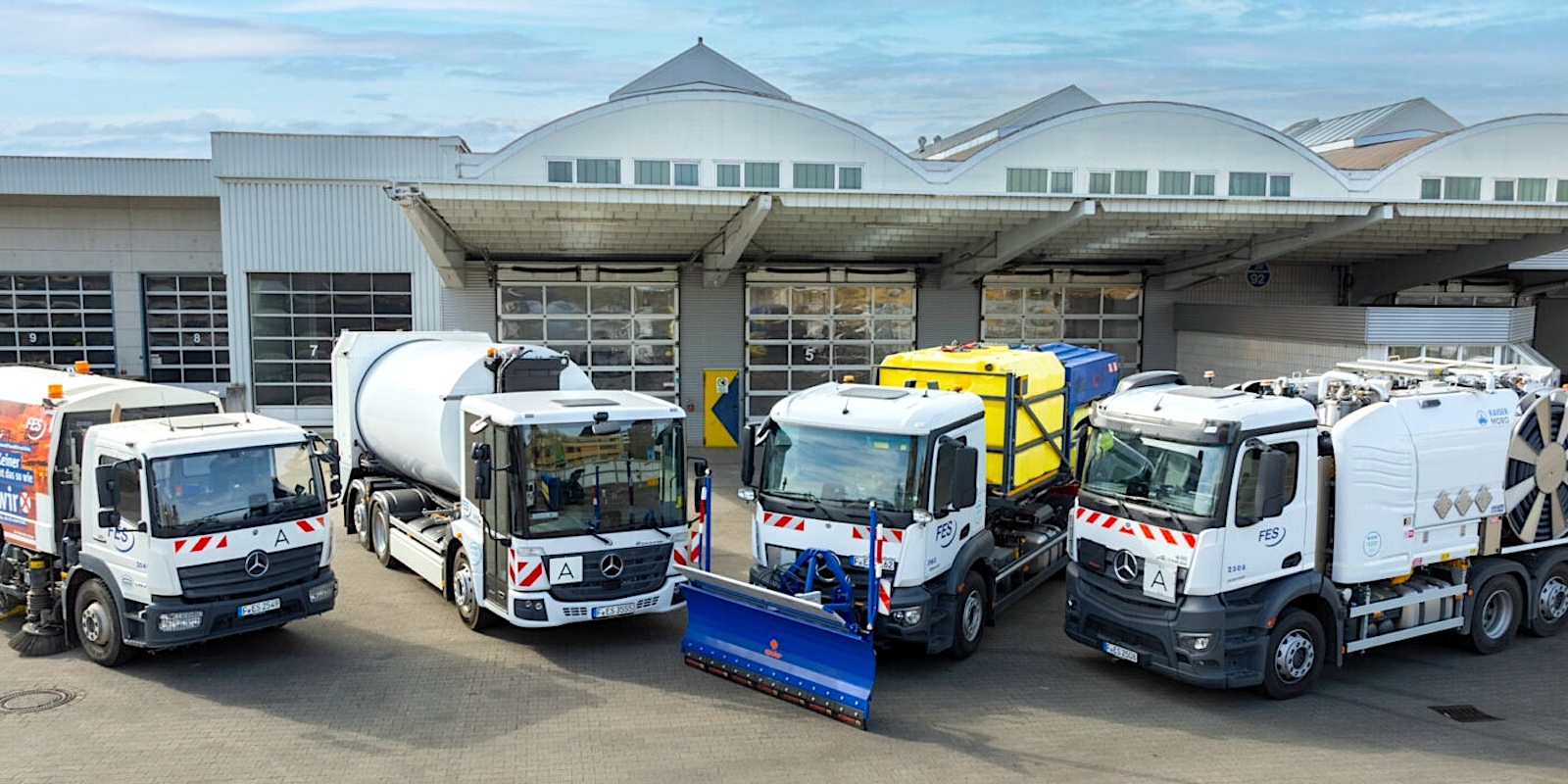
Frankfurt has ordered 10 additional Mercedes-Benz eEconic heavy-duty electric trucks, pushing the German city's total battery-electric low-floor truck fleet to 34 units. The new vehicles arrive specially upfitted for vocational duties, reinforcing Frankfurt's commitment to decarbonizing municipal operations.
The eEconic represents Daimler Truck's answer to urban waste management and delivery needs. As a purpose-built low-floor design, it offers easier loading access than conventional cab-over layouts. The battery-electric powertrain eliminates tailpipe emissions in congested city centers where air quality remains a persistent concern.
This expansion reflects a broader European pivot toward commercial EV adoption. German cities face mounting pressure to meet EU air quality directives and carbon reduction targets. Frankfurt's incremental fleet growth, now at 34 units, demonstrates that municipalities view electrified heavy-duty trucks as practical tools rather than experimental vehicles. The eEconic's repeated orders suggest the platform delivers on reliability and operational economics that justify procurement at scale.
Daimler Truck's strategy hinges on purpose-built architectures for specific vocations rather than converting diesel platforms. The eEconic's low-floor design, coupled with its electric drivetrain, addresses the repetitive stop-start cycles of waste collection and urban delivery. Competitors like Volvo, Scania, and MAN pursue similar segmented approaches, each targeting niches where electric propulsion matches duty cycles.
For Frankfurt specifically, the 10-truck addition signals confidence that charging infrastructure and grid capacity can support expanded deployment. Cities rolling out municipal EV fleets typically invest concurrently in depot charging networks, a capital commitment that reinforces buying decisions. The eEconic's repeated ordering suggests total cost of ownership, including fuel and maintenance savings, now justifies the premium over diesel equivalents.