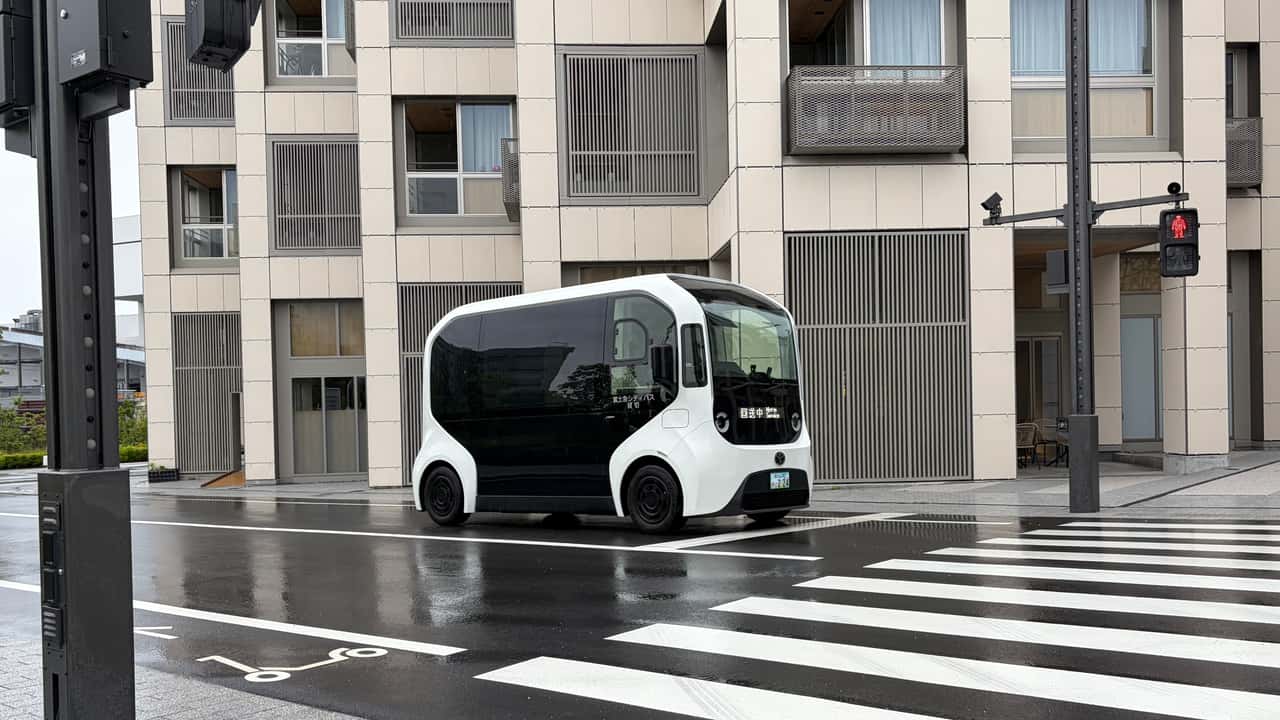
Toyota opened Woven City, its experimental "proving ground for mobility," to select visitors this month. The sprawling test facility sits on a 175-acre former Toyota factory site in Susono, Japan, about 60 miles southwest of Tokyo. The company built it to test autonomous vehicles, smart city infrastructure, robotics, and hydrogen fuel cells in a controlled environment before deploying these technologies at scale.
The facility houses about 2,000 residents, mostly Toyota employees and their families, living in purpose-built homes equipped with smart-home technology. Streets accommodate three vehicle types. The top level handles autonomous vehicles and delivery robots. The middle level serves pedestrians and cyclists. The bottom tier manages utility vehicles. This three-tier separation reduces conflict between different mobility modes, a key design principle Toyota hopes proves viable for real cities.
Hydrogen fuel cell vehicles roam the streets alongside battery electric vehicles and traditional combustion engines. Toyota is testing its Mirai hydrogen sedan and other fuel cell prototypes in regular use. The company views hydrogen as a complementary technology to battery electric vehicles, not a replacement. This diversified approach reflects Toyota's cautious stance on pure-EV adoption compared to competitors pushing full electrification timelines.
The city remains under construction. Many planned features still exist only on blueprints. Robot delivery systems are operational but limited. Autonomous shuttle services run fixed routes rather than operating freely throughout the city. Smart-home integration works but feels early-stage compared to commercial offerings from other tech companies.
Toyota invested billions into Woven City as a long-term research project, not a commercial real estate development. The company frames it as a living laboratory where it can validate technologies at their own pace without regulatory constraints typical in public cities. Success here could influence how Toyota approaches urban mobility globally over the next decade.
The facility reveals Toyota's hedged-bet strategy. Rather than commit entirely to battery electric