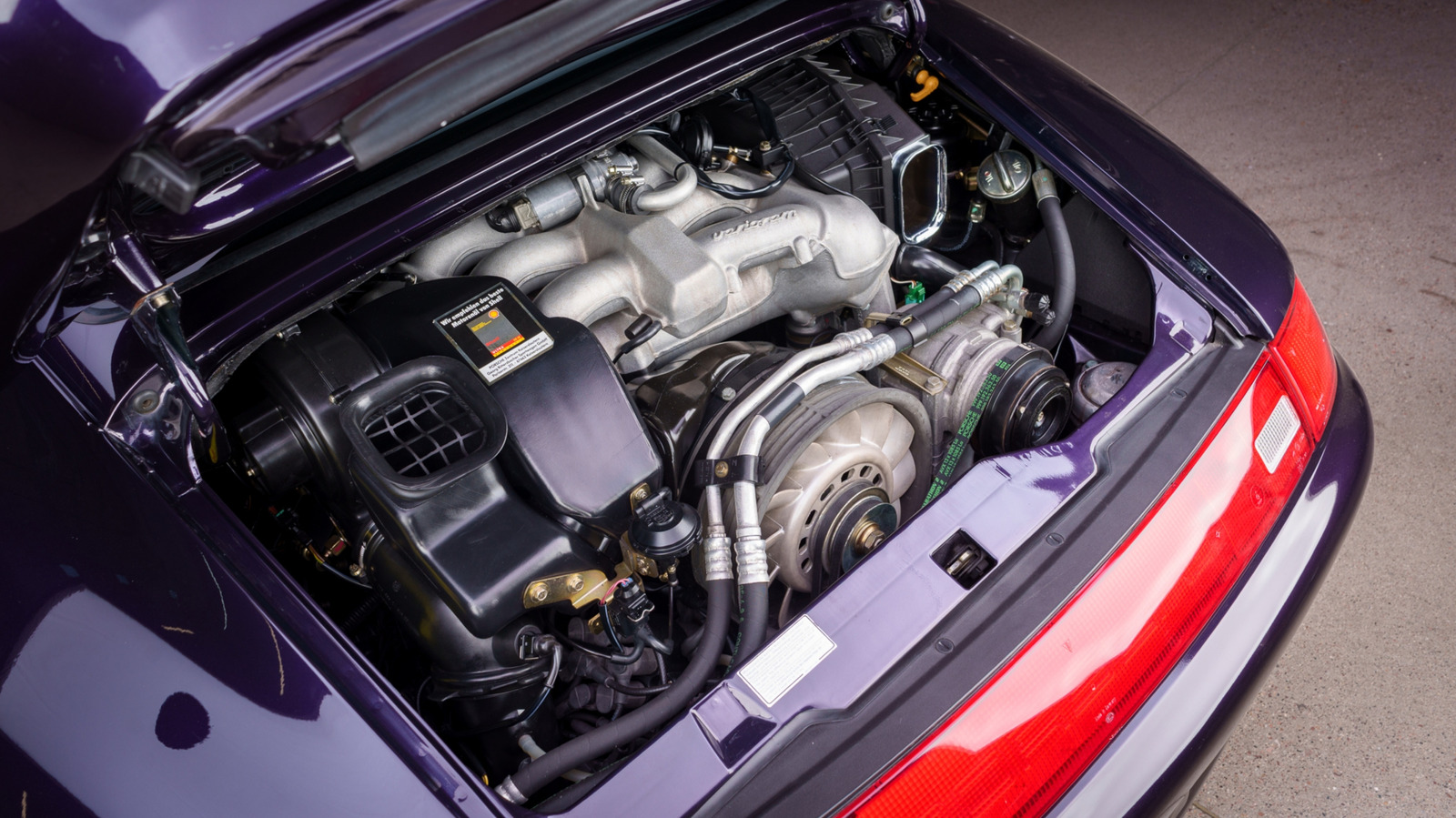
Porsche built its legendary reputation on the horizontally-opposed six-cylinder engine, but the Stuttgart manufacturer has deployed diverse powerplant configurations throughout its history. The flat-six remains the brand's calling card, yet Porsche has experimented with inline-fours, V-8s, V-10s, and V-12s across its model lineup.
The 911 Carrera GT featured a 5.7-liter naturally aspirated V-10 producing 612 horsepower, a departure from flat-six tradition that defined the era. Porsche's first-generation Boxster initially used a 2.5-liter flat-six before later models adopted turbocharged variants. The brand's LMP1 prototype race cars ran V-4 turbos, while some early 914 models came equipped with Volkswagen inline-four engines, establishing cost-effective alternatives for buyers seeking entry-level Porsche ownership.
In the modern lineup, Porsche continues this diversification strategy. The Panamera sedan employs a range of powerplants including turbocharged V-6s, V-8s, and plug-in hybrid systems. The Cayenne SUV primarily relies on turbocharged V-6 and V-8 engines rather than flat-sixes. Porsche's electric Taycan uses no internal combustion engine whatsoever, representing the brand's shift toward electrification.
The flat-six remains the spiritual center of Porsche identity, particularly in the 911 where it continues as standard equipment across most variants. Its rear-mounted placement provides the 911's distinctive handling characteristics and compact engine bay design. However, Porsche recognizes that modern market demands and regulatory requirements necessitate engine diversity.
Turbocharged flat-sixes now dominate the current 911 lineup,