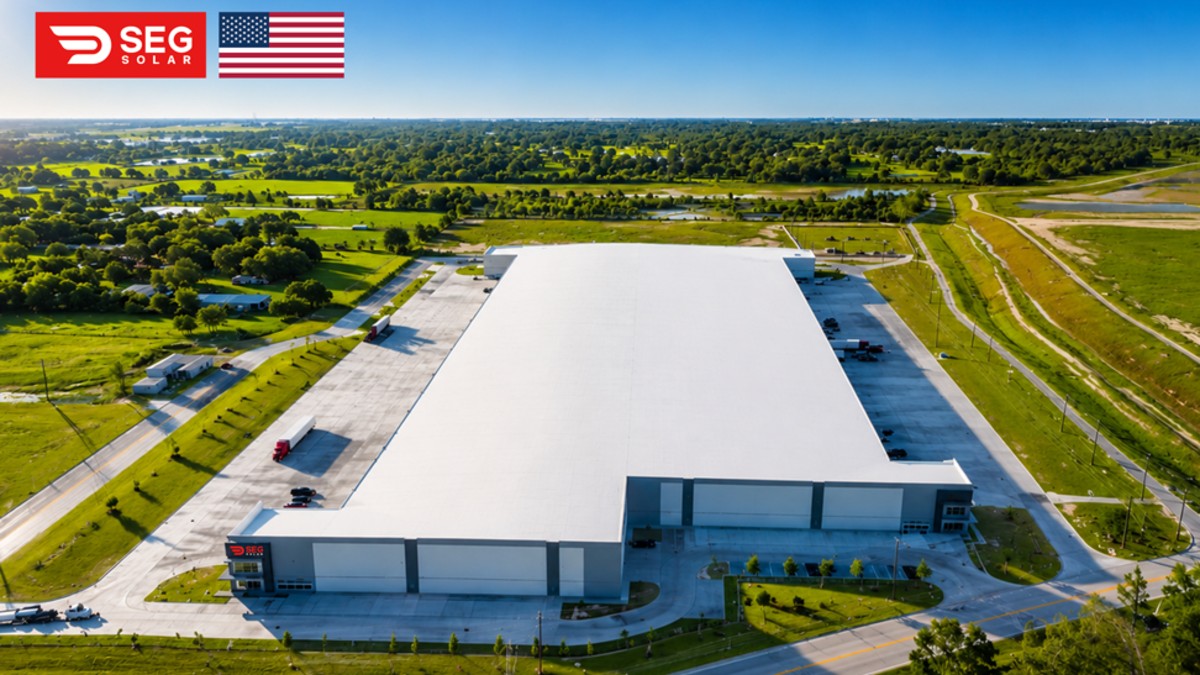
SEG Solar announced construction of a new 4-gigawatt solar module manufacturing facility in Houston, Texas, marking the company's latest expansion of domestic production capacity. The factory will produce solar panels at a scale that positions SEG Solar among the growing roster of manufacturers localizing panel assembly in the US market.
This Texas facility reflects broader industry momentum toward onshore manufacturing. US solar capacity needs keep climbing, driven by corporate renewable commitments, grid decarbonization targets, and the Inflation Reduction Act's domestic content incentives. Building solar modules domestically reduces supply chain risk and shipping costs while capturing tax credits that sweeten project economics for installers and developers.
SEG Solar operates existing US facilities and has invested heavily in American manufacturing over recent years. The Texas location offers access to a large labor pool, established industrial infrastructure, and proximity to major solar installation markets across the Southwest and Southeast. A 4 GW annual capacity represents meaningful scale. For context, total US solar module production hovers around 15-20 GW annually, so SEG Solar's contribution will be material.
The company competes directly with Hanwha Q Cells, Canadian Solar, and increasingly with First Solar, which has expanded its US cadmium telluride manufacturing significantly. Price competition remains intense as panels commoditize, but supply security and reduced tariff exposure give domestic producers an edge in bid competitions.
SEG Solar's expansion signals confidence in sustained US solar demand even as panel costs continue declining. The Houston factory will require substantial capital investment but promises long-term returns as the energy transition accelerates. Texas has emerged as a hub for clean energy manufacturing, benefiting from its industrial base and cost structure.
The company still faces headwinds from Chinese manufacturers who dominate global production. However, tariffs on imported panels, domestic content requirements in major procurements, and customer preference for supply chain resilience create real advantages for US