# H-Beam Versus I-Beam Connecting Rods: What Engine Builders Actually Care About
Engine builders have waged a long debate over connecting rod geometry, and the choice between H-beam and I-beam designs carries real performance consequences.
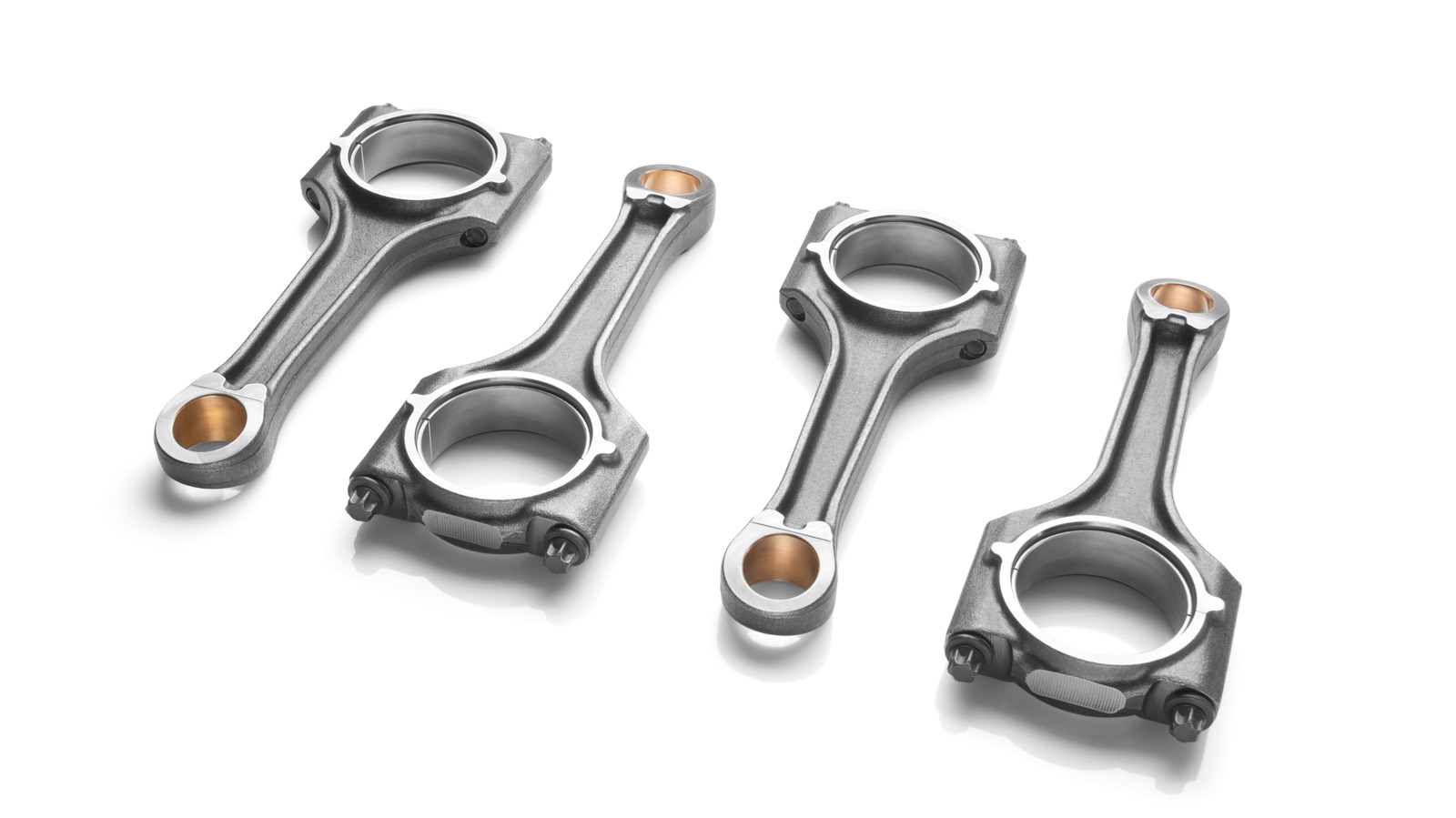
I-beam rods, the traditional design, feature a narrower cross-section that tapers from the rod's center toward the ends. This shape saves weight, a critical advantage in naturally aspirated engines where every gram matters for revving capability. I-beams also cost less to manufacture, making them the default choice for most production engines. The tapered profile concentrates material where loads concentrate, reducing reciprocating mass. For street engines and stock builds, I-beams deliver proven reliability at a lower price.
H-beam rods sacrifice some weight for significantly greater rigidity. The wider, more uniform cross-section resists flex under extreme loads. In forced-induction applications, supercharged and turbocharged engines generate crushing pressures that bend traditional I-beams. H-beams maintain their shape under these forces, preventing the harmonic distortions that lead to premature failure. High-horsepower drag racing, heavy boost racing, and sustained high-RPM operation favor H-beams.
The trade-off cuts both ways. The extra material in H-beam rods increases reciprocating mass, which limits peak RPM potential and demands more power to accelerate the piston. Naturally aspirated engines, where RPM range matters and boost never pressurizes the combustion chamber, suffer efficiency losses from that added weight. For a stock 7,000-RPM street engine, the penalty proves worthless. For a 9,500-RPM turbo engine making 600 horsepower, H-beams become mandatory.
Material quality compounds these differences. Modern forged steel H-