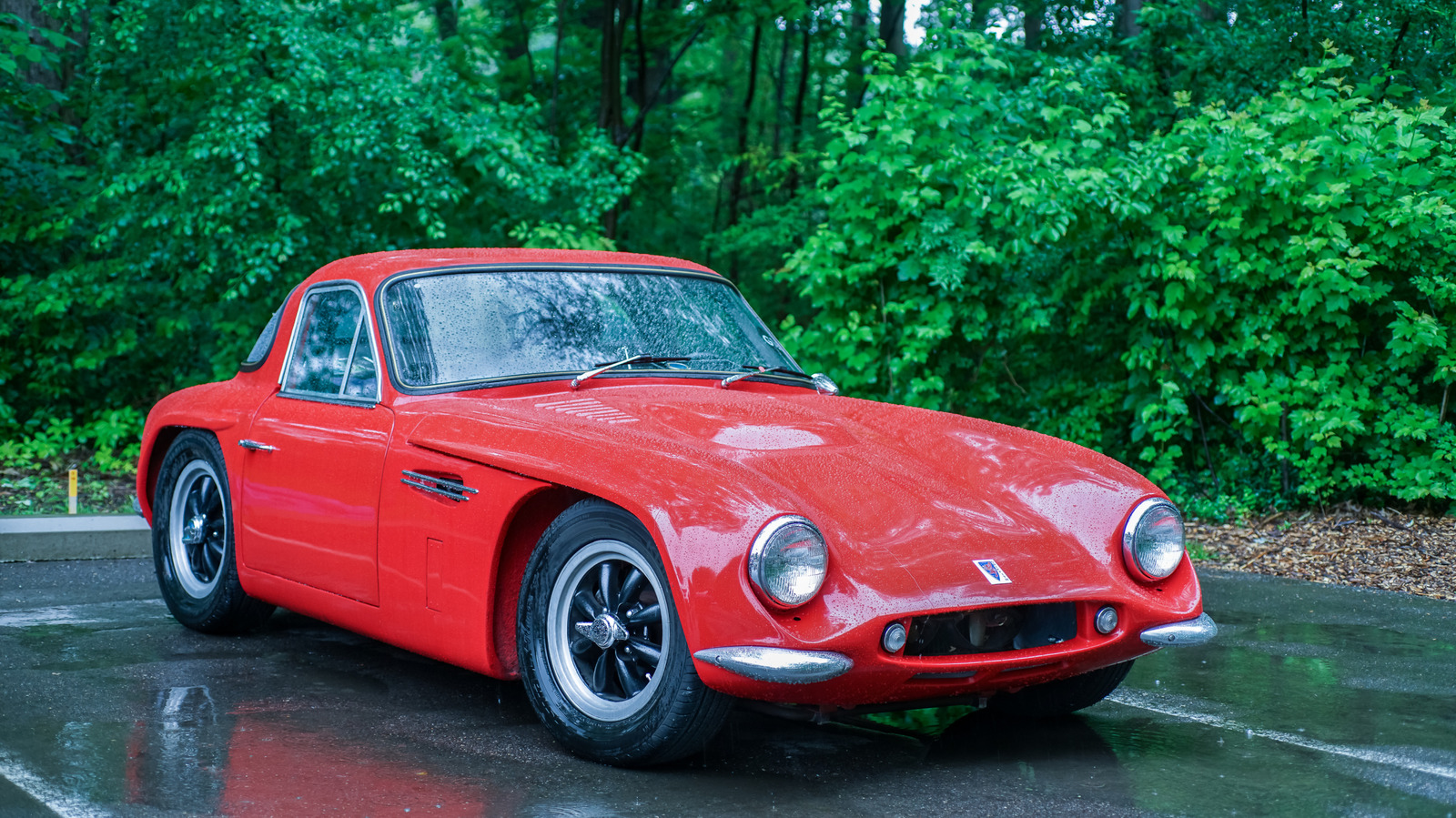
The Griffith 200 holds a forgotten chapter in automotive history. This British sports car claimed the title of world's fastest production vehicle, a distinction that surprises most enthusiasts who associate speed records with Ferrari, Jaguar, or other marquee names.
Built by TVR, the Griffith 200 paired a modest chassis with an American V8 engine, a formula that proved devastatingly effective. The combination delivered raw acceleration that dominated competitors in its era. The car's lightweight construction amplified the engine's output, creating a power-to-weight ratio that was genuinely formidable for its time.
TVR's approach differed sharply from the establishment. Rather than pursuing exotic engineering or hand-built perfection, the company sourced a Rover V8 and dropped it into a relatively simple fiberglass-bodied frame. This pragmatism paid dividends. The Griffith 200 could outaccelerate and outrun cars costing multiples of its price.
The production numbers remained low, limiting the Griffith's cultural impact. TVR never chased volume sales or mainstream recognition the way other manufacturers did. This obscurity partly explains why the Griffith 200 doesn't command the same reverence as contemporary rivals. Yet its performance credentials were undeniable. The car genuinely ranked among the quickest vehicles on the planet.
This achievement reflects a broader truth in automotive history. Speed records belong not exclusively to wealthy established brands. A British upstart with a V8 and a lightweight chassis could outperform the industry's supposed elite. The Griffith 200 proved that intelligent engineering and mechanical courage could overcome traditional advantages in prestige and resources. The car may be overlooked today, but its performance legacy stands unchallenged.