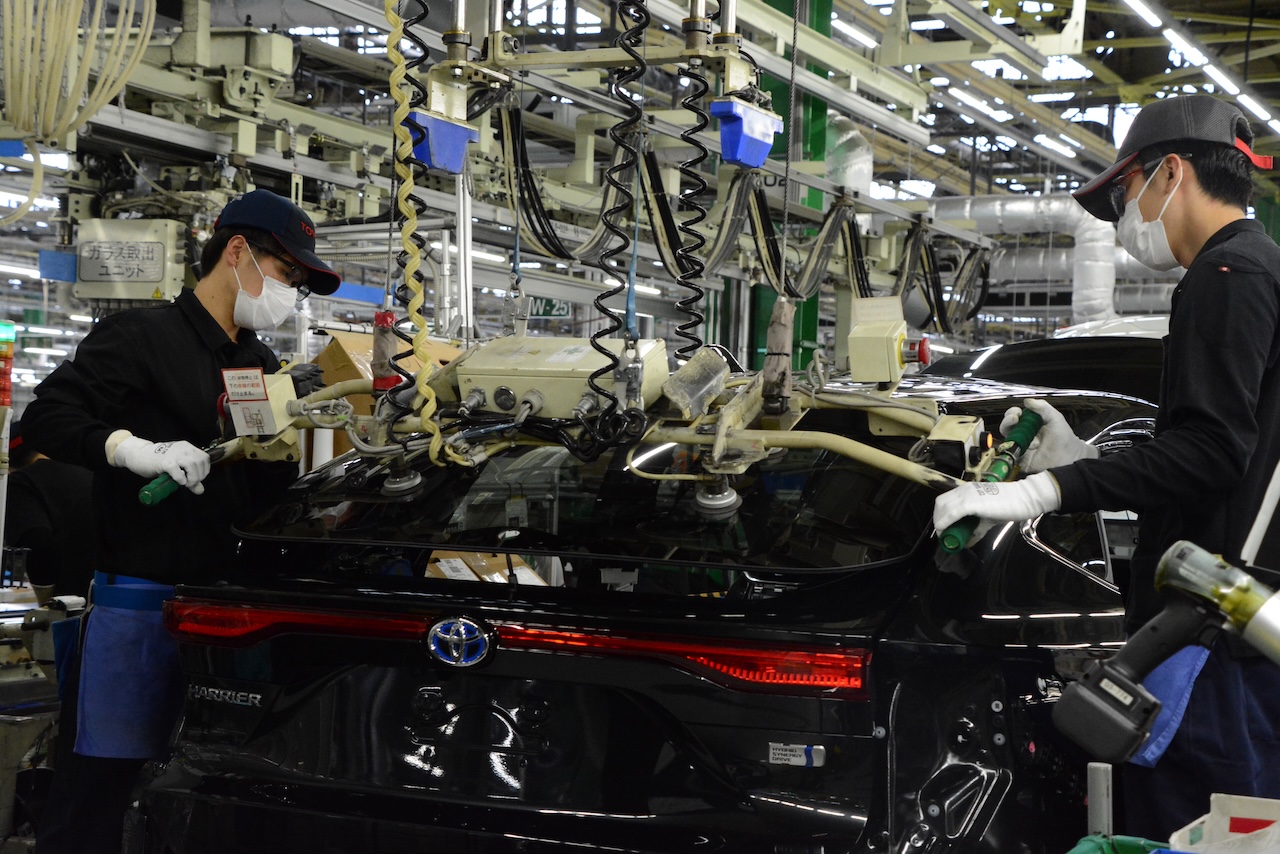
Toyota plans to nearly double its India manufacturing footprint by the early 2030s through construction of three new factories. The Japanese automaker aims to achieve annual production capacity exceeding one million units across its Indian operations.
This expansion reflects Toyota's confidence in India's automotive market growth and its position as a manufacturing hub for vehicles destined for both domestic consumption and export. The company currently operates multiple plants in India but faces intensifying competition from Maruti Suzuki, Hyundai, and emerging EV makers racing to capture market share in the world's fifth-largest auto market.
India represents a critical battleground for legacy automakers. The country's vehicle sales reach roughly four million units annually, with steady demand growth despite economic headwinds. Toyota's existing India capacity lags behind rivals. Maruti Suzuki controls over 40 percent market share with multiple facilities, while Hyundai operates two plants with significant throughput. Toyota's new investment addresses this gap and positions the company to compete for growing SUV and sedan demand.
The three-factory plan also serves Toyota's export ambitions. India has become a preferred manufacturing base for vehicles shipped to Africa, Latin America, and Southeast Asia, where labor costs and infrastructure favor Indian production over domestic Japanese manufacturing. Toyota can leverage this network to serve global markets while supplying domestic growth.
The timing aligns with India's push toward electric vehicles and stricter emission standards. Toyota has committed to electrification globally, but the timeline for India's EV transition remains gradual compared to Europe or China. Building factories now positions Toyota to retrofit facilities for battery production and EV assembly as demand accelerates.
India's government actively incentivizes automotive manufacturing through production-linked incentive schemes and tariff policies. Toyota's expansion depends partly on maintaining favorable policy conditions. Currency volatility and supply chain disruptions in semiconductors and raw materials present execution risks.
By 2030