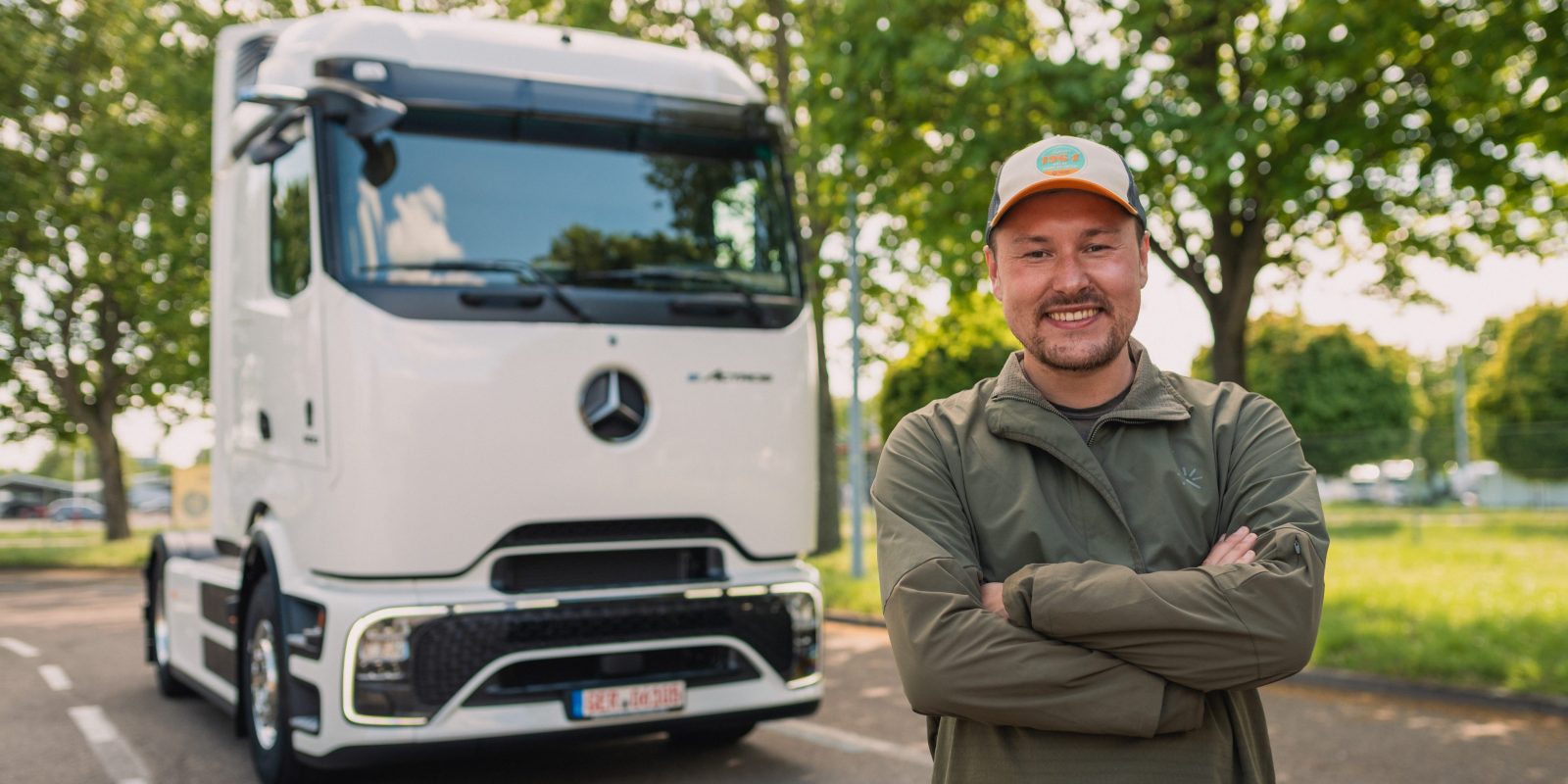
A German YouTuber specializing in electric trucking content will pilot a Mercedes-Benz eActros around the world, marking the first circumnavigation of the globe by a heavy-duty electric truck. The journey represents a watershed moment for commercial EV adoption, demonstrating that battery-electric semis can handle extended routes beyond regional hauling.
The eActros, Mercedes' flagship electric heavy-duty truck, carries enough battery capacity to tackle long-distance routes when paired with strategic charging infrastructure. The vehicle's real-world range and charging speed will face scrutiny during this expedition, as the journey traverses regions with vastly different EV charging ecosystems. The "80 charges" reference hints at the charging strategy required to complete the global route.
This stunt carries weight beyond YouTube spectacle. It validates Mercedes' engineering claims about the eActros' capability while exposing infrastructure gaps that logistics companies must navigate today. Heavy-duty trucking remains stubbornly dependent on diesel, partly because owner-operators and fleet managers doubt electric semis can replicate traditional truck versatility. Real-world proof of intercontinental capability chips away at that skepticism.
The timing matters. Volvo Trucks, Scania, Cummins, and others are racing to scale production of battery-electric and hydrogen-fuel-cell semis. European regulations mandate steep CO2 reductions from commercial vehicles, forcing manufacturers to prove electrification works at scale. Demonstrating that an eActros can complete a globe-spanning journey, with documented charging times and energy consumption, provides marketing leverage that no lab test can match.
That said, this journey succeeds because infrastructure exists in developed markets. The route likely hugs regions with established EV networks. Fleet operators in Southeast Asia, Africa, and South America face fundamentally different challenges. Infrastructure parity remains years away in most markets.
The eAct