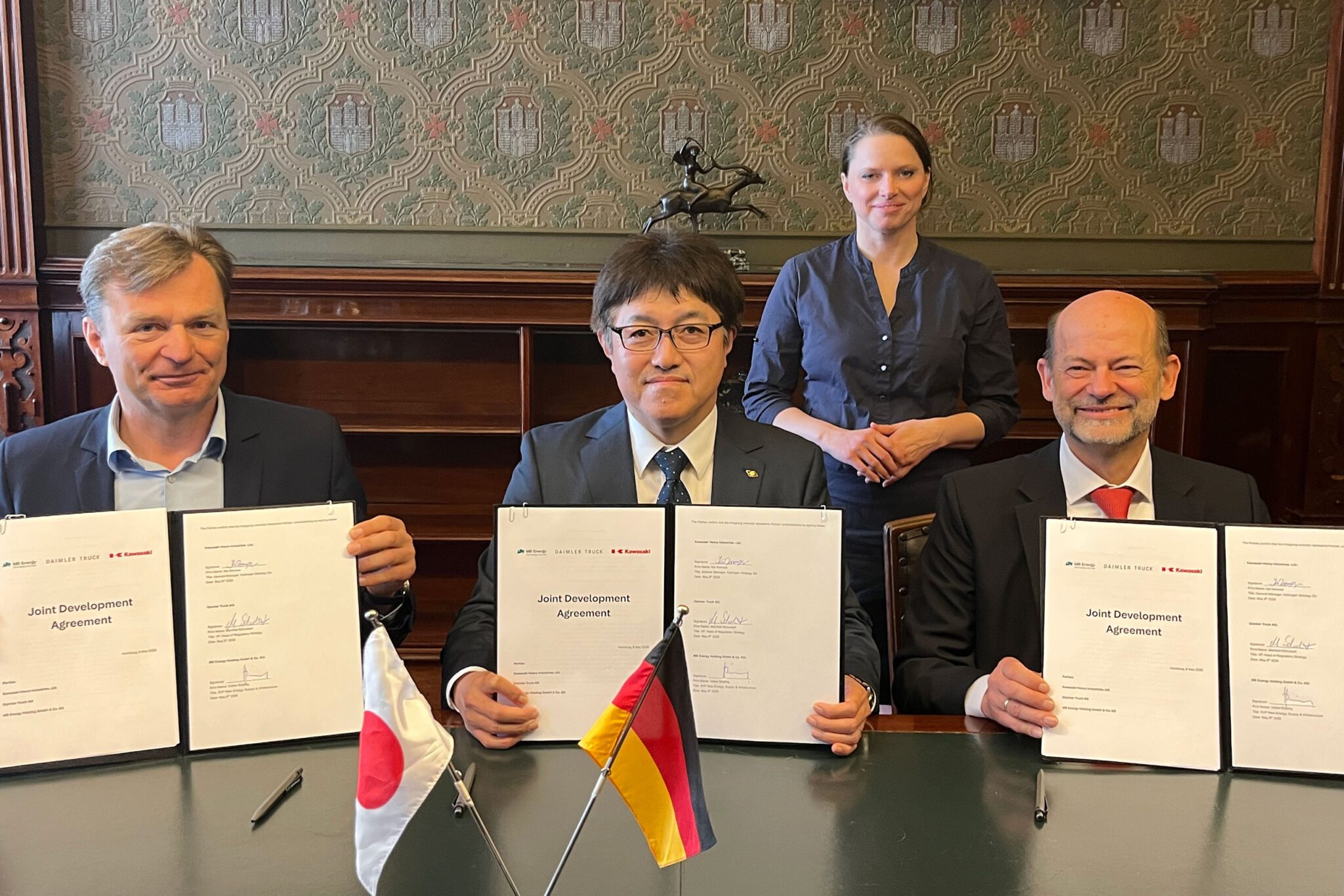
Daimler Truck will deploy 100 Mercedes-Benz NextGenH2 hydrogen fuel cell trucks into customer operations across Europe starting in late 2026. The German manufacturer's push into liquid hydrogen propulsion targets commercial fleets seeking zero-emission heavy-duty transport without the range and refueling limitations of battery-electric trucks.
The NextGenH2 represents Daimler's answer to the EU's increasingly stringent CO2 emissions standards for trucks, which require a 30 percent reduction by 2030 and 55 percent by 2035. Hydrogen fuel cells convert H2 into electricity to power electric motors, producing only water vapor as exhaust. Liquid hydrogen storage enables long-haul capability comparable to diesel trucks, addressing logistics operators' range anxiety.
Hamburg's selection as a deployment hub reflects Germany's broader hydrogen infrastructure strategy. The port city has committed to building liquid hydrogen refueling stations, critical for scaling commercial operations. This advantage over battery trucks, which require hours of charging even with fast DC systems, makes hydrogen attractive for time-sensitive freight corridors.
Competition in hydrogen trucking remains nascent. Toyota and Hino operate limited fuel cell truck trials in Japan and the US, while Volvo, Scania, and Hyundai continue development programs. Daimler's 100-truck commitment demonstrates confidence that the hydrogen ecosystem will mature fast enough to support operations.
The real test involves total cost of ownership. Hydrogen production, liquefaction, and distribution remain expensive, making per-mile fuel costs higher than diesel in most markets. Daimler must prove that government subsidies, carbon pricing, and technological maturation can bridge this gap within three years.
European fleet operators face pressure to decarbonize their entire transport chains. Shippers demand emissions-compliant logistics partners, and Daimler's staged roll