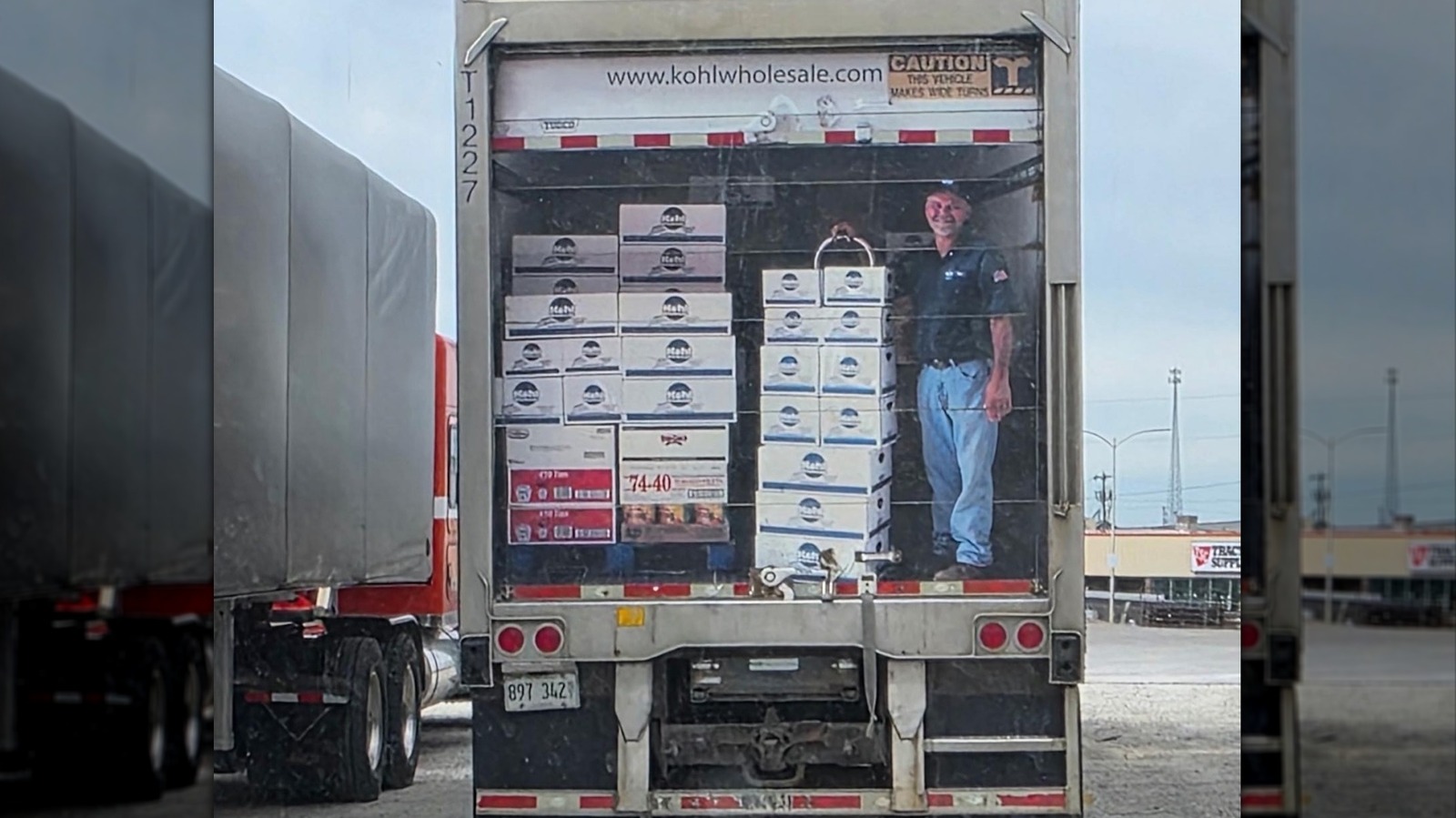
Drivers across multiple states reported to police that they spotted a man standing motionless in the back of an open semi-truck trailer. The calls came from concerned motorists who believed they were witnessing someone in distress or danger on the highway.
The twist: it was a sticker.
The decal, placed on the rear of a trailer, depicted a hyperrealistic image of a person standing upright in the cargo area. The optical illusion proved convincing enough to trigger emergency calls from drivers who genuinely believed they were reporting a safety hazard.
Law enforcement confirmed receiving multiple complaints about the supposed stranded figure before determining the source. Police departments clarified the situation publicly, noting that while the sticker was remarkably lifelike, it posed no actual threat.
The incident highlights two dynamics on American highways. First, it demonstrates driver attentiveness. Motorists remain alert to unusual activity on the road and willing to report potential emergencies. Second, it exposes how effectively modern printing technology can deceive. High-resolution vinyl decals now replicate human figures with unsettling accuracy.
Semi-truck operators occasionally use rear graphics for advertising or branding purposes. This particular sticker appears designed purely for shock value, playing on driver psychology and highway monotony. It succeeded spectacularly, generating exactly the kind of attention the decal's creator likely intended, albeit through emergency services rather than organic social media sharing.
The incident raises a question about highway pranks and public safety responsibility. While the sticker harmed no one, it consumed police resources and distracted drivers from road conditions. Some jurisdictions may reconsider whether such realistic human imagery belongs on commercial vehicles operating in traffic.
The decal serves as an unintended reminder that highway safety depends on driver focus. When optical illusions grab attention, reaction times suffer. Trucking companies and regulators will likely face pressure to establish clearer guidelines