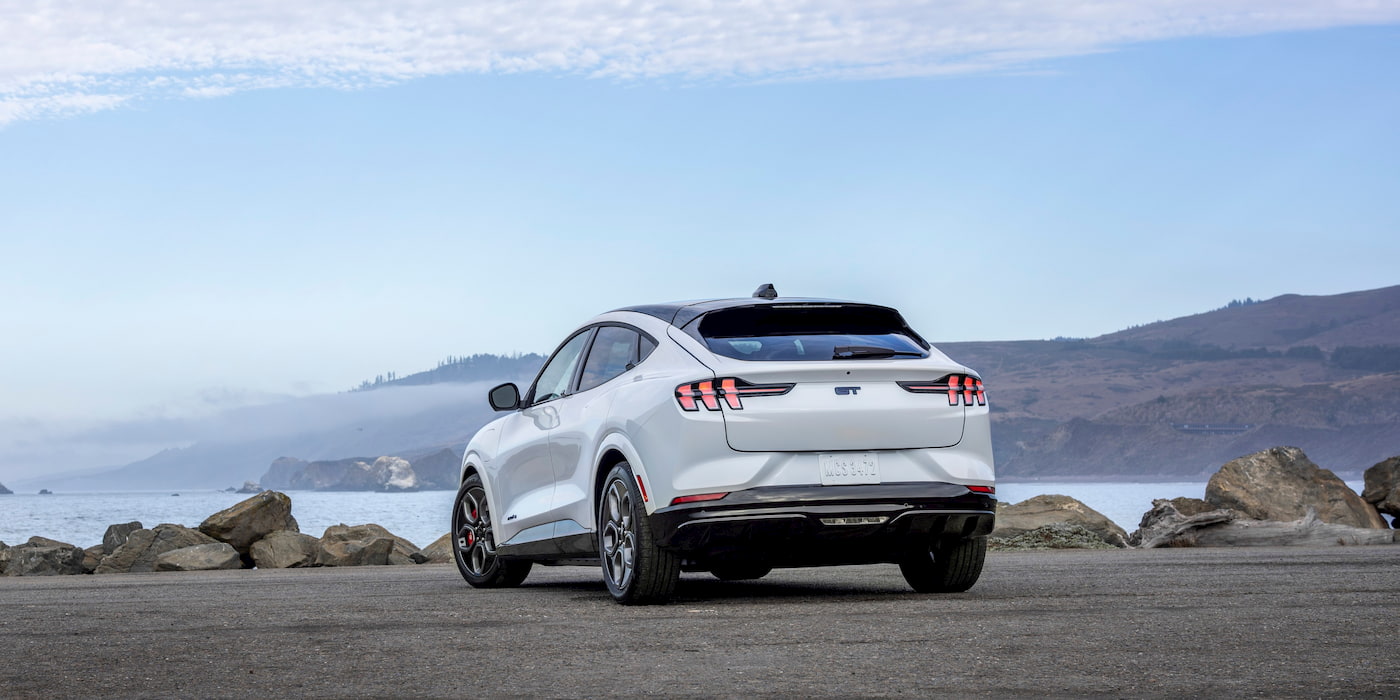
Ford is giving the 2026 Mustang Mach-E distinct personalities tied to trim levels and driving modes, extending beyond visual differentiation into actual performance behavior. The automaker structured the electric crossover around different character archetypes to help buyers align vehicle capabilities with their driving preferences.
Each Mach-E variant delivers different power outputs, acceleration characteristics, and handling dynamics. The base model emphasizes efficiency, while higher trims unlock sportier acceleration and more responsive steering tuning. Ford's "personality" framing reflects a broader EV industry shift toward making electric vehicles feel less like one-size-fits-all boxes and more like cars with distinct character.
The strategy addresses a real problem for EV buyers. Unlike combustion-powered Mustangs with engine roar and transmission shifts, electric vehicles risk feeling characterless to drivers accustomed to gasoline dynamics. Ford combats this by calibrating suspension stiffness, regenerative braking intensity, and throttle mapping per trim. Higher performance versions get sharper response curves that reward spirited driving.
This approach mirrors what Tesla, Porsche, and Lucid already do with their EVs. Porsche's Taycan, for instance, delivers completely different driving experiences between base and Turbo variants through software tuning and hardware changes. Ford applies similar logic to mainstream pricing.
The 2026 Mach-E competes directly against Chevrolet's Equinox EV, Hyundai's Ioniq 5, and Tesla's Model Y. Each targets different buyer demographics. Ford's personality positioning helps differentiate the Mach-E in a crowded segment where specs alone don't capture what drives a purchase decision.
Buyers increasingly view vehicles as lifestyle extensions, not just transportation tools. Younger EV shoppers especially want cars that reflect how they drive. A daily commuter wants