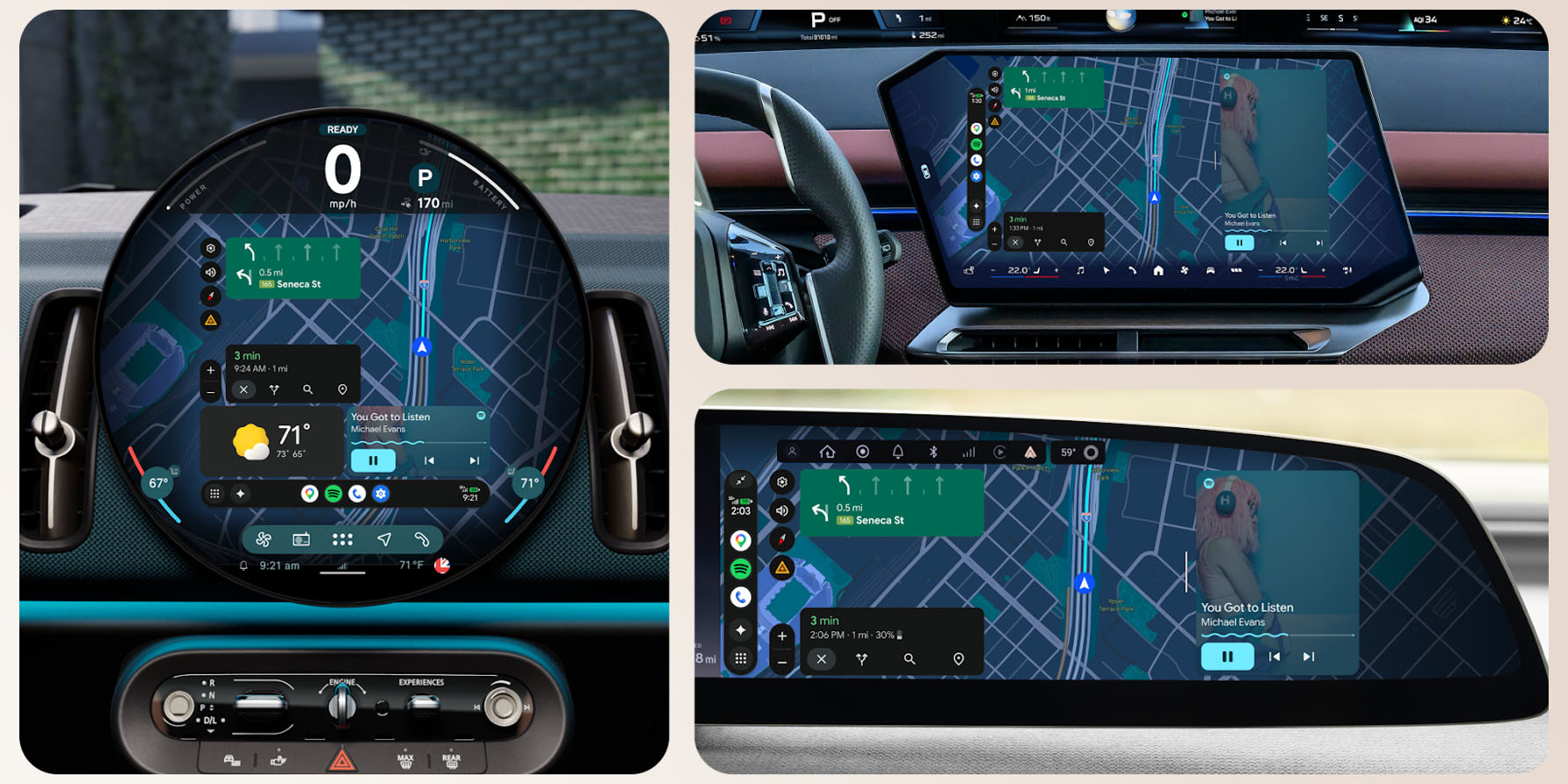
Google is overhauling Android Auto with a major update that enables YouTube and other video apps to display on vehicle infotainment screens when the car is parked. The redesign also adapts to screens of varying aspect ratios and sizes, addressing a longtime limitation that forced content into rigid, narrow columns optimized only for portrait-oriented phone displays.
The update represents a significant shift in how Android Auto handles multimedia content. Previously, YouTube and similar video platforms were blocked from the system entirely while a vehicle sat stationary, forcing drivers to rely on their phones despite having a larger screen inches away. Now parked vehicles unlock access to these apps, transforming infotainment systems into entertainment hubs during stops.
The flexible screen architecture matters because automakers have invested heavily in displays ranging from modest 8-inch units to panoramic curved screens spanning the entire dashboard. Android Auto's old format, designed around smartphone proportions, wasted screen real estate on many vehicles. The redesigned interface fills available space, whether that screen is ultrawide, square, or anything between.
This update hints at Google's broader strategy to make Android Auto more competitive against Apple CarPlay and proprietary systems like BMW's iDrive. Automakers increasingly view infotainment as a revenue opportunity and a chance to differentiate their brands. YouTube capability and screen flexibility give Android Auto owners tangible reasons to adopt the platform instead of hardwired alternatives.
The parked-video feature carries obvious safety implications. Google continues restricting video playback while driving, a safeguard that prevents distraction and liability. Playing YouTube when stationary lets passengers watch content during rest stops or while waiting, but keeps drivers' eyes on the road when the vehicle moves.
Rollout timing remains unclear, but the update signals Google's commitment to evolving Android Auto beyond basic navigation and messaging. As in-vehicle entertainment becomes standard across price points, automakers will demand platforms