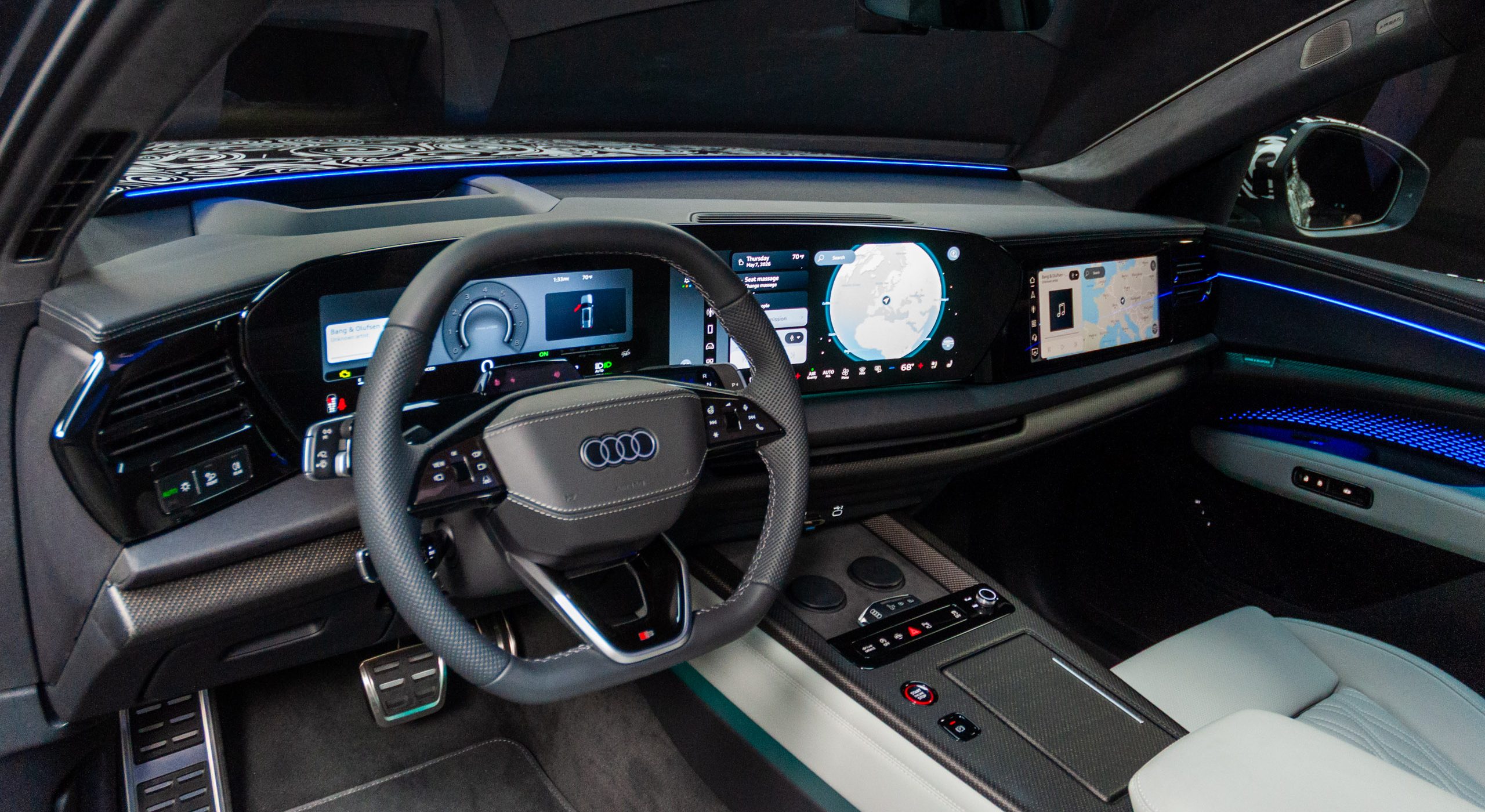
Audi is launching the 2027 Q9, a three-row flagship SUV that prioritizes indulgence and technology over restraint. The vehicle features electronic doors with emergency capacitors for manual operation during power loss, addressing a real safety concern that plagued early Tesla Model Xs. Those doors aren't just a gimmick. They're part of Audi's push toward seamless cabin integration.
The audio system takes immersion seriously. Rather than standard speakers, Audi equipped the Q9 with seat vibration technology that syncs to the soundtrack, turning the entire cabin into a resonance chamber. This transforms listening to music from passive consumption into a physical experience. It's the kind of feature that distinguishes a six-figure luxury vehicle from something merely premium.
Climate control and storage reflect the same no-compromise philosophy. The cupholders accommodate full-size Stanley thermoses, a detail revealing Audi's attention to how real owners actually use their vehicles. The panoramic glass roof spans 16 square feet, creating an open, airy sensation that appeals to buyers seeking commanding sightlines without a traditional sunroof's mechanical complexity.
The Q9 arrives as luxury automakers battle for relevance in the three-row segment. Mercedes-Benz's GLS remains the benchmark, but that model's aging platform makes room for challengers. BMW's X7 dominates sales volume, yet Audi's design language consistently impresses in showrooms. The Q9's feature set targets affluent families who view their vehicle as a mobile sanctuary rather than transportation.
Audi hasn't confirmed powertrain details, but expect a high-output turbocharged engine option alongside a plug-in hybrid variant. The brand's electric future remains committed, but three-row buyers still prioritize range and towing capacity over pure battery range. The Q9 will likely offer both