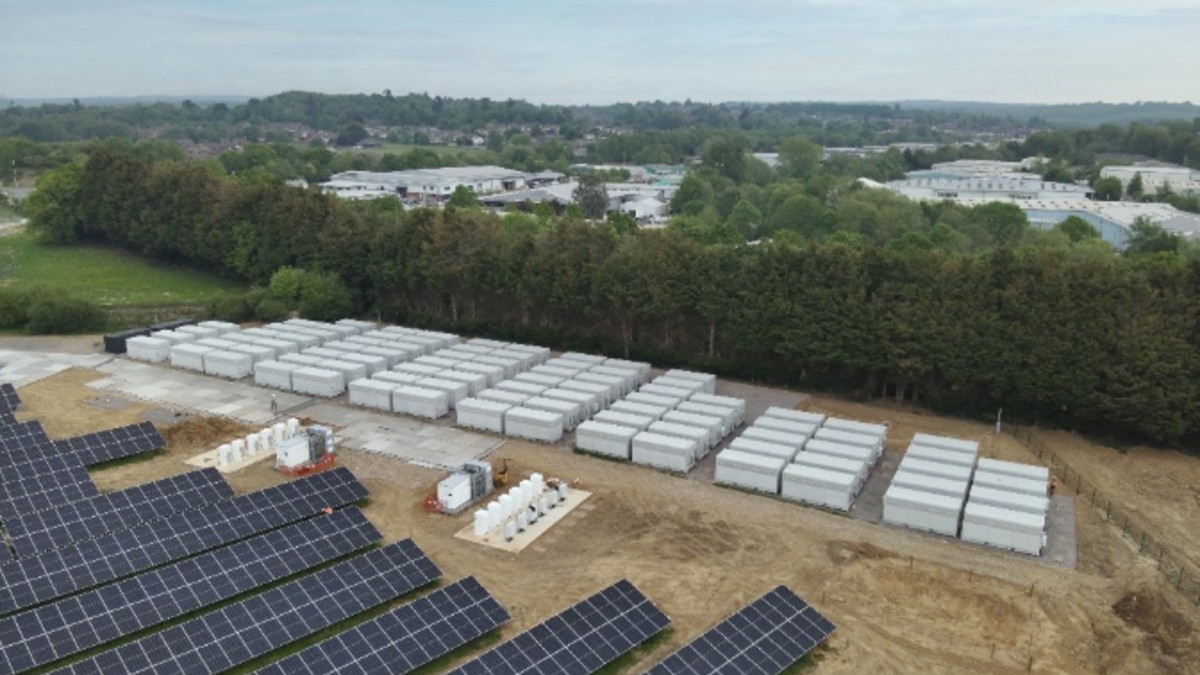
Invinity Energy Systems delivered a 20.7 megawatt-hour vanadium flow battery system to the Copwood VFB Energy Hub in East Sussex. The installation will become Europe's largest vanadium flow battery facility once it enters service later in 2026.
Vanadium flow batteries represent a distinct technology path in the grid storage race. Unlike lithium-ion systems that dominate short-duration storage, vanadium redox batteries store energy in liquid electrolyte tanks. They excel at longer discharge durations, can cycle thousands of times without degradation, and decouple power and energy capacity. These characteristics make them valuable for applications requiring sustained discharge over four to eight hours.
The Copwood hub addresses a genuine market need. As Europe accelerates renewable energy deployment, grid operators confront volatility from wind and solar generation. Battery storage fills that gap. Lithium-ion captures short-duration demand response. Vanadium flow batteries handle longer storage windows at utility scale. The technology also avoids the thermal runaway risks and supply chain constraints tied to lithium mining.
Invinity's delivery signals growing acceptance of flow battery chemistry in Europe's energy transition. The London-listed company competes against manufacturers like Rongke Power and RedT Energy in a fragmented but expanding sector. Utilities and project developers increasingly recognize flow batteries as grid infrastructure assets rather than specialized niches.
The Copwood scale matters. At 20.7 MWh, this installation dwarfs most pilot projects. It demonstrates that vanadium flow systems can achieve commercial viability at meaningful capacity. Construction and financing for such a project required confidence from lenders and grid operators alike.
Timing favors Invinity. Europe's 2030 renewable energy targets and capacity market reforms create structural demand for long-duration storage. The European Green Deal mandates grid modernization.