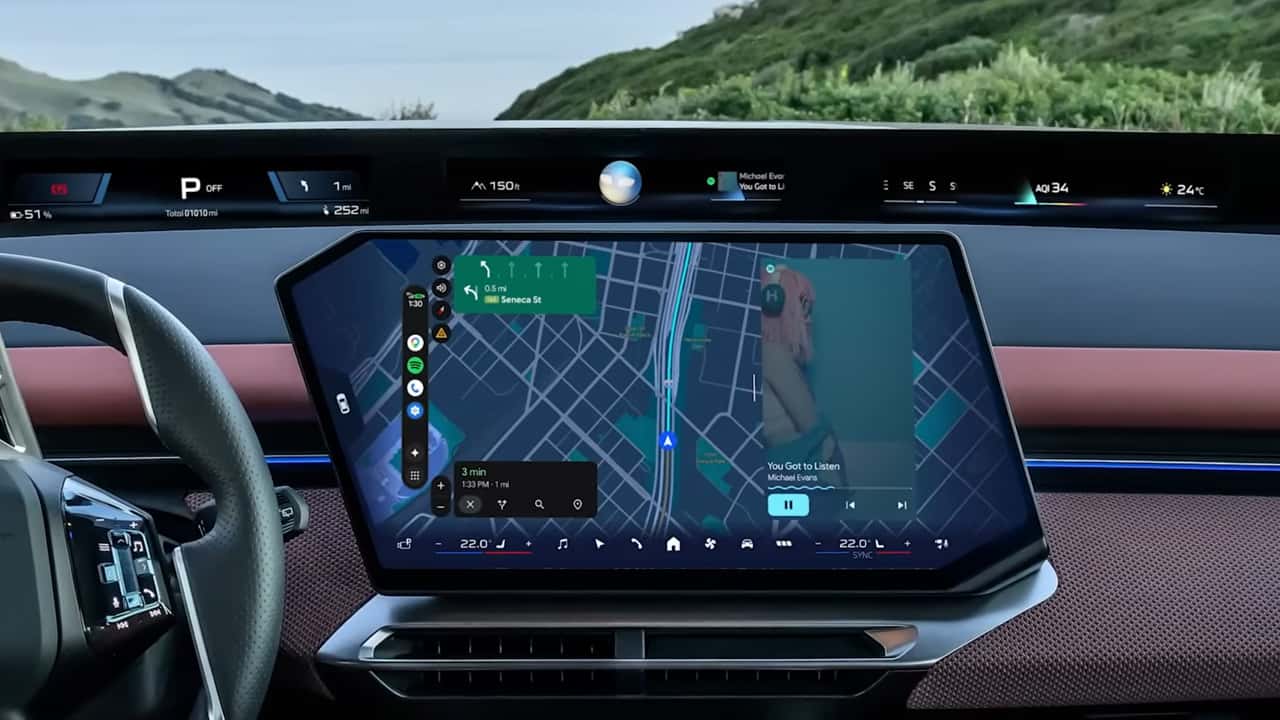
Google pushes Android Auto into full-screen territory with its largest update in years. The software now stretches maps edge-to-edge across infotainment displays, eliminating the bezels and black borders that have cluttered car screens since Android Auto's launch. This creates a cleaner, more immersive navigation experience without forcing drivers to glance at their phones.
The update bundles three major improvements. Maps now consume the entire display width, making turn-by-turn directions easier to read at a glance. HD video playback arrives for the first time, letting drivers stream music videos and other content through compatible head units when parked. Uninterrupted playback means music and podcasts won't skip or restart when switching between apps or getting notifications.
These changes target a persistent weakness of Android Auto. Carmakers have long complained that the software felt dated compared to Apple CarPlay, which offered better integration with native infotainment systems. Tesla, BMW, and others developed proprietary systems partly because Android Auto felt cramped and limited. Google's latest push signals the company finally taking screen real estate seriously.
The timing matters. As infotainment screens grow larger, Android Auto's old borders waste valuable space. Modern cars now feature 12-to-15 inch displays as standard. Apple's CarPlay already dominates this market, but Google's refresh gives Android users parity on visual presentation.
Adoption depends on carmaker cooperation. Not every vehicle will receive the update immediately. Manufacturers must push new software versions to existing cars, and new models must ship with compatible head units. Legacy systems from 2020 and earlier may not support edge-to-edge rendering. This fragmentation has plagued Android Auto's rollout for years.
The HD video feature comes with a catch. Drivers cannot watch video while the vehicle moves. Safety regulations and most state laws prohibit this, limiting the