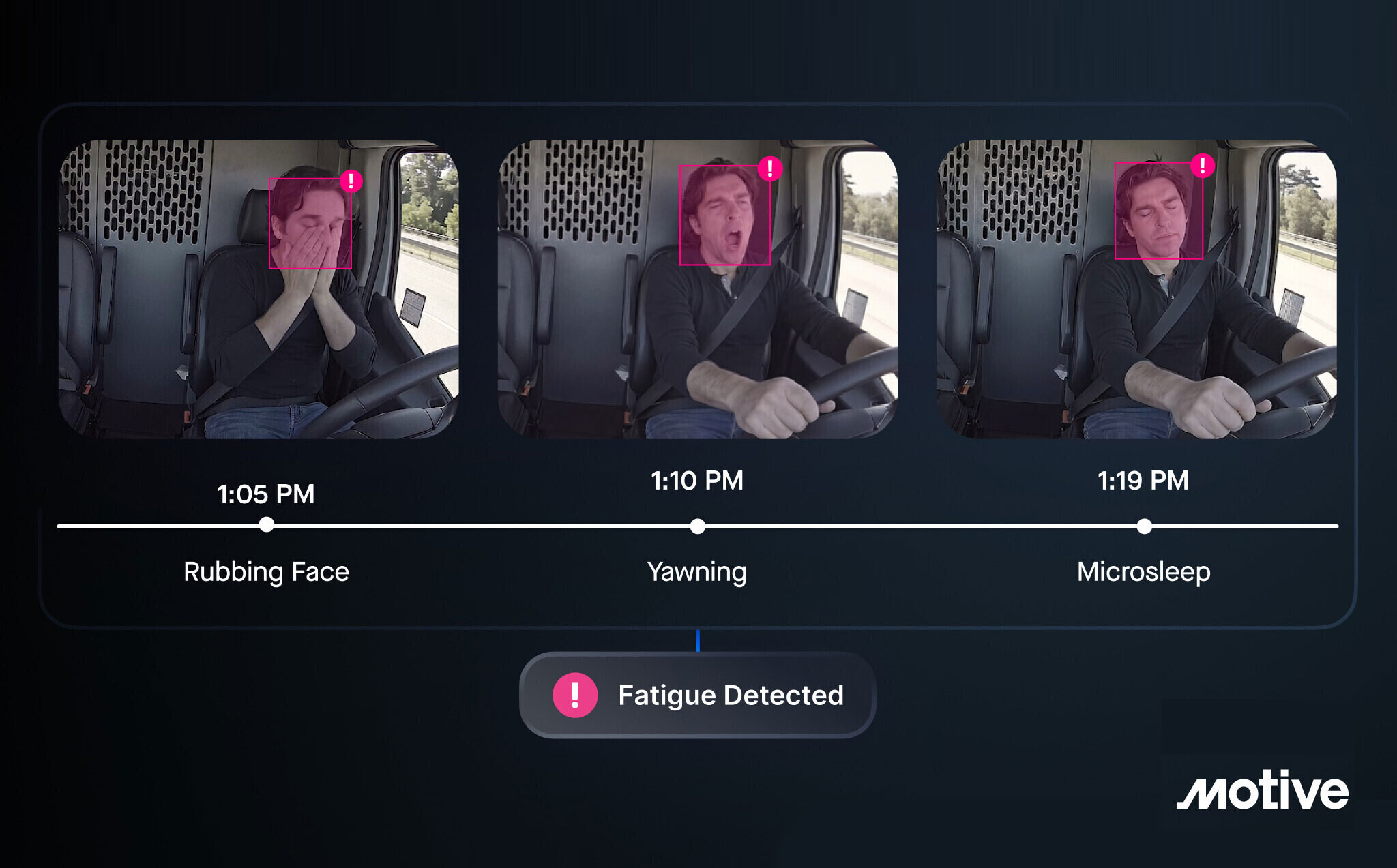
Motive, a fleet management software provider, has expanded its AI-powered dashcam capabilities with three new safety detection models targeting the behavioral factors that cause crashes. The platform now identifies driver fatigue, eating while driving, and improved collision detection using edge-based artificial intelligence that processes video directly on the camera hardware rather than relying on cloud servers.
The fatigue detection system monitors driver alertness in real time, flagging signs of drowsiness before accidents occur. This addresses a persistent fleet safety challenge. The National Highway Traffic Safety Administration estimates fatigue contributes to roughly 100,000 crashes annually in the United States. Eating detection functions similarly, identifying when drivers take their focus off the road to consume food or beverages, a common distraction in long-haul and delivery operations.
The enhanced collision detection builds on Motive's existing dashcam offering, expanding recognition of various crash scenarios beyond traditional frontal impacts. This capability matters for complex driving environments where side-impact or multi-vehicle collisions occur.
By running these AI models at the edge rather than transmitting data to cloud servers, Motive achieves faster response times and reduces bandwidth demands. Fleet operators receive immediate alerts when unsafe behaviors occur, enabling corrective coaching before incidents happen. The approach also addresses privacy concerns by processing sensitive video locally.
The addition positions Motive competitively within the growing fleet telematics market, where companies like Verizon Connect, Samsara, and Geotab compete on safety features and driver monitoring capabilities. Fleet operators increasingly demand behavioral analytics to reduce insurance claims and improve safety records. Rising insurance costs for trucking companies make loss prevention investments more appealing.
These tools prove particularly relevant for last-mile delivery fleets, where driver fatigue and distraction present acute risks during demanding shift schedules. Commercial vehicle operators managing hundreds or thousands of drivers benefit from automated monitoring that identifies high-risk patterns