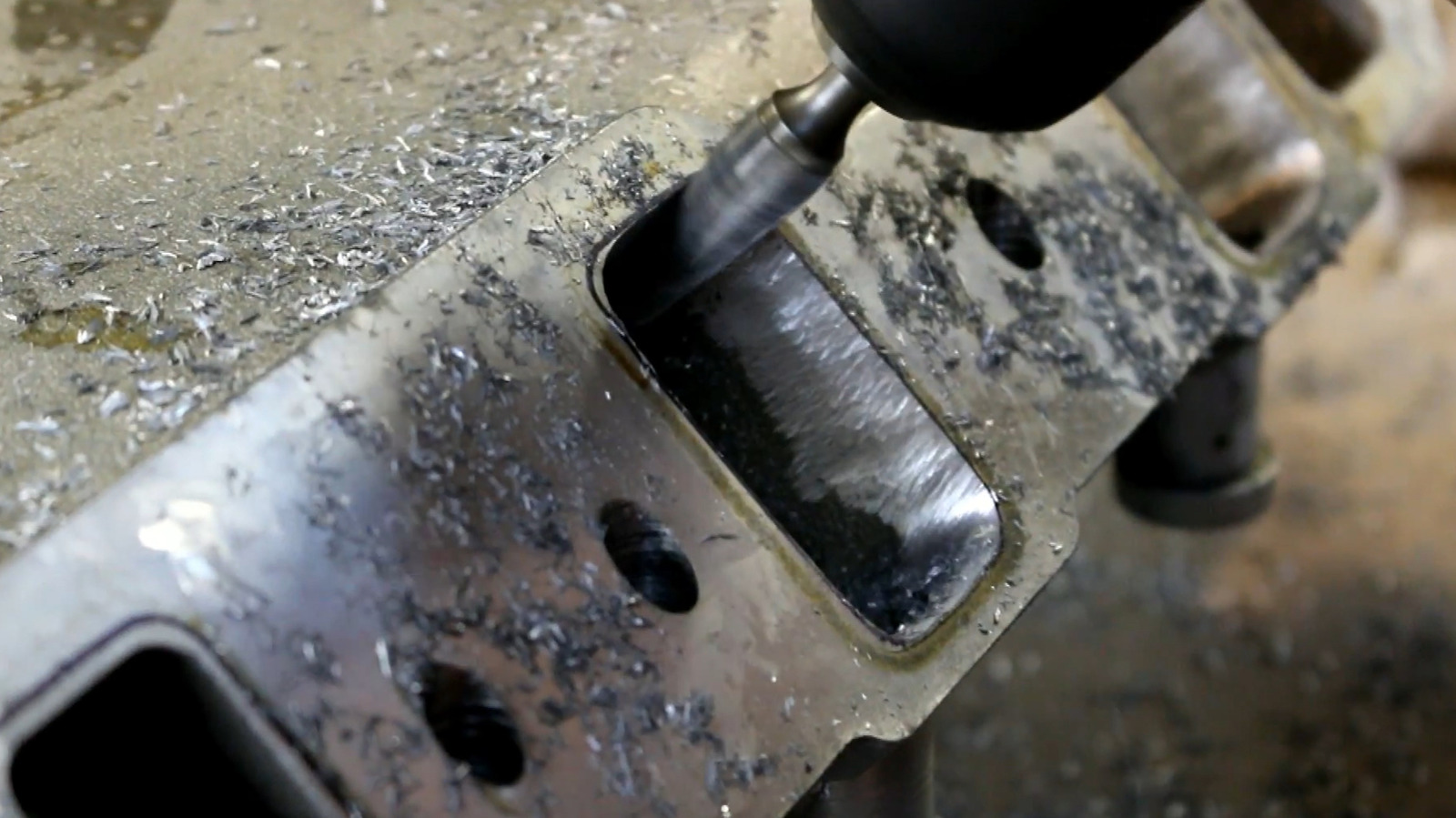
Porting an intake manifold removes casting irregularities and flow restrictions from the manifold's internal passages, allowing air to move more freely into the engine's cylinders. This straightforward modification increases volumetric efficiency, which translates to more oxygen reaching the combustion chamber per intake stroke. The result is measurable horsepower and torque gains without forced induction or major engine surgery.
The process involves careful smoothing and reshaping of the intake manifold's internal walls using hand tools and abrasives. Machine shops can handle the work professionally, but experienced DIY enthusiasts can tackle it in a home garage with basic equipment. The key is maintaining proper port alignment and avoiding thin spots that compromise structural integrity.
Porting delivers real gains across the RPM range, but the benefits scale with engine tuning. A stock engine sees modest improvements, typically 5 to 15 horsepower. Forced induction engines benefit more because they already push high air volumes through the manifold. Paired with other modifications like a quality intake, exhaust, and ECU tune, porting becomes part of a comprehensive power-building strategy.
The appeal lies in cost and accessibility. A professional porting job runs $300 to $800, far cheaper than turbocharging or engine building. The work requires no mechanical experience to appreciate, and results appear on a dyno immediately. Unlike many aftermarket claims, porting delivers measurable airflow improvements that engineers can verify.
Jalopnik highlights this mod as underrated because many enthusiasts overlook it in favor of flashier upgrades. A ported manifold won't turn heads at a car meet, but it works. Combined with proper intake and exhaust tuning, it amplifies power delivery with minimal risk. The modification respects engine longevity since it adds no stress or complexity. For builders seeking honest horsepower gains without gimmicks