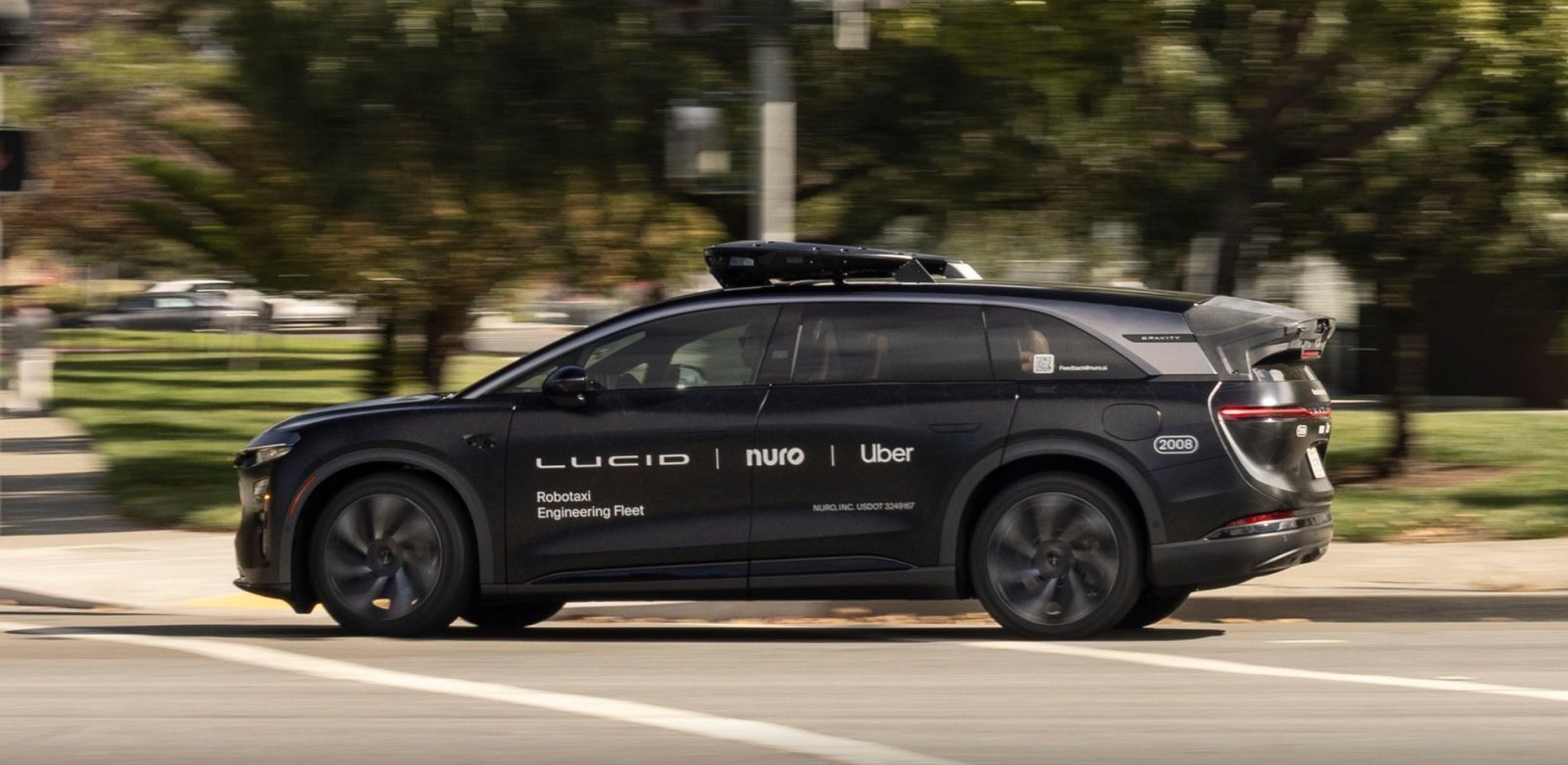
Uber is publicly attacking its robotaxi partner Waymo while committing over $10 billion to build competing autonomous fleets with Rivian, Lucid, and Nuro. The ride-hailing giant's leadership has spent months criticizing Waymo's technology and deployment approach, even as Waymo vehicles continue operating on Uber's platform in Austin and Atlanta.
This shift marks a fundamental pivot in Uber's autonomous strategy. The company now treats Waymo as a competitor rather than a partner, betting heavily that it can develop superior robotaxi alternatives faster and cheaper. By backing three different manufacturers instead of one, Uber spreads risk while pressuring each to deliver results.
Rivian, Lucid, and Nuro each bring different assets to the table. Rivian offers manufacturing scale and EV expertise. Lucid brings premium vehicle technology and their Saudi backing. Nuro specializes in compact, purpose-built autonomous vehicles optimized for efficiency rather than luxury. This diversified portfolio lets Uber avoid dependence on any single supplier.
The public criticism of Waymo reveals cracks in what was once a tight partnership. Waymo's cautious, city-by-city expansion contrasts sharply with Uber's appetite for rapid scaling. Uber executives apparently believe Waymo's approach is too slow and its vehicles too expensive to achieve the profitability the ride-hailing giant demands from autonomous fleets.
The irony runs deep. Waymo still generates revenue for Uber through active robotaxi operations, yet Uber simultaneously works to render those vehicles obsolete. This reflects the cutthroat economics of autonomous mobility. Waymo has proven the technology works in limited markets, but Uber sees opportunity to build something cheaper and more scalable.
For the broader industry, Uber's $10 billion commitment signals that autonomous fleets