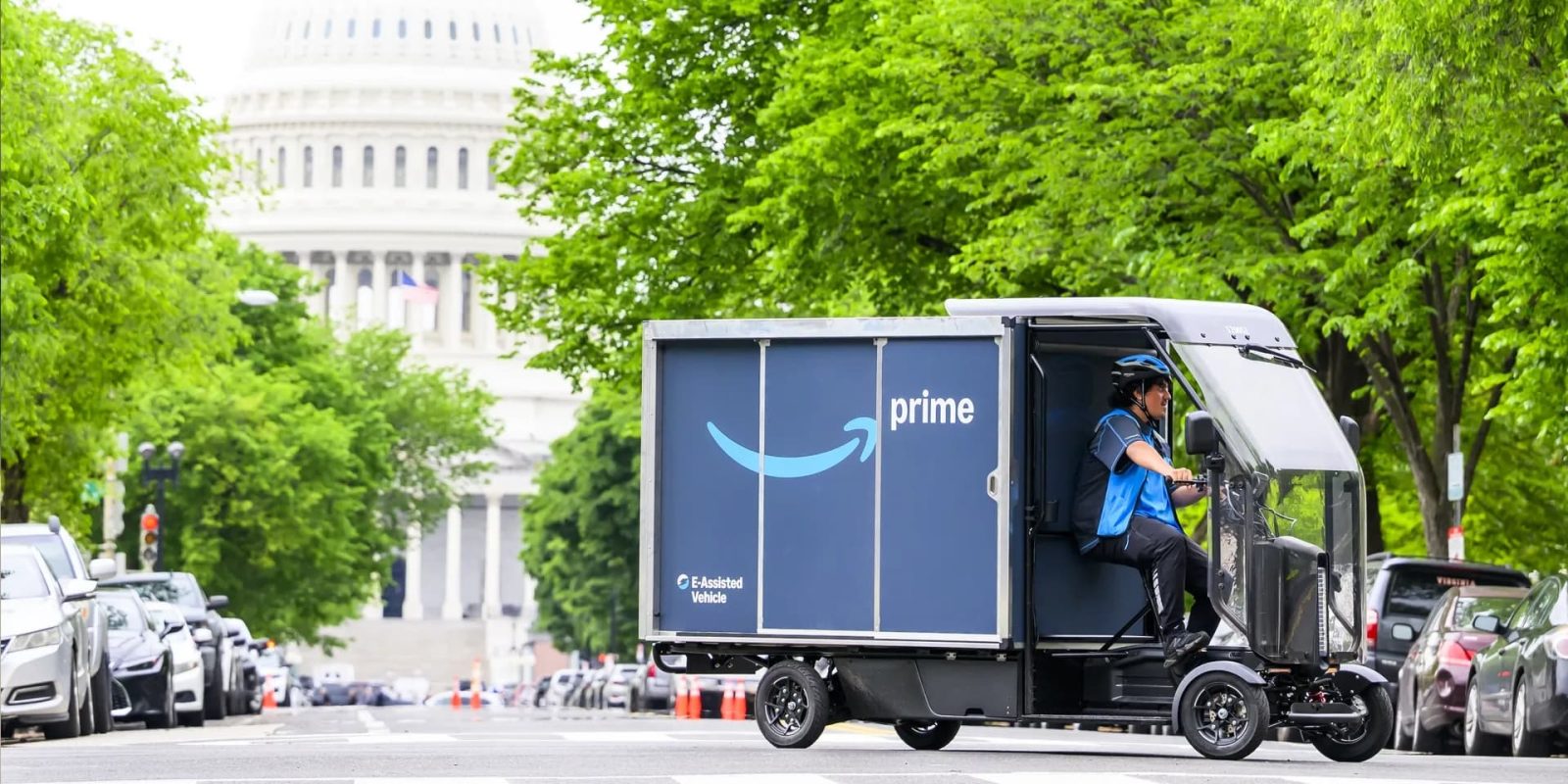
Amazon is rolling out electric cargo bikes for last-mile deliveries in Washington, DC, through a ten-month pilot program called "MicroFreight DC" in partnership with the District Department of Transportation. Amazon Delivery Service Partners will deploy battery-powered cargo bikes to handle neighborhood deliveries instead of relying solely on traditional delivery vans.
The program targets urban logistics efficiency. Cargo e-bikes excel in congested city environments where traditional vans struggle with traffic, parking, and delivery density. DC's dense neighborhoods make the district an ideal test market for this approach. Amazon joins other retailers recognizing that cargo bikes reduce emissions, lower operational costs, and improve delivery speed in high-volume residential areas.
E-cargo bikes address a real last-mile problem. Amazon moves roughly 3.5 billion packages annually in North America. In urban zones, diesel and gas vans burn fuel idling between stops, emit particulates, and consume expensive parking. Cargo e-bikes eliminate fuel costs, require minimal parking, and navigate congestion faster. A single cargo bike can handle 50 to 100 neighborhood deliveries per day depending on package volume and geography.
This shift reflects broader industry momentum. Major cities from New York to San Francisco have embraced cargo e-bikes for postal delivery and small-package logistics. UPS, FedEx, and DHL operate cargo bike fleets in European markets. Amazon's entry into the DC market validates what urban planners and logistics operators already know: electric cargo bikes work at scale.
The MicroFreight DC pilot will generate critical data on bike utilization, delivery capacity, weather resilience, and customer satisfaction in a major U.S. metropolitan area. Results will inform whether Amazon expands the program to other dense urban corridors like Manhattan, San Francisco, or Boston.
Success hinges on infrastructure. Cargo bikes require secure parking, charging stations, and repair facilities.