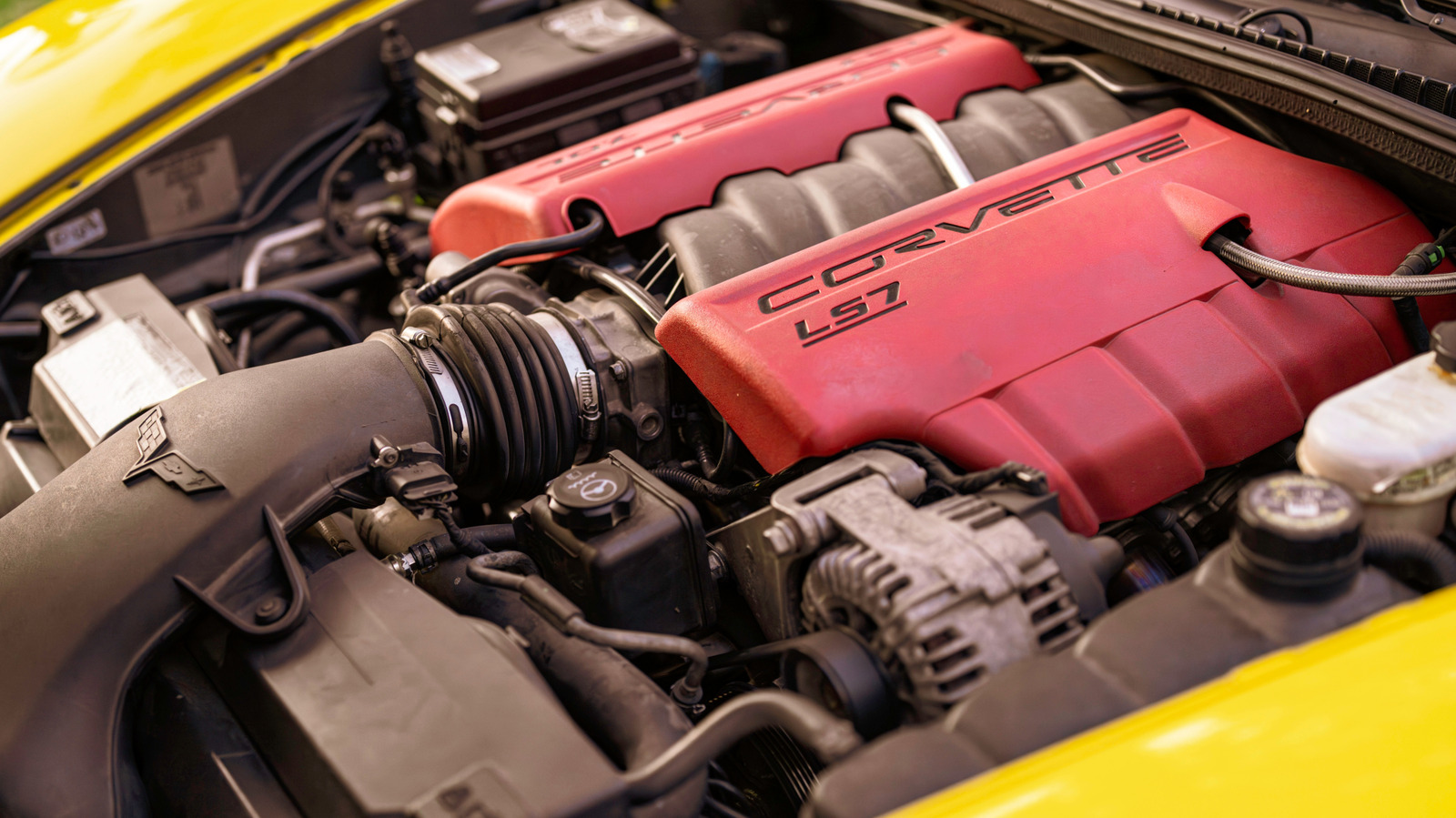
General Motors' LS7 V8 stands as one of the most consequential engines ever bolted into a production car. Introduced in the 2006 Corvette Z06, this 7.0-liter small-block delivered 427 cubic inches of displacement and 505 horsepower, shattering the conventional wisdom that small-blocks had inherent displacement ceilings.
The LS7 traced its lineage to the legendary LS family but took an entirely different approach. Instead of relying on forced induction, GM engineered a naturally aspirated monster with a forged steel crankshaft, titanium connecting rods, and a unique cam-in-block design that allowed extreme lift and duration. The engine revved to 7,100 rpm and produced 470 lb-ft of torque, making it the most powerful naturally aspirated small-block GM had ever produced.
What made the LS7 revolutionary wasn't just raw output. The engine embodied race-bred engineering bleeding directly into a road car. Its cylinder heads featured canted valves optimized for flow. The block itself incorporated a 4.125-inch bore, pushing displacement boundaries without sacrificing the compact packaging that small-blocks offered. In the Z06, it accelerated from zero to 60 mph in 3.6 seconds and posted a 7m34s Nurburgring lap time that embarrassed six-figure supercars.
The LS7 proved that a carmaker could create a high-revving, naturally aspirated engine that matched turbo performance without compromise. That philosophy influenced the industry. Toyota leaned on that lesson for the GR Corolla. Porsche doubled down on naturally aspirated engines even as rivals went turbo. The LS7 showed there remained a market for raw mechanical passion.
Today