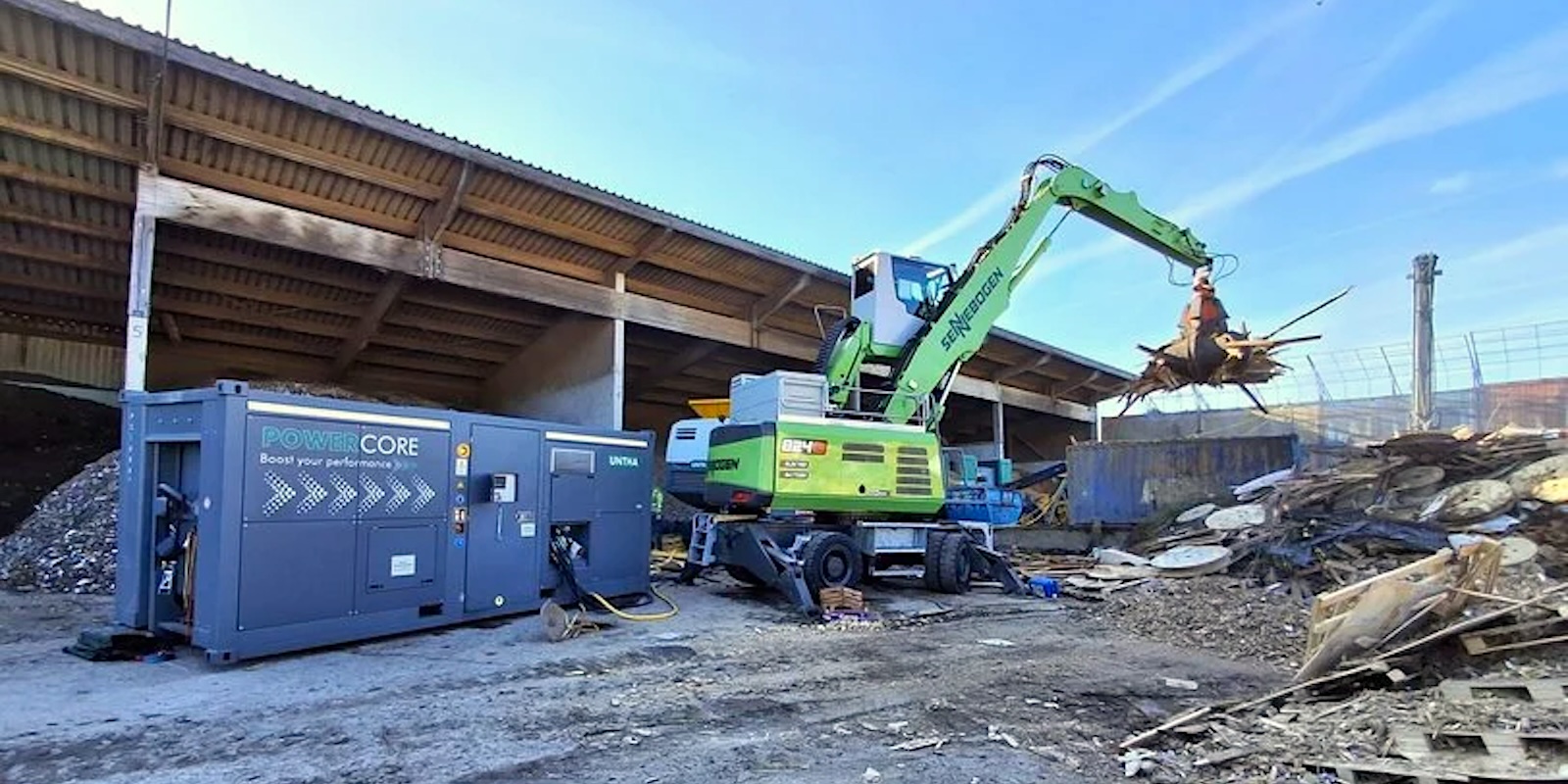
German equipment manufacturer Sennebogen unveiled a semi-autonomous material handling system designed to electrify European recycling operations. The integrated solution combines an electric wheeled excavator, mobile battery unit, and mobile shredder into a coordinated system that handles material processing on-site.
The system targets recycling plants seeking to reduce emissions and boost operational efficiency. By pairing electric excavation equipment with autonomous capabilities, Sennebogen addresses two industry pressures simultaneously. European recycling facilities face tightening emissions regulations while competing to process more material with fewer personnel.
The wheeled excavator serves as the primary handler, using battery power instead of diesel hydraulics. The mobile battery system provides charging infrastructure on-site, eliminating downtime from central charging stations. The integrated shredder processes material directly at the handling point, reducing the need for secondary transport between stations.
Semi-autonomous operation matters in recycling because it reduces reliance on skilled operators while maintaining safety controls. Human operators retain oversight while the system handles repetitive load positioning and processing sequences. This hybrid approach addresses the European labor shortage in heavy equipment operation without sacrificing the precision required for selective sorting and dangerous material handling.
Sennebogen positions this system against competitors like Liebherr and Komatsu, which have developed hybrid and electric excavators but lack integrated autonomous capabilities. The combined solution targets cost optimization for large recycling networks processing construction debris, industrial waste, and end-of-life vehicle components.
European recyclers face mandatory electrification timelines under EU regulations. Equipment like diesel excavators already encounter restrictions in major markets. Sennebogen's demonstration signals confidence in battery technology scaling to handle continuous heavy-duty cycles typical in recycling environments.
The system's real advantage lies in throughput improvement. Faster material processing translates to higher hourly tonnage and reduced equipment idle time. For recycling operations competing on margin, efficiency