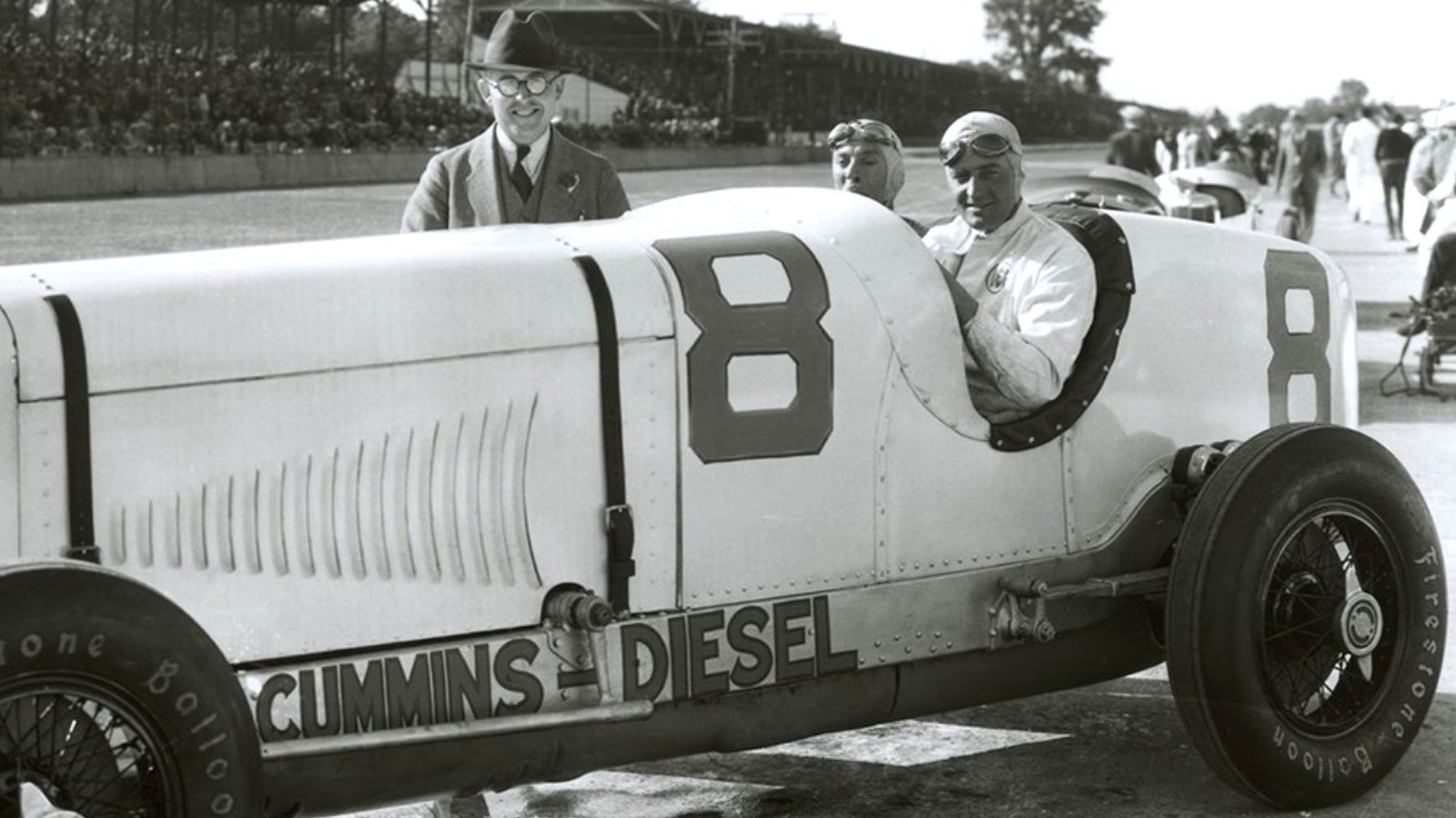
Cummins pulled off a legendary fuel economy stunt at the 1931 Indianapolis 500 by entering a Duesenberg fitted with a diesel engine that completed the entire 500-mile race on a single tank of furnace oil costing just $1.40. The achievement demonstrated the raw efficiency of diesel combustion when gasoline-powered competitors burned through expensive fuel and required multiple pit stops.
The Duesenberg-Cummins entry didn't win the race, but it made an undeniable statement about diesel reliability and economy at a time when most American automakers dismissed the technology as too heavy and underpowered for racing. The stunt challenged prevailing assumptions about what diesel engines could accomplish on the track.
For context, the early 1930s marked a pivotal moment in engine development. Gasoline remained the dominant fuel for American cars, and diesel tech was relegated to trucks and industrial equipment in the US market. European manufacturers had begun exploring diesel performance, but racing—especially at Indy—belonged almost exclusively to fuel-guzzling gasoline engines.
Cummins engineered this effort to prove diesel could match gasoline's performance while delivering extraordinary fuel economy. Running furnace oil instead of refined diesel fuel added another layer of efficiency messaging. The company understood that cost-per-mile mattered to drivers, even if racing purists dismissed fuel economy as beside the point.
The 1931 Indy entry became folklore within Cummins. It demonstrated engineering ambition beyond the truck market where the company built its reputation. The message stuck: when efficiency counted, diesel delivered.
This episode echoes through automotive history. Modern Indy cars run on biofuel blends and focus on efficiency, but the fundamental lesson Cummins proved nine decades ago endures. Engines that sip fuel rather than guzzle it perform better over distance.