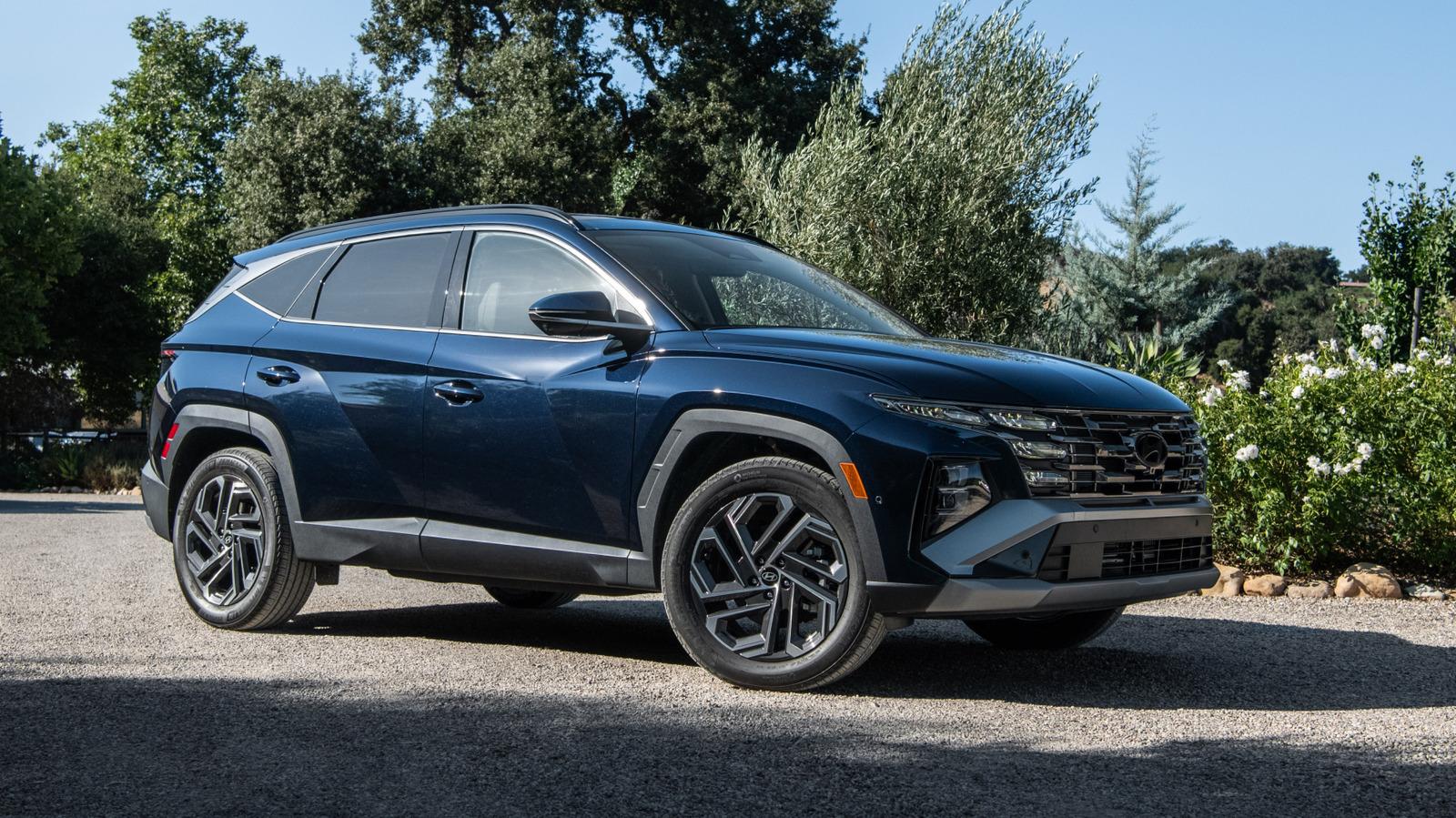
Hyundai's 2025 Tucson earned a spot on Consumer Reports' list of recommended SUVs, validating the compact crossover's strengths in practicality and fuel economy. The real question for buyers centers on long-term dependability.
Consumer Reports tracks ownership costs, repair frequency, and component durability across model years. The Tucson has historically performed well in these metrics, though Hyundai's reliability record varies by generation and powertrain. The current generation Tucson benefits from refinements that address earlier weakness points, particularly in transmission smoothness and engine longevity on higher-mileage examples.
Hyundai's warranty covers five years or 60,000 miles for basic coverage, plus a 10-year or 100,000-mile powertrain warranty. This confidence level reflects the manufacturer's engineering improvements over the past decade. However, some owners report issues with infotainment systems and electrical components after three years of ownership, areas where Hyundai has historically lagged behind Honda and Toyota.
The 2025 model refresh brings updated software and hardware to the infotainment suite, addressing common complaints from earlier iterations. Engine choices include a naturally aspirated 2.0-liter four-cylinder and a turbocharged 1.6-liter option, both paired with conventional eight-speed automatics. The turbocharged unit delivers better performance but sometimes shows higher repair costs when issues arise.
For buyers prioritizing reliability above all else, Toyota's RAV4 and Honda's CR-V remain the segment benchmarks. Yet the Tucson represents genuine progress for Hyundai. Its reliability now sits closer to mainstream Japanese competitors than ever before. The combination of Consumer Reports' recommendation, improved warranty coverage, and fewer reported critical failures makes the 2025 Tucson a legitimate choice for practical buyers who