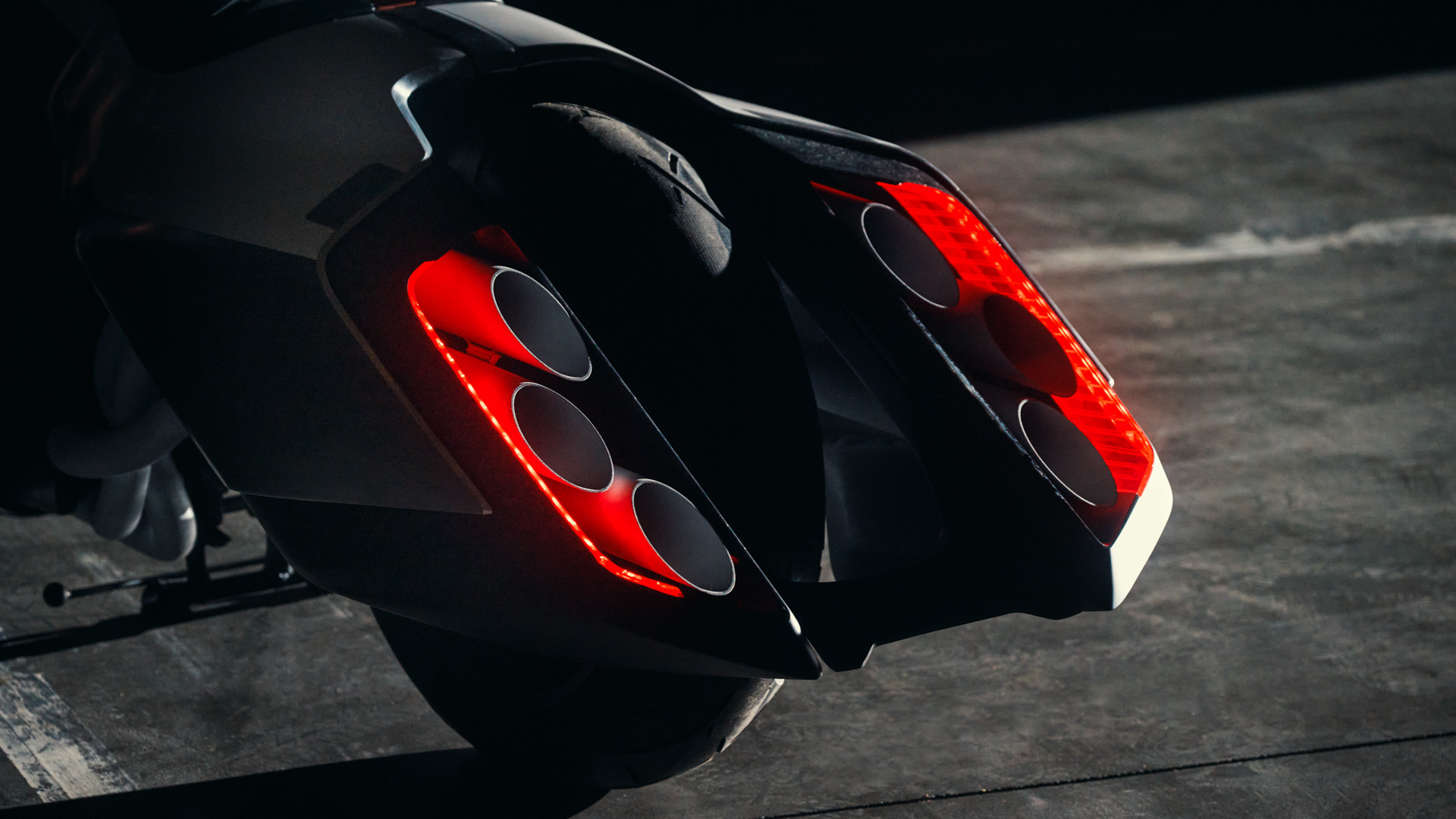
BMW's Vision K18 Concept celebrates the internal combustion engine with theater. The German automaker designed radical exhaust pipes that dominate the rear, resembling Starship thrusters more than traditional tailpipes. The design philosophy merges the powertrain with the bodywork itself, rejecting the typical separation between mechanical and aesthetic components.
This concept arrives as BMW continues to hedge its bets on electrification. While the company commits to EV production at scale, it hasn't abandoned the combustion narrative entirely. The Vision K18 serves as a design exercise that romanticizes traditional engines at a moment when the industry pivots away from them.
The exhaust treatment on the K18 represents more than styling excess. It exposes mechanical components as design features, treating the engine's output as something worth celebrating visually. The pipes integrate directly into the rear architecture, creating a sculptural quality that transforms what is functionally a emissions system into a visual statement.
BMW's timing speaks volumes. As manufacturers rush toward electrification timelines and increasingly stringent emissions regulations, concepts like the K18 function as automotive nostalgia. They acknowledge that enthusiasts and collectors remain emotionally attached to combustion engines while the production reality shifts elsewhere.
The K18 doesn't preview any production model. Instead, it functions as design philosophy. BMW's styling team used the concept to explore how powertrains can become design language rather than hidden mechanical necessities. The starship-like exhausts challenge the minimalism of modern design by making the engine's output visible and intentional.
For enthusiasts, the Vision K18 reads as a farewell tour. BMW recognizes that combustion engines have finite futures in most markets. By celebrating mechanical theater with theatrical design, the company acknowledges what it's leaving behind. The radical exhaust pipes aren't practical. They're a statement that some drivers want their cars to