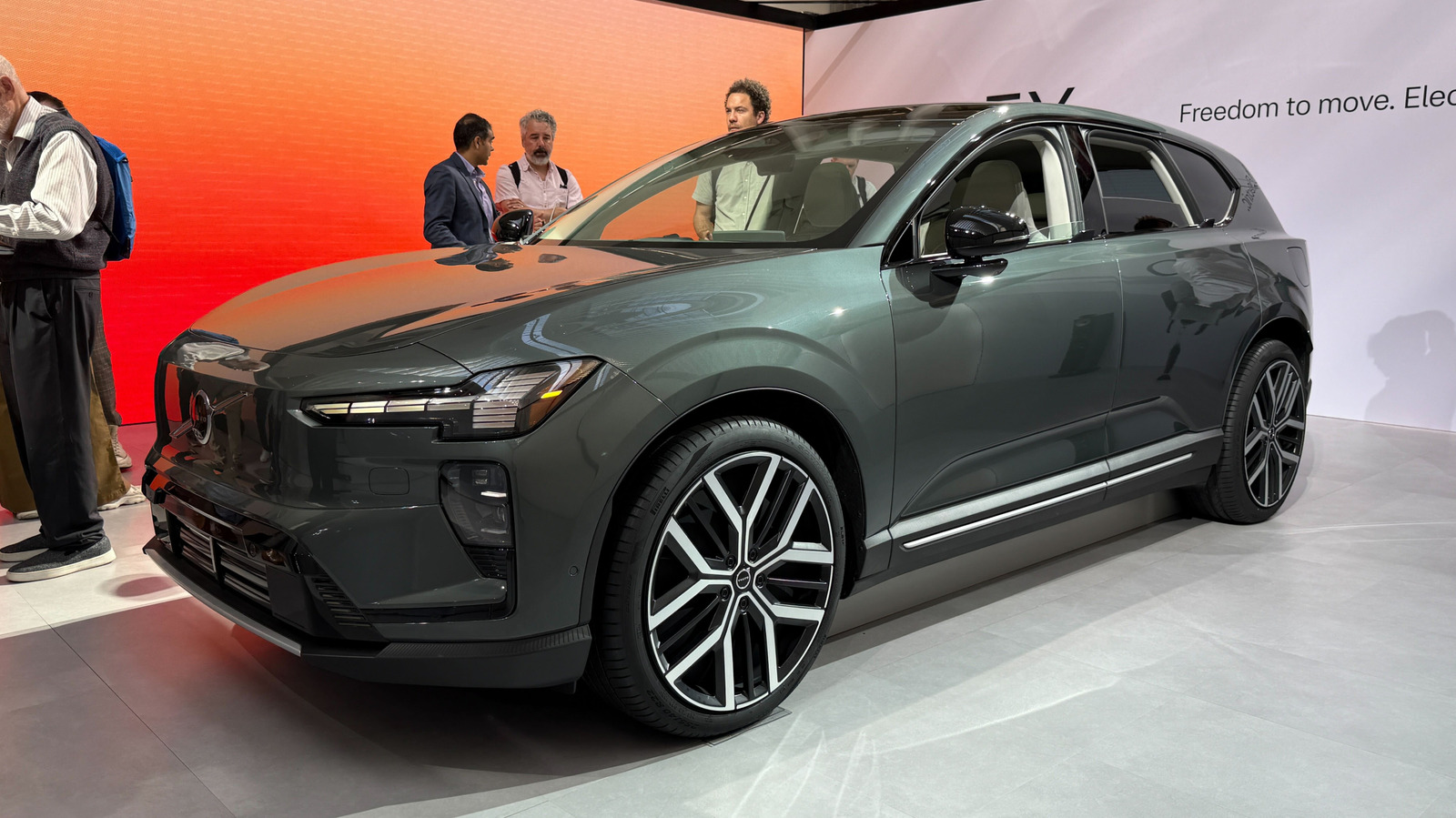
Volvo's EX60 compact electric SUV arrives in the US market with a $59,795 starting price, positioning itself squarely against established rivals like BMW's iX3 and Mercedes-Benz's GLC EV. The Swedish automaker's entry into the competitive midsize EV segment reflects the industry's rush to populate the crucial $50,000 to $70,000 price bracket where most mainstream EV buyers shop.
The EX60 inherits Volvo's Scandinavian design language. Clean lines, minimalist interiors, and a focus on safety define the vehicle's appeal. The model rides on the same scalable platform underpinning the larger EX90, giving Volvo manufacturing efficiency across its lineup.
However, BMW's iX3 already owns this segment with a more mature product, established dealer network, and premium brand cachet. The iX3 starts lower in some trims and offers proven reliability data that Volvo's newer platform lacks. Mercedes' GLC EV also commands attention with its luxury positioning and performance credentials.
The real question hinges on driving dynamics and real-world range. Volvo's traditional strength in interior quality and safety systems could differentiate the EX60, but those attributes alone don't guarantee sales success in a crowded field. Buyers increasingly prioritize acceleration, charging speed, and total cost of ownership over design philosophy.
Volvo must prove the EX60 justifies its $59,795 entry point through superior handling, quicker acceleration, or longer EPA-rated range than competitors. The BMW iX3 offers an established track record. The Mercedes GLC EV delivers luxury nameplate prestige. Volvo's play depends on making drivers feel the company's electric transition represents genuine engineering progress, not just market participation. Initial reviews will determine whether the E