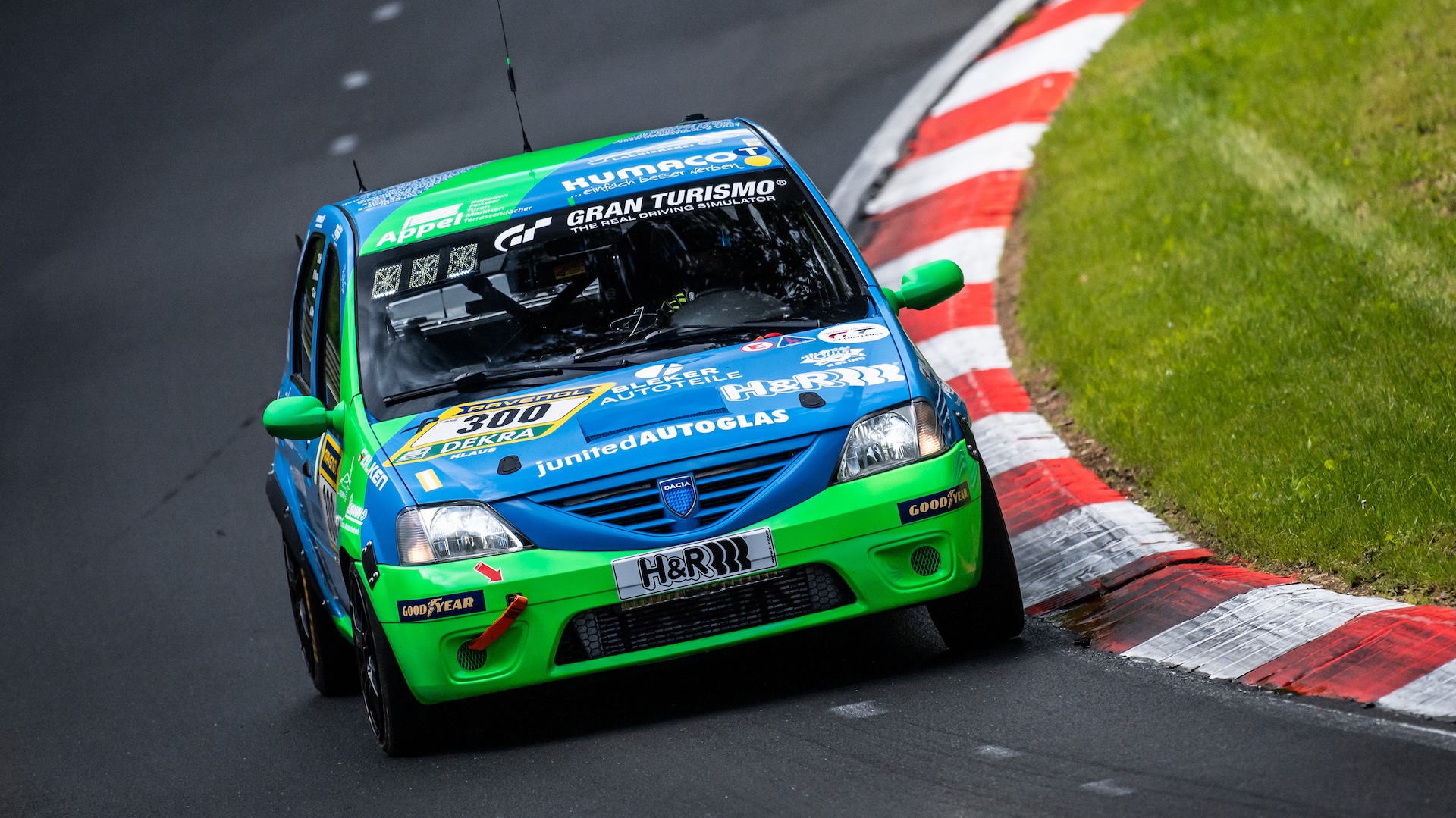
A Dacia Logan econobox outshined Formula 1 hype at the 2026 Nurburgring 24 Hours, capturing fan attention by doing something Max Verstappen's entry could not: finishing the endurance race.
The Romanian-built Logan, one of the world's cheapest new cars, competed in the grueling 24-hour circuit race at the Nurburgring in Germany. While Verstappen's participation generated pre-race buzz, the diminutive Dacia proved the real story. The Logan's team executed flawlessly over a full day of racing, avoiding mechanical failure and driver mistakes that plague many competitors.
The Logan's performance resonates because it challenges motorsport's expensive culture. Endurance racing traditionally demands six-figure budgets, factory support, and exotic machinery. A humble economy sedan running the same circuit highlights the gap between racing hype and grassroots competition. The car's reliability and the team's competence generated organic enthusiasm that celebrity entries often miss.
Verstappen's involvement illustrates another trend: F1 drivers increasingly dabble in side racing ventures. These appearances draw eyeballs but don't always deliver on-track results. The Logan's success story flips that script. No star power needed. No pre-race drama. Just a team that showed up, prepared properly, and crossed the finish line.
For Dacia, the result proves brand positioning. The Logan sells on practicality and value, not prestige. Nurburgring completion validates those claims to buyers. The car survived thousands of brutal corners, temperature swings, and driver transitions. That endurance translates to real-world reliability messaging.
The broader takeaway cuts deeper. Motorsport audiences crave authentic competition and underdog narratives. A budget economy car outlasting more expensive, hyped entries speaks to steering, setup, and