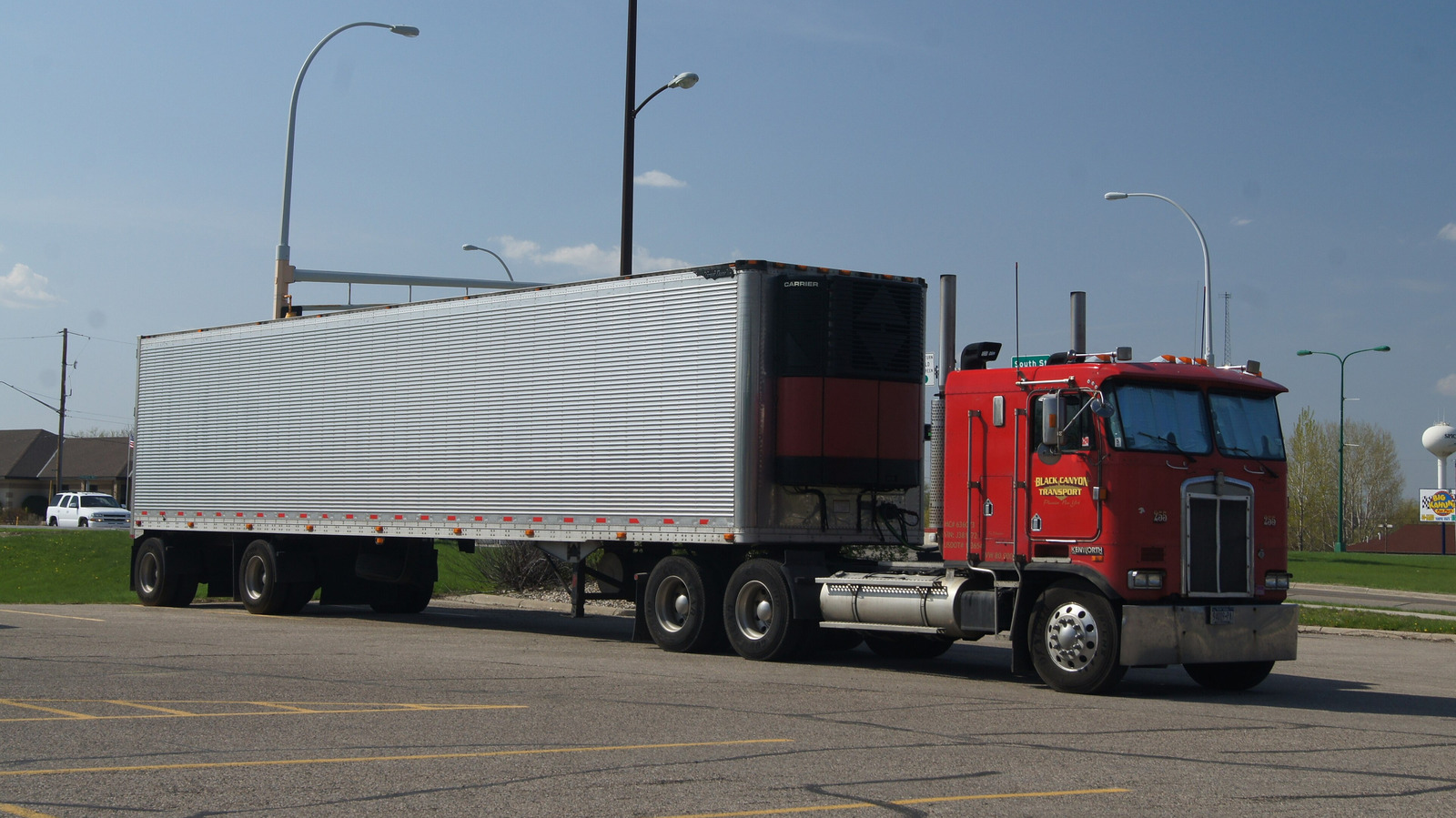
Cab-over trucks once dominated American highways but have nearly vanished from U.S. roads, while remaining common in Australia and Europe. This shift reflects fundamental changes in trucking economics and regulation.
The decline stems primarily from the 1982 Surface Transportation Assistance Act, which increased the maximum truck length to 65 feet but imposed strict wheelbase limits. Conventional "long-nose" trucks could stretch their cargo beds to use this extra length, while cab-overs could not. Manufacturers designed conventional trucks with longer wheelbases to maximize hauling capacity, making them more profitable for owner-operators and fleets.
Fuel economy also favored conventional designs. Cab-over aerodynamics proved inferior to the sloped hood of conventional trucks, which cut through air more efficiently. As diesel prices climbed, drivers prioritized efficiency. Modern long-nose rigs achieve better fuel economy and can haul more freight per gallon.
Driver comfort entered the equation too. Cab-overs place the operator directly over the front axle, transmitting road vibrations and noise directly into the cabin. Sitting high above the engine creates a cramped, spartan environment compared to the spacious, quiet cabins of conventional trucks. Long-haul drivers spending weeks on the road preferred the comfort premium.
European and Australian regulations took different paths. These markets imposed strict overall length restrictions that made cab-overs logical. European trucks face severe length penalties for conventional designs, making shorter cab-overs preferable. Australia's road trains actually favor cab-overs for similar reasons.
American fleets abandoned cab-overs entirely by the early 2000s. Volvo ended production of the VN cab-over in 1995, while Freightliner discontinued its cab-over line around the same time. Today, spotting one on American interstates ranks as a rarity.