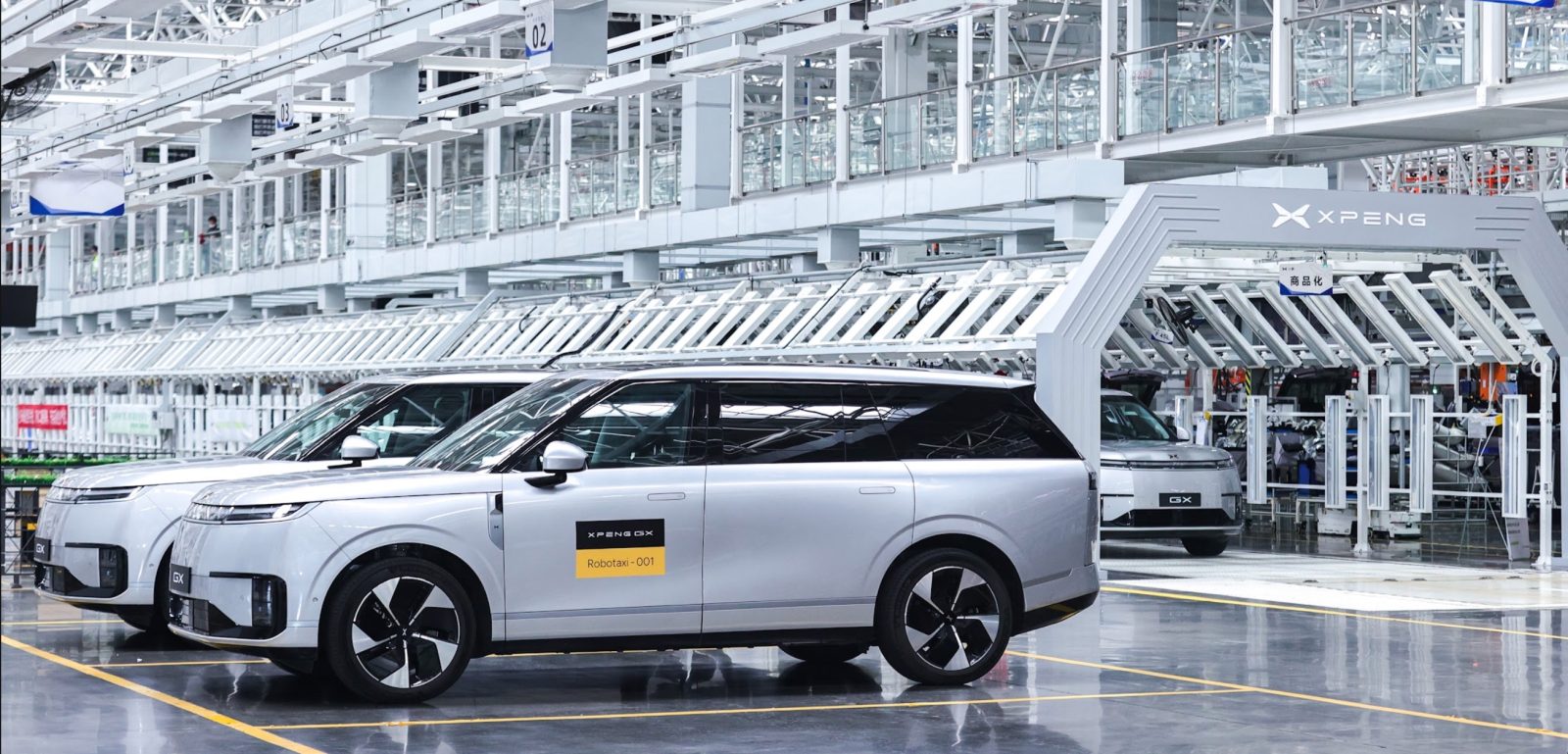
XPeng rolls its first mass-produced robotaxi off the assembly line in Guangzhou, marking China's first homegrown L4 autonomous vehicle built through complete in-house development. The company engineered the purpose-built vehicle without relying on external suppliers for core autonomous technology.
The robotaxi runs on four of XPeng's proprietary Turing AI chips, each delivering 3,000 TOPS of computing power. The architecture notably excludes LiDAR sensors, instead depending on alternative perception systems for navigation and obstacle detection. This design choice reduces hardware costs and manufacturing complexity compared to competitors like Waymo and Cruise, which rely heavily on expensive LiDAR arrays.
The achievement positions XPeng ahead of domestic rivals like Baidu and Didi in actual production volume. Baidu has deployed limited robotaxi fleets in selected cities, while Didi's autonomous capabilities remain in testing phases. XPeng's vertically integrated approach mirrors Tesla's strategy of controlling software, hardware, and manufacturing to maintain competitive advantages in autonomous systems.
The timing reflects China's accelerating shift toward autonomous mobility. Local regulators have permitted expanded robotaxi testing in cities like Guangzhou and Wuhan, creating favorable conditions for rapid scaling. XPeng plans to deploy these vehicles in ride-hailing services, leveraging its existing ecosystem and brand recognition in the EV market.
Mass production signals XPeng's confidence in its autonomous stack maturity. The company has tested earlier prototypes extensively, refining sensor fusion algorithms and decision-making systems. Moving from prototype to manufacturing proves the technology passes durability and reliability thresholds necessary for commercial operation.
This milestone challenges Western assumptions about autonomous vehicle timelines. While American developers focus on Level 3 highway driving, XPeng pursues full L4 urban autonomy in a booming market. Chinese manufacturers benefit