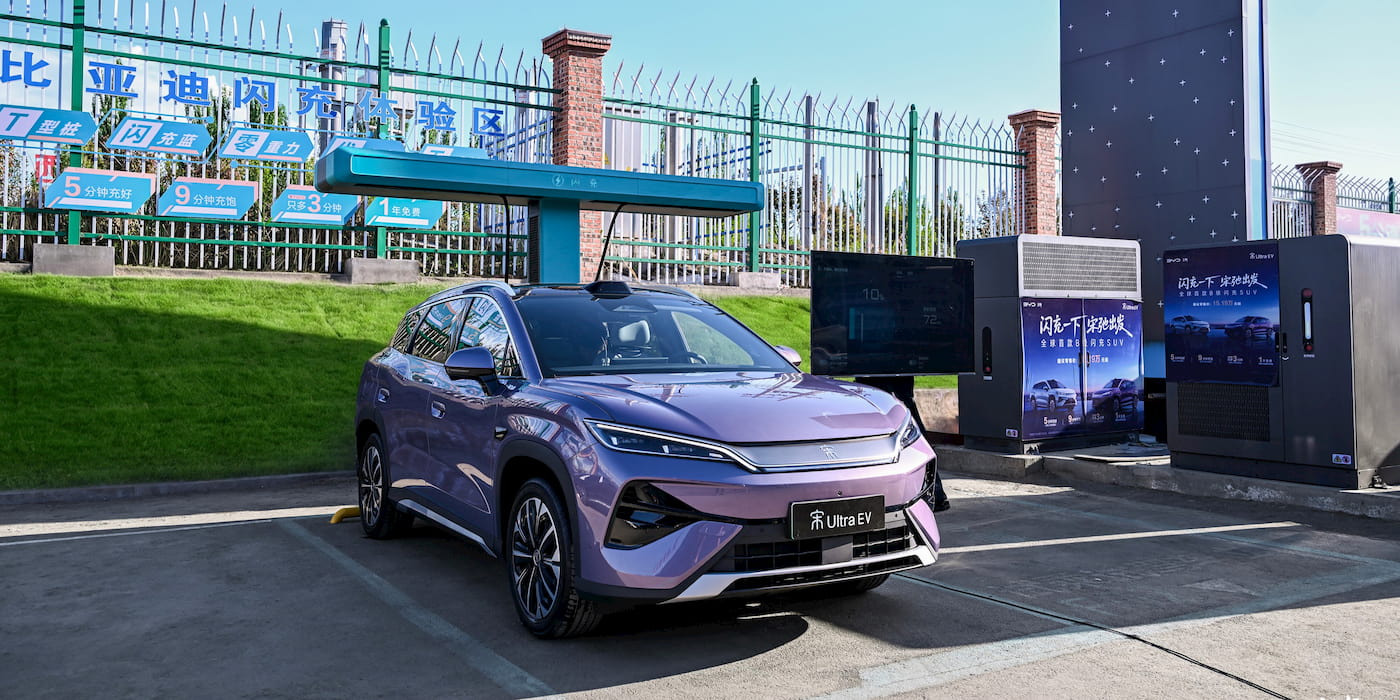
BYD is mounting a publicity campaign centered on its Song Ultra EV to demonstrate the real-world durability of its Blade Battery platform and Flash Charging technology. The automaker plans to drive the vehicle over 2,700 miles across China's largest expressway system, positioning this as the first EV to complete the full route on a single battery charge or equivalent energy strategy.
The Blade Battery represents BYD's in-house cell technology, which the company has engineered for extended range and cycle life. The 5-minute Flash Charging capability addresses one of EV ownership's primary pain points. At that speed, drivers can recoup substantial range in the time needed for a bathroom break or quick meal.
BYD's strategy here mirrors industry playbook moves from Tesla and other EV makers. Long-distance demonstration drives generate media coverage and build consumer confidence in battery endurance and charging infrastructure. The Song Ultra EV sits in BYD's mass-market lineup, targeting buyers concerned about daily practicality rather than luxury positioning.
The expressway journey tests battery performance under sustained highway operation, where constant cruising speeds stress thermal management and efficiency differently than city driving. If BYD completes the route as claimed, it validates range claims and charging speeds to skeptical consumers still worried about EV practicality in markets where charging networks remain sparse outside major cities.
BYD dominates EV battery production globally and sells more battery-electric vehicles than any automaker, yet the company remains lesser-known outside Asia. Demonstrations like this one build brand awareness and differentiate BYD technology from competitors like Tesla and Li Auto in the crucial Chinese market. The expressway stunt doubles as engineering validation and marketing theater, proving the Blade Battery's capability while generating headlines that reach potential buyers evaluating EV purchases.